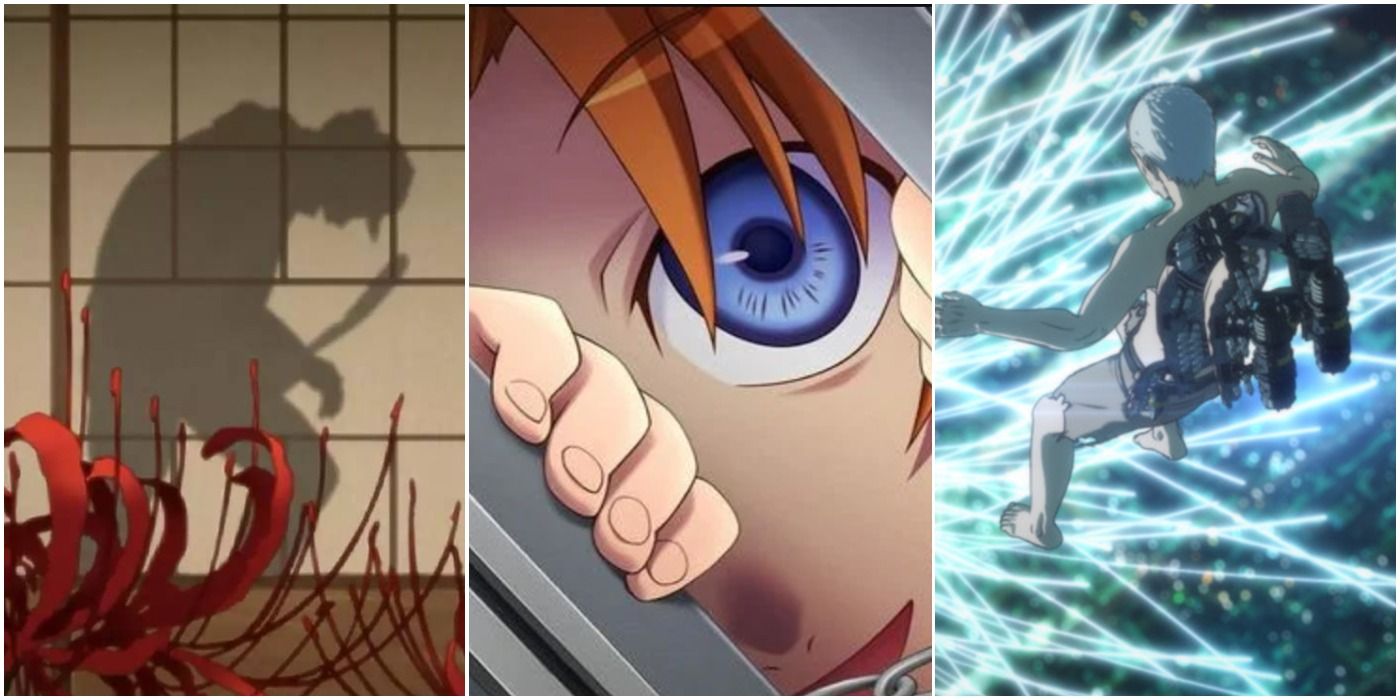
There is an abundance of eclectic storytelling genres that are specific to the anime industry, many of which allow for challenging subversions of norms. Some of the most prolific anime series to come out of the past few decades are the ones that embrace dark themes and psychological deconstructions.
The most successful psychological anime series, such as the foreboding Death Note, become staples of the industry, evolving into an enlightening examination of corruption and evil. Death Note is still mandatory viewing, but there is also plenty of psychological anime series that beat it at its own grim game.
10 Paranoia Agent Unleashes A Horror That Feeds On Societal Fear
Satoshi Kon is one of the most prolific names in the anime industry, and while he sadly passed away at a young age, he’s still responsible for a staggering amount of work. Feature films like Perfect Blue and Paprika are testaments to Kon’s abilities as a psychological storyteller, but Paranoia Agent is a dark 13-episode examination of identity, mob mentality, and the collective consciousness.
An assailant known only as Lil’ Slugger terrorizes a community, and each episode is filtered through a different character’s skewed perspective. It’s a glowing example of delusion, and the subtle changes that are present in each episode are incredible.
9 Puella Magi Madoka Magica Uses Magical Girl Staples To Create A Death Wish
One of anime’s greatest strengths is how the medium has so many well-established genres that become ripe territory for subversion and deconstruction. Magical girl series are rampant in anime, and Puella Magi Madoka Magica leans into the friendly tropes of this type of storytelling in order to craft an absolutely haunting story.
Madoka Magica turns the exciting responsibilities of magical girls into death sentences. These slayers of witches are just a means to an end and designed to cause just as much destruction as they prevent. The whole series plays with the expectation of whether Madoka will succumb to this call for action and become a magical girl.
8 Serial Experiments Lain Pits The Private Against The Public Self
Serial Experiments Lain opened up the audience’s eyes when the 13-episode series first debuted in the late ’90s, but it tells a story that’s only grown more relevant in a world that’s increasingly dependent on technology and the Internet.
The anime unravels a dark mystery as Lain, a young girl, gets pulled into a virtual world and shifts into the role of a martyr for a much greater cause. Serial Experiments Lain unpacks very sophisticated ideas, but triumphs through its restrained use of exposition and how it’s confident enough to let its stark visuals and cryptic symbolism speak for itself.
7 Higurashi: When They Cry Turns Its Characters Into The Universe’s Punching Bags
Lots of anime series wear their worrisome tendencies on their sleeve and the audience immediately knows what they’re about to watch. There are also anime like Higurashi: When They Cry that intentionally perplex the viewer with a reliance on bright colors and friendly “moe” character designs, only to engage in serial killings, deadly mysterious viruses, and an oppressive time loop narrative.
Higurashi crafts increasingly complex lore that pits its characters in a seemingly hopeless reality. Individuals have to meet their end hundreds of times over and still be left with questions. Much like in Death Note, there are larger forces at play in Higurashi.
6 Steins;Gate Explores The Complicated Ramifications Of Time Travel
Time travel is a concept that more and more stories want to tackle, but it’s exceedingly difficult to pull off the material in a way that’s both satisfying and without plot holes. Steins;Gate is a fascinating foray into the subject matter, and Rintaro’s growing power as he experiments with his volatile science becomes increasingly tense.
Steins;Gate doesn’t hide from the constant paradoxes and mental toll that time travel and its consequences have on Rintaro. What begins as an exciting power fantasy turns into a depressing loss of self.
5 Elfen Lied Presents Differences As Liabilities That Must Be Controlled
It’s a popular trope in anime for ordinary individuals to encounter powerful creatures or aliens, becoming suddenly responsible for their safety in a strange world that they don’t understand. Elfen Lied begins in a grim, disturbing place and only becomes a darker examination of man’s inherent evil.
Lucy is a deadly extraterrestrial who loses her memories and becomes reliant on some overwhelmed humans. The bloodshed and psychological torture in Elfen Lied never stops, and it’s not afraid to go out on a nihilistic note that condemns humanity even more than Death Note.
4 Attack On Titan Is A Haunting Look Into Loss And The Casualties Of War
The anime for Attack on Titan has entered its endgame, and many audiences are still devastated over the frightening places that the story has gone. Titan begins in a bleak world that’s full of death, but it seems to clearly pit man against monster, where the threats to the world are easy to identify.
Attack on Titan moves into progressively greyer territory as man turns on man, and it’s hard to determine who are actually the heroes. Eren Jaeger’s slow transformation from put-upon warrior into the ultimate antagonist is horrifying and far more difficult to watch than Light’s corruption in Death Note.
3 Neon Genesis Evangelion Descends The World Into A Depressing Apocalypse
Few anime series have gained the totemic legacy of Neon Genesis Evangelion, and it’s widely considered to be essential viewing for both anime fans and those who are strangers to the medium. At first glance, Evangelion resembles many other giant robot series, where mechanical creations wage war with kaiju-esque beasts.
Evangelion frequently looks at the fate of the world and an impending apocalypse, but it filters itself through the suffocating depression that’s experienced by its main character, Shinji Ikari. Evangelion’s themes and symbolism continue to be deconstructed, and it’s a psychologically exhausting anime.
2 Inuyashiki Looks At Two Contrasting Individual’s Use Of The Same Power
There’s a simple idea at the center of Inuyashiki, an 11-episode anime that turns an elderly man and a disaffected teen into powerful cyborgs after they both experience the same strange event. This new power reinvigorates the elderly Inuyashiki, who tries his hand at heroics.
Alternatively, Inuyashiki’s counterpoint, Hiro, becomes corrupted by this power and engages in a brutal killing spree that leaves the nation paralyzed in fear. Inuyashiki grows into a stunning examination of how the same power can push people down very different paths.
1 Monster Highlights How The Power To Give Life Can Have Deadly Consequences
Mary Shelley’s myth of Frankenstein’s Monster is more than 200 years old, and it’s had a remarkable influence on pop culture. Monster is a compelling descent into power, responsibility, and hubris that pushes the Frankenstein story into serial killer territory.
Kenzo Tenma is a revered surgeon whose life begins to fall apart after one of his old patients emerges with murderous tendencies. Tenma is left to consider the power of his work and the chilling realization that saving someone’s life has left far more people hurt. At 74 episodes, Monster reaches devastating stakes and has the freedom to properly expand upon its characters and dark themes.
About The Author
