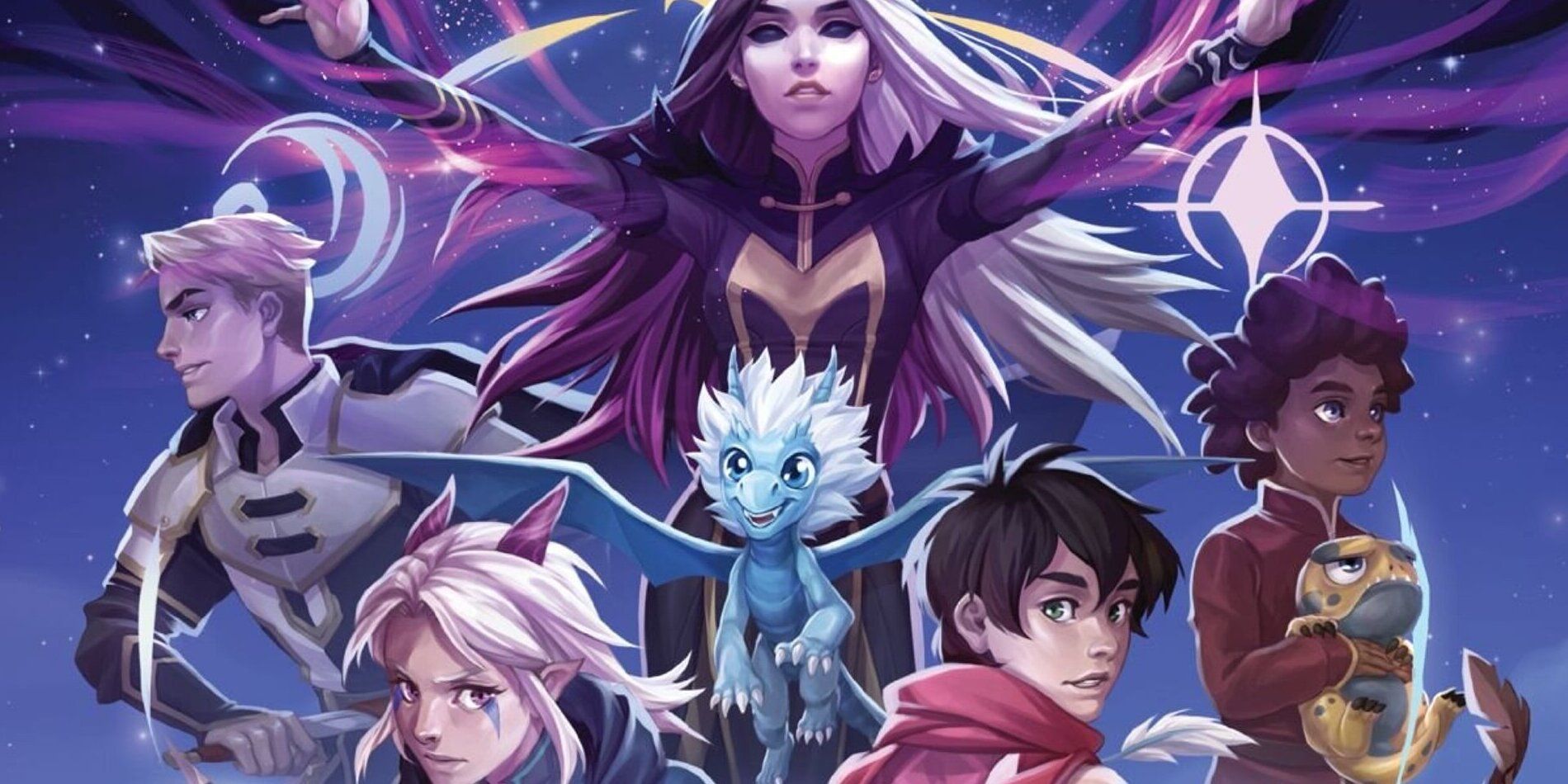
As The Dragon Prince fans wait eagerly for the hit animated series fourth season to premiere on Netflix, the tabletop RPG The Dragon Prince: Tales of Xadia will help tide them over in the interim with its deep dive into the colorful fantasy world. Working closely with the animated series’ production company and creators at Wonderstorm, the team at Fandom Tabletop have crafted a game using Fandom’s Cortex system while offering a healthy amount of customization that allows players to tailor their vision for Xadia and its characters as they see fit.
Tales of Xadia has a surprising depth and complexity to thrill more seasoned tabletop players, but its customization makes it accessible to newcomers too. The game comes with a set of pre-written player characters to facilitate those looking to jump right into the action led by a Game Master, dubbed “the Narrator.” This places the emphasis on interactive storytelling rather than a one-and-done Dungeons & Dragons-esque campaign in a way that heavily informs the gameplay experience.
In Tales of Xadia, each player character has their own value system and outlook on the world. This affects how they approach a given situation, though they are given room to grow and change from these scenarios and, on some level, are expected to. Characters that fail skill checks are given stress factors that hinder future performance, though these can be channeled towards their benefit as a campaign progresses.
This all made possible through the Cortex system, a gameplay engine featured in different variations across Fandom’s growing list of tabletop titles. This provides the game with an accompanying digital tool, complete with character profile cards and a full dice tray, with the later feature especially invaluable given the sheer variety of dice needed per player decision. This all seems a bit complex at first glance, but the easy-to-navigate modules and menus helps make this a relatively smooth gameplay experience.
In addition to its 12 starting player characters, Tales of Xadia comes with two pre-made quest campaigns available digitally, with a third provided by the game’s guidebook. These provide players with plenty of narrative material to pit their characters on epic adventures. The guidebook provides all the information and templates players need to create their own adventures and characters, and it’s easy enough for any prospective narrator to follow. The book also comes with its own tutorial prompts, making the digital tools all the more intuitive after a bit of practice.
Fandom’s tight working relationship with Wonderstorm makes Tales of Xadia feel like an authentic extension of The Dragon Prince‘s expansive world. Narrative lead Dan Telfer and creative director Cam Banks have introduced a dozen diverse characters that feel like they could naturally rub shoulders with established Dragon Prince characters like Callum and Rayla while the game takes full advantage of the setting. It’s evident that Tales of Xadia is a love letter to the animated series and its own fully-formed game and not a cheap cash-in with the Dragon Prince license.
For tabletop players looking for a faster, action-oriented Dragon Prince game, last year’s miniature game Battlecharged should more than satisfy. By comparison, Tales of Xadia offers a deeper, story-driven experience that expands the fantasy world, with customization options that can make the game as complex or accessible as the players might prefer. Not quite as intimidating as it may appear on the surface, Tales of Xadia offers a rich exploration of The Dragon Prince and the story and characters that allow fans to carve their own path in the animated series’ world.
Developed by Fandom Tabletop, in association with Wonderstorm, The Dragon Prince: Tales of Xadia is available now. A review copy was provided by the publisher.
About The Author
