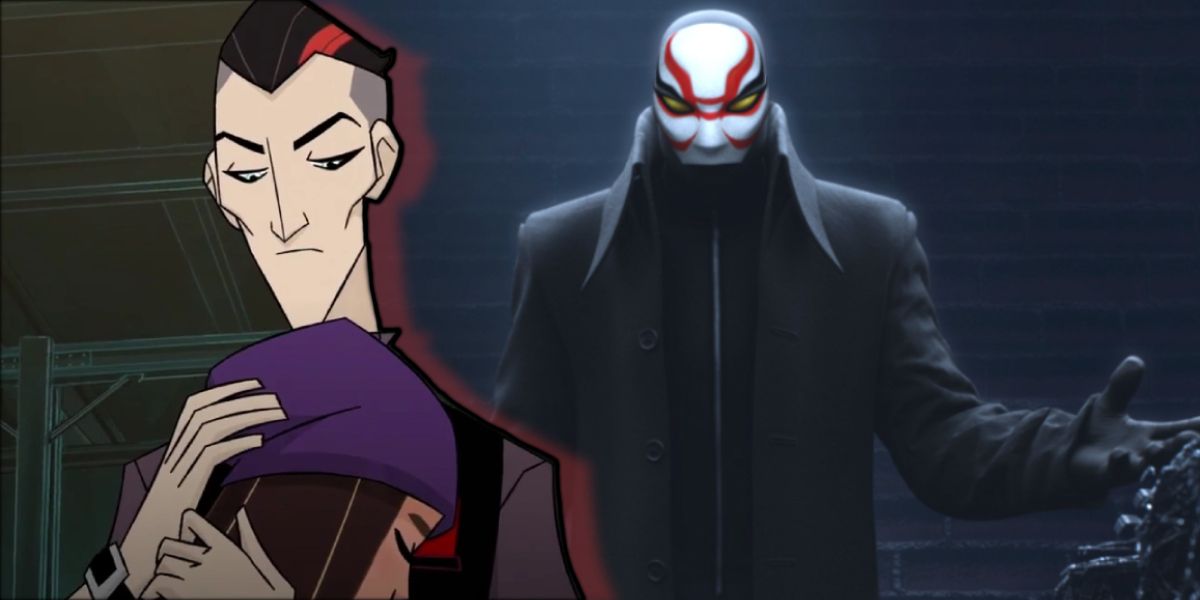
Nearly a decade on from its initial release, Disney’s Big Hero 6 remains one of the best and most heartwarming superhero films in recent memory. Based on the Marvel Comics team of the same name created by the Man of Action collective, the film turned a group of incredibly obscure superheroes into box office stars, earning critical acclaim in the process.
However, if there’s one criticism fans and critics had for Big Hero 6 when it first hit theaters back in 2014, it was its main villain: Robert Callaghan (James Cromwell), aka Yokai. Callaghan is rather reminiscent of some of the more lackluster Marvel Cinematic Universe villains like Ronan the Accuser, which is to say that he isn’t outright bad — just not especially strong or memorable.
Callaghan does have a few things going for him, namely the fact that he’s a sympathetic villain with a believable motivation. But for as creative as Big Hero 6 is as a whole, Callaghan’s evil plan is pretty vague and generic. Furthermore, audiences didn’t think his hard pivot from mild-mannered mentor figure to ruthless villain felt totally earned. Callaghan also isn’t much of a personality, as he spends much of the film hiding behind a mask as the silent antagonist Yokai.
If anything, it speaks to how good the film is when one of its biggest problems is that the main villain is “just okay.” Still, there was room for improvement — and Big Hero 6 definitely upped its villain game when it made the jump to the small screen.
Big Hero 6: The Series premiered in 2017, running on Disney Channel and Disney XD for a total of three seasons through 2021. The show followed the continued heroic exploits of Baymax (Scott Adsit), Hiro (Ryan Potter), Fred (Brooks Wheelan, taking over for T.J. Miller), Go Go (Jamie Chung), Wasabi (Khary Payton, taking over for Damon Wayans Jr.) and Honey Lemon (Genesis Rodriguez) — because as it turns out, Callaghan was far from the only baddie looking to wreak havoc on the city of San Fransokyo.
Big Hero 6’s Obake Was the Perfect Big Bad
The villainous Obake (Andrew Scott) served as the main antagonist of Big Hero 6: The Series Season 1. Right out of the gate, he was a major improvement over Callaghan, proving that the franchise could make a villain interesting while also keeping their identity and motivations under wraps. Rather than staying quiet before being unmasked by the heroes, Obake got to develop his personality while more information regarding his history and motivations was slowly revealed over the course of Season 1. It just goes to show that, when done right, television has a major storytelling advantage over movies in that it can take its time.
A tech genius with a scary amount of influence over San Fransokyo, Obake somewhat resembles a family-friendly version of Vincent D’Onofrio’s Kingpin from Marvel’s Daredevil. He pulls the strings from the shadows and, for a good chunk of the season, our heroes are none the wiser to the fact that he even exists. Meanwhile, Obake learns everything he needs to know about Big Hero 6, including their secret identities.
That said, the most interesting thing about Obake is his dynamic with main protagonist, Hiro Hamada. Obake doesn’t want to defeat or destroy Hiro; he wants to win him over to his side. It brings to mind Robin and Slade’s dynamic from the Teen Titans animated series, though it’s actually a bit more nuanced than that.
The “We’re not so different, you and I” trope has been done to death, especially in superhero media. But what sets Obake apart is that while he uses some despicable tactics, it’s not just a mind game for him. He genuinely views Hiro as a kindred spirit and, despite his compromised state of mind, isn’t entirely wrong in that observation. It’s fitting, then, that Obake’s ultimate undoing is as poetic as it is tragic.
Big Hero 6’s Liv Amara Was a Worthy Successor
One of Big Hero 6: The Series‘ biggest strengths was its ability to plant seeds for the future. For instance, amid the Obake arc in Season 1, the show introduced Liv Amara (Mara Wilson), who seemed to be relatively harmless at first, but went on to become the main antagonist of the first half of Season 2.
In fact, what makes Liv such a strong villain is that, to the untrained eye, she doesn’t seem like a villain at all. When monsters start popping up around San Fransokyo, Hiro correctly deduces that Liv is responsible. However, because she’s such a well-known and well-liked member of the scientific community, she’s able to pull the wool over the public’s eyes, even making herself look like a hero in the process.
What’s more, without spoiling too much, when the show finally reveals Liv’s goals, motivations and true identity, it’s a legitimately surprising twist that puts a unique spin on Mr. Freeze’s arc from Batman. In the end, she doesn’t quite reach Obake’s level, on account of the fact that she only got half a season as the big bad, whereas he got a full season. But even still, Liv wonderfully fell into the role of main antagonist and proved that Big Hero 6: The Series wasn’t done introducing great villains.
About The Author
