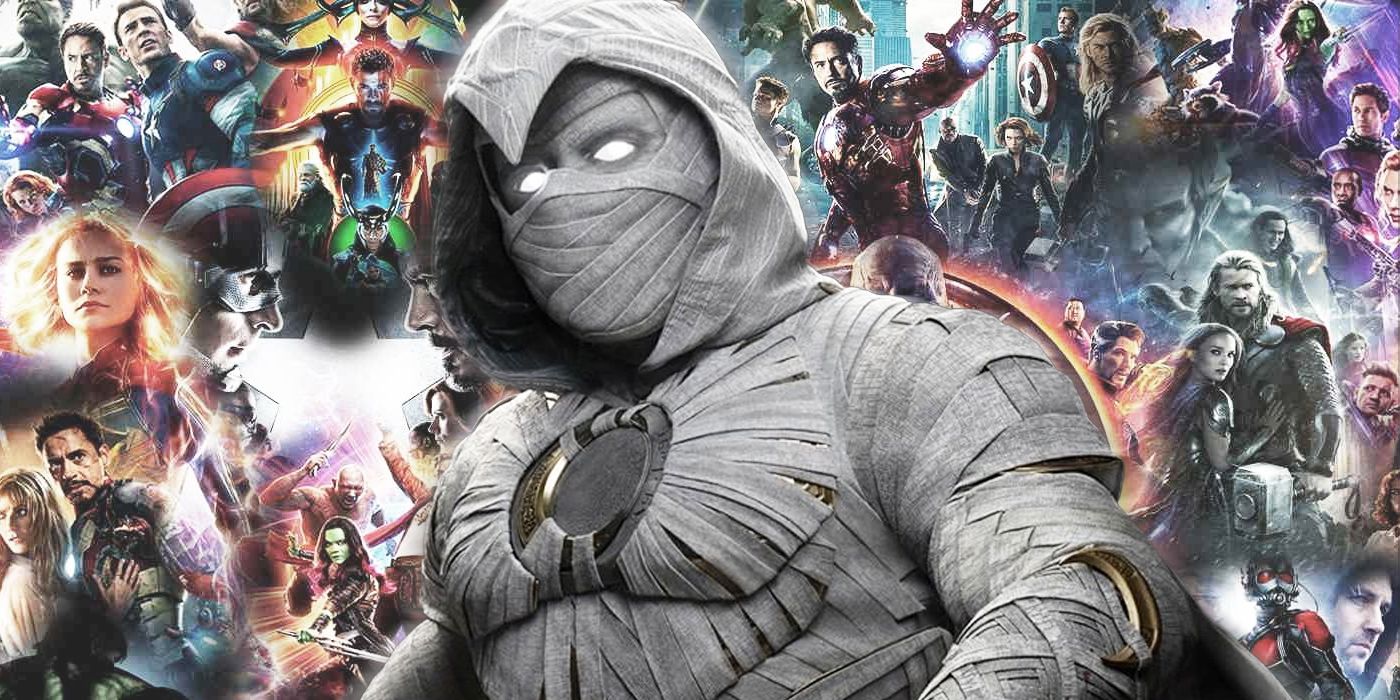
WARNING: The following contains spoilers for Moon Knight Episode 1, “The Goldfish Problem,” now streaming on Disney+.
Marvel Cinematic Universe fans may have seen it coming when Disney announced that the adult-oriented “Netflix MCU” series would be available on its Disney+ streaming service. It was a major shift in branding – bringing grown-up violence, sexuality and dark psychology to the squeaky-clean confines of Mickey Mouse – and it seems to have anticipated what was to come. With the premiere of Moon Knight finally here, it’s apparent why they made the move. Not only does the new miniseries embrace the same shadowy side of the MCU as those earlier series, but it’s similarly coy about its connection to the universe to which it belongs.
That’s unusual in part because the MCU has never been shy about using Easter eggs. Indeed, the franchise relies heavily on them not only as a way of referencing different projects, but in order to make its universe more organic and believable. The tradition goes back to the comics, when crossovers were easy and often desirable. Moon Knight, on the other hand, was very cautious about drawing those connections, at least during its premiere. There are some very good reasons for doing so, both in-universe and out.
Season 1, Episode 1, “The Goldfish Problem” endeavors to stay as self-contained as possible. That means characters, settings and situations that haven’t appeared in previous MCU projects before, along with a world that looks as much like the real one as possible. That was the norm 15-20 years ago, before the first Avengers movie and the concept of a shared universe became the overriding norm. Moon Knight accomplishes a great deal simply by emulating “one-shot” superhero stories that don’t belong to any larger continuity.
It’s notable in the absences more than the specifics, for obvious reasons. Protagonist Steven Grant lives and works in a London that bears no signs of the Blip, with no mention of other heroes in the papers or on the news. That’s to be expected, but it extends further. Moments arrive that cry out for an easy Easter egg, only for Moon Knight to skip the easy lay-up and focus on the story.
The European village where Harrow runs his cult, for instance, could easily have been placed in the former MCU nation of Sokovia. It would take only a line or two of dialogue to establish the place geographically in the minds of Marvel fans and give everyone a little smile in the process. Instead, it leaves the precise location a mystery: something earlier projects likely would never have done.
Similarly, Grant or any of the figures around him could have made quick reference to any of the MCU’s heroes the moment he began exhibiting extraordinary abilities. “The Goldfish Problem’s” central action sequence – and its unique gimmick – are a perfect example. Grant wakes up in that village surrounded by Arthur Harrow’s cult, who have an unspecified ill intent towards him. He experiences periodic blackouts during the incident, only to wake up with his unconscious foes in a pile around him and signs of an epic conflict that he has no memory of. Dropping a name like the Hulk or Captain America in that instant would have felt easy and natural amid Grant’s attempts to piece together what happened. Again, the episode deliberately declined to follow up.
And that’s actually very much to Moon Knight’s benefit. The character lacks the ready accessibility of previous Disney+ series protagonists, and can’t automatically draw on the cache of fan good will that, say, Sam Wilson or Clint Barton could. By keeping it all separate, it allows this corner of the MCU to find its own voice without being shouldered by any other expectations. Considering its dark content and apparent intent to embrace the franchise’s more horrific elements, space to find itself may be invaluable.
It’s also in keeping with the Netflix Marvel series, which similarly minimized their connections to the rest of the MCU (though they certainly weren’t shy about crossing over with each other). Moon Knight always had more in common with the likes of Daredevil and Luke Cage than the Avengers, which presents a thorny issue for Disney. They need to respond to fans’ desires for more adult-oriented characters in the same universe as family friendly ones like The Avengers. Thankfully, it’s not an issue they necessarily need to solve overnight. By letting Moon Knight find its own tone before intermingling it with the rest of the franchise, it will hopefully liberate the show from both unnecessary expectations and undue distractions.
New episodes of Moon Knight air every Wednesday on Disney+.
About The Author
