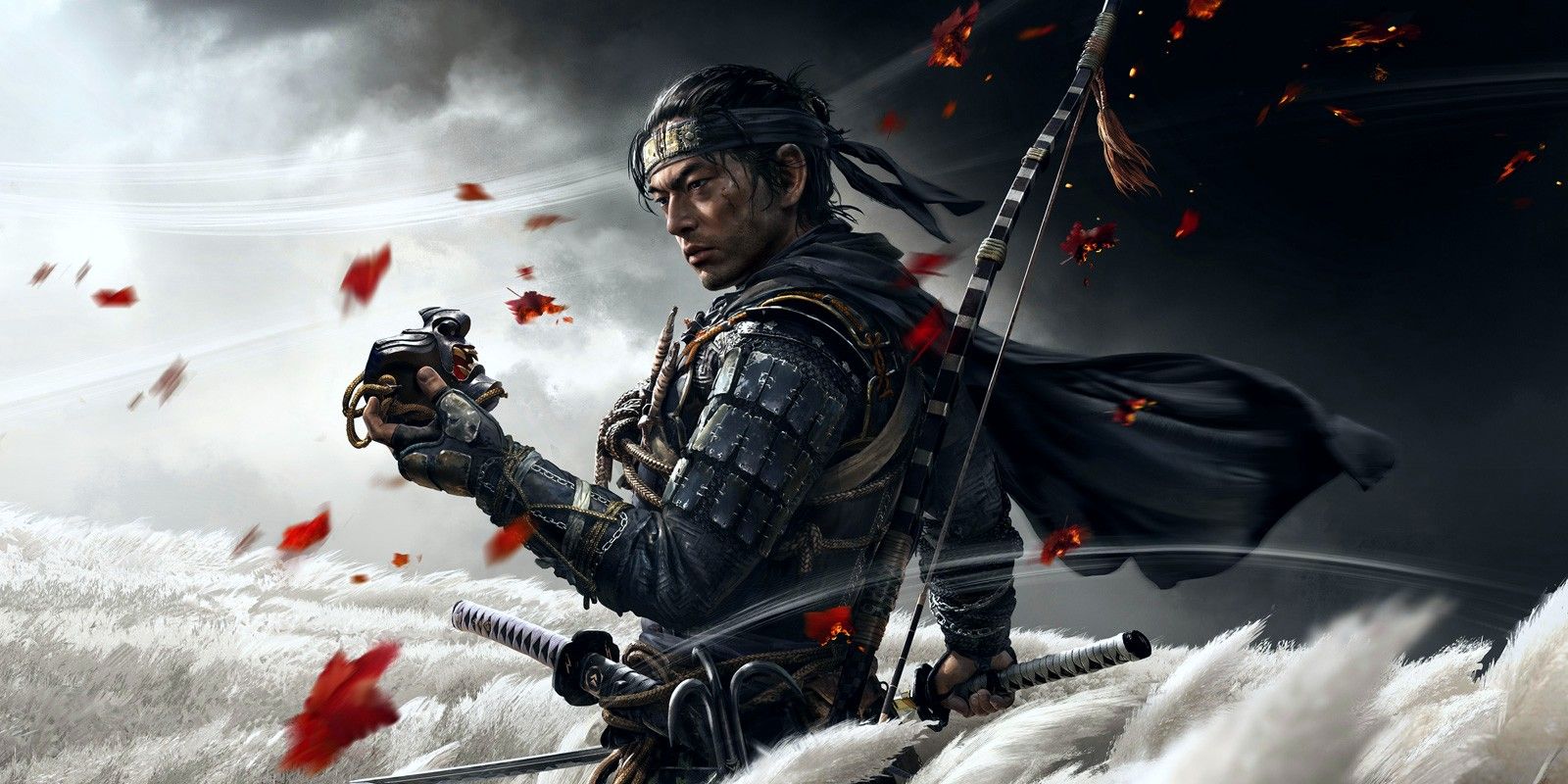
Ghost of Tsushima was (despite having no connection to Ubisoft’s franchise) the Assassin’s Creed game many had been crying out for. Set on the Japanese island of Tsushima during the 13th century Mongol Invasion, the open-world title followed the adventures of Jin Sakai, a dedicated samurai fighting to defend his besieged homeland. The longer Jin fights, however, the more he comes to realize that the sacred honor codes of his beloved order are rendering the war unwinnable, driving a wedge between Jin and his traditionalist uncle as the former seeks more clandestine tactics to defeat the foreign invaders.
Ghost of Tsushima‘s story is one of its strengths, with the central tension coming from within Jin as he navigates between the way of the ghost and the way of the samurai. This struggle grounded the narrative and gave it genuine substance. The game’s dense characterization, coupled with the phenomenal vistas of Tsushima and some of the best combat mechanics around made Sucker Punch’s 2020 release a Game of the Year contender. With a sequel reportedly in development and a film in the works, Ghost of Tsushima 2 has the potential to be a genuinely phenomenal follow-up if it makes the right moves.
Break the AAA Mold
At this point, there can’t be many triple AAA players who aren’t growing slightly tired of the typical open-world formula that has become so prevalent over the last decade. Far Cry, Assassin’s Creed, Watch Dogs, Horizon Zero Dawn, and even The Legend of Zelda and Pokémon are following the same basic template. All take place in an explorable open world, many have stealth elements, and almost all have some form of crafting, collectibles, and fast traveling.
While there’s nothing inherently wrong with the format, Ghost of Tsushima‘s main problem was tying itself too tightly to it. Side missions only ever involved either finding an item or killing some generic enemies (often at the same time), while the essential AAA open-world template of most modern Ubisoft titles seemed to have been lifted and used directly by Sucker Punch, safe in the knowledge that it was a dependable fit. If the Ghost franchise is to forge its own identity, it has to do something to deviate from a blueprint that is becoming increasingly tired and frustratingly generic.
Don’t Lose Sight Of The Narrative
The story of Jin Sakai’s internal struggle between the traditional values of his ancestral home and his emergent realization that he will have to break with said values to defeat the fearsome Mongol invasion is one of the major reasons for the game’s undeniable success. Video games are increasingly treating their stories with the care and attention once reserved for other media, and the maturity and emotional resonance of the Ghost‘s climactic finale is one of the finest in recent memory.
The danger is that a sequel could undermine the story it so carefully crafted in the first game if it fails to pay any attention to narrative whatsoever in favor of flashy visuals and gimmicky mechanics. If the next Ghost of Tsushima continues Jin’s engrossing journey from honor-bound warrior to morally ambiguous savior of Japan, it must maintain the themes and conflicts that made its predecessor such an emotionally resonant piece of work.
Tweak the Combat, But Don’t Ruin It
Ghost of Tsushima‘s combat is a triumph, feeling meaty, varied and exceptionally well-balanced. The use of different stances may become a little arbitrary over time, in the sense that each stance is designed to be effective against a very rigid set of enemy classes, but it’s a welcome touch of variety and authenticity that many other games fail to capture. Combat feels cinematic, dense, and tactile, a blessed relief from lesser games’ systems, whose bloated, chunky mechanics often feel weightless, primitive or downright dull.
Sucker Punch needs to recognize that Ghost‘s combat is one of its primary strengths and treat it with immense care. Not changing things at all would smack of complacency, but there’s always the danger of going down a less satisfying road and ruining all the original’s great work. The developers need to fix the combat’s primary issues (namely that its target lock-on system feels rudimentary and clunky and the camera can go haywire and take up unwanted or unhelpful positions) while being careful not to tamper with the game’s heart and soul.
Make Sure Tsushima Is Adequately Populated
One of the main criticisms leveled at Ghost of Tsushima was the sparseness of its open world. Visually, Tsushima is stunning, unquestionably one of the most strikingly gorgeous games of its era. The island’s lofty, snow-capped mountains, vast fields of vegetation, and densely-packed forests, all encircled by an endless shining sea, are counterpointed by charming villages, verdant groves, and sunlit orchards, pulling off the illusion of grandeur superbly whilst never sacrificing any of the game’s intimacy or sense of place.
The main issue with the island, however, is that there isn’t a great deal in it. A lack of decent side-quests and activities aside, Tsushima can feel empty of people or of life, and while the land undulates almost as though living and breathing in and of itself, it could certainly benefit from a few more settlements, enemies, and people to interact with.
Give Players More to Do Beyond The Story
Ghost of Tsushima‘s story is one of its trump cards, a heart-rending tale of tradition, loss, and internal strife all played out via the medium of an epic fight for a culture’s very survival. When the game’s narrative is in full swing, it’s as engaging and emotionally resonant as the finest stories games currently have to offer.
The game’s problem, however, is that while the island may be breathtaking, there is little else to do outside of the games’ main story. For an open-world game, that’s a real shame, because so much of the incentive to explore this incredible scenery should be in the pursuit of things to do, incentivizing players to dig deeper into such a stunning world. Sucker Punch’s sequel needs to add some substance to Tsushima’s considerable style, and give players something else to do when they’re not pursuing the game’s central narrative.
About The Author
