As entertaining as shows about food culture can be, it can be hard to accept most of them as anything other than light entertainment. Cooking competition shows that feature working-class chefs and cooks fighting for a cash prize, like Chopped and Top Chef, can feel like exploitative contests in an insular world. Travelogue shows starring celebrity chefs, even Anthony Bourdain’s work which broke the mold in so many ways, can often feel like the equivalent of privileged people sharing photos on Instagram.
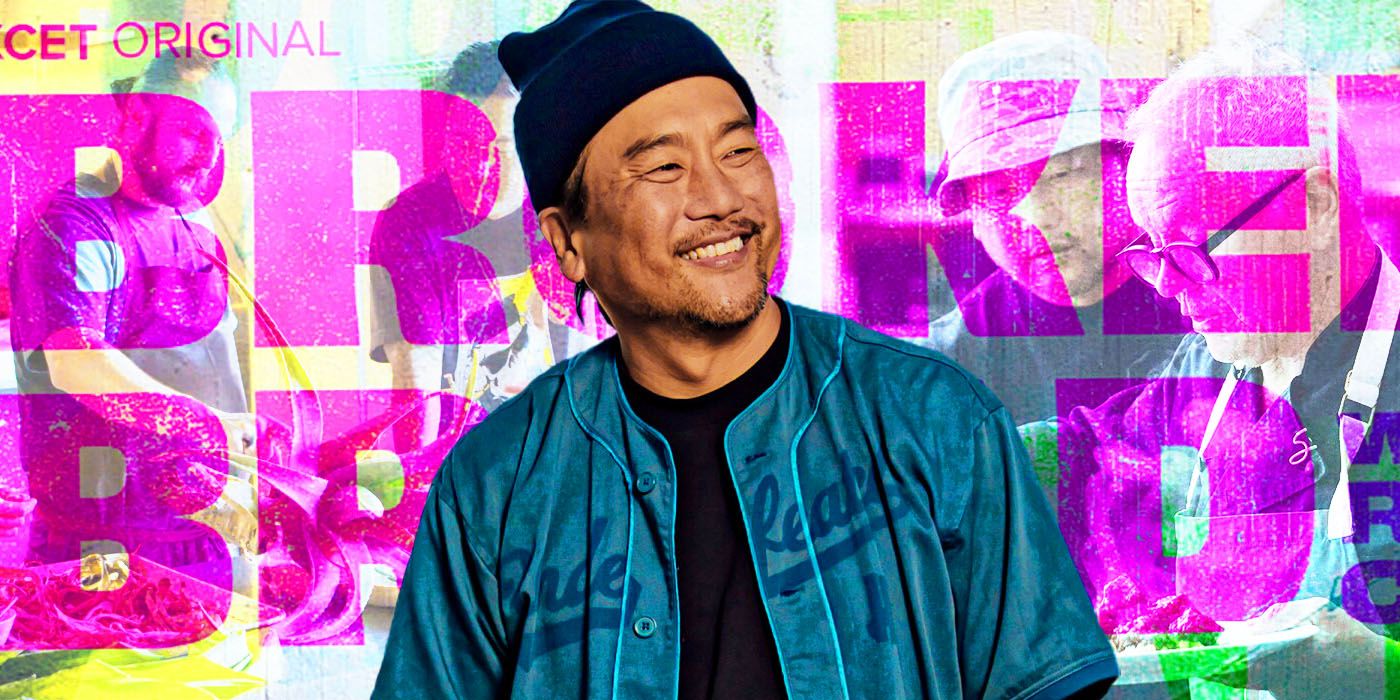
Chef Roy Choi’s Broken Bread is different. The documentary series’ mission statement is to celebrate “the people making big changes when it comes to what we eat and where we gather.” The series focuses on the kind of people and businesses that food, cooking shows and pop culture in general ignore, which makes it a breath of fresh air. This focus makes it one of the most important shows in a TV and streaming landscape full of quality documentaries.
In Broken Bread’s intro, Chef Choi introduces himself as a “street person” turned street cook. He’s best known in the food industry for being one of the leaders of the gourmet food truck movement. Choi trained The Mandalorian director Jon Favreau for his role as a chef turned food truck operator in 2014’s foodie movie classic Chef. That led to the pair hosting the Netflix series The Chef Show, where they cooked alongside celebrities like Favreau’s castmate from his Iron Man days Gwyneth Paltrow and Mandalorian star Bill Burr.
Broken Bread is clearly a personal project for Chef Choi. The show’s intro lays out Choi’s vision of food as a unifying force. In the opening moments of the first episode, set in Choi’s hometown of Los Angeles, he also introduces the idea that food can be a catalyst for change for people society has given up on. He illustrates that by visiting businesses like Homeboy Industries, a bakery that Choi admits “goes against any business plan someone would write.”
Homeboy Industries employs formerly incarcerated gang members with no experience. Founded by Father Gregory Boyle in 1988, Homeboy Industries has grown into the self-described “largest gang intervention, rehabilitation and re-entry program in the world.” Choi sits down with Boyle and learns about Homeboy’s origins. Boyle tells him that the reaction to Homeboy evolved from initial hostility, including bomb threats, to acceptance that being “tough on crime” could be replaced by genuine attempts at rehabilitation.
Interviews with Homeboy’s employees show how its program changes their lives. One unidentified employee talked about how Homeboy taught him to be a better man and smiled about how happy his son is when he bakes cookies at home. Another said that she plans to go back to school and eventually become a firefighter. Father Boyd describes Homeboy as being a place about “inclusion, non-violence, unconditional loving-kindness and compassionate acceptance,” which he considered antithetical to the time’s political climate. (The first episode aired on May 15, 2019.)
Choi shows food’s connective power when he sits down with L.A. Mayor Eric Garcetti at iconic local restaurant Philippe’s French Dip. Choi describes it as a place where “people from all walks of life sit across from each other and break bread.” Choi and Garcetti talk about the need for activists and the city government to work together in solving the problems that make L.A. an “imperfect paradise,” as Garcetti puts it. That includes homelessness, no longer an “invisible” problem now that tents are more affordable, and hunger.
As uplifting as Broken Bread can be, Choi doesn’t shy away from the harsh realities the people he features in the show face. Mar Diego is the owner of Dough Girl, a pizza shop that employs at-risk youth. Diego didn’t come to the food industry from culinary school or even a restaurant gig. While incarcerated, she was assigned to work in a prison kitchen. After establishing herself in the food industry, Diego opened Dough Girl to give the youth of the San Fernando Valley an alternative to processed food and a place to belong. It’s an inspiring story, but Choi doesn’t shy away from showing the complications that come with it, including Diego talking to a potentially suicidal employee after they had a breakdown during a shift.
By shining a light on people using food to help the marginalized in a society with precious few safety nets, Broken Bread is doing important work. While it’s produced by PBS and airs on Southern California’s KCET, it can be viewed via other means. KCET’s website hosts the first two seasons. It’s also available for streaming on PBS’ streaming app and foodie streaming service Tastemade. The first season is also available on Peacock, offering WWE and JOE VS. CAROLE fans a nice change of pace on NBC’s streaming service. It’s worth a watch for anyone, especially those looking for more social consciousness in their foodie television.
About The Author