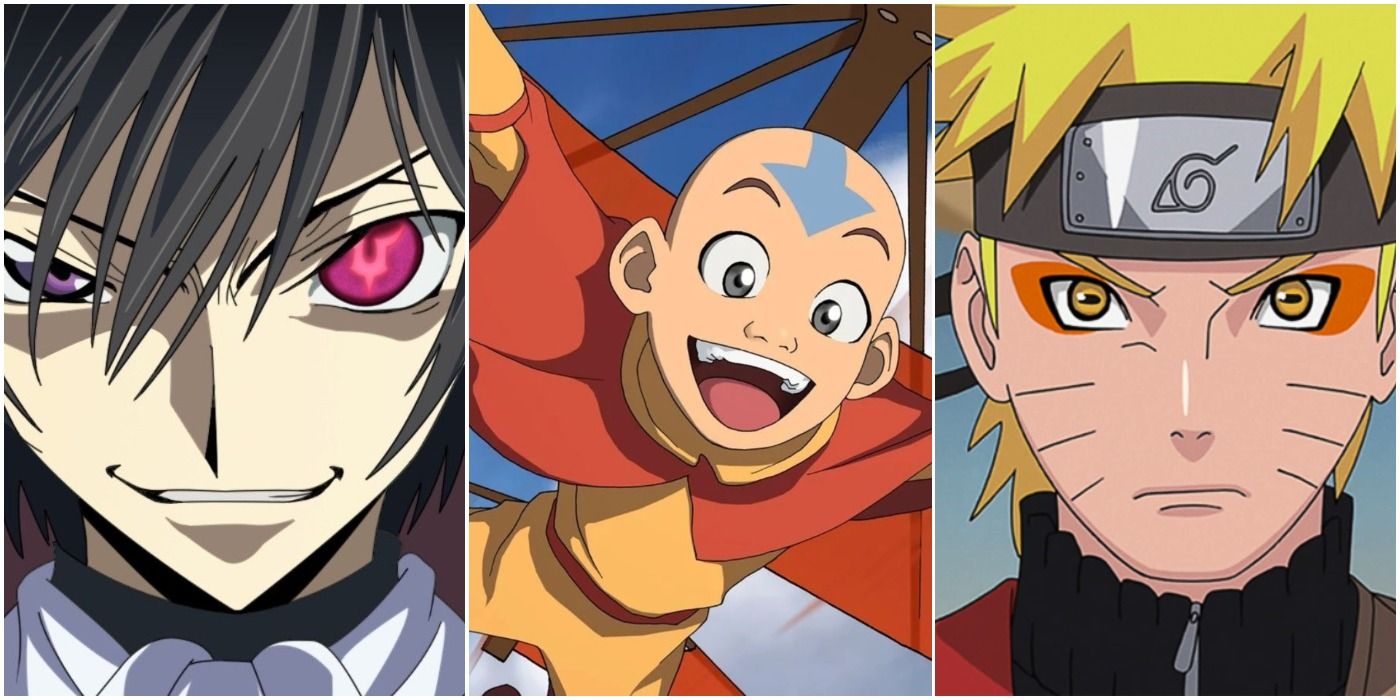
It is no secret that sequels are notorious for spoiling plots, characters, and franchises by making drastic changes that do not necessarily make sense. There can be huge shifts in tone without precedent; there can be characters whose new designs or characterizations make no sense compared to their previously established traits.
Sometimes, heroes are “nerfed,” with powers downgrades that do not align with previous installments. The history of anime characters who have been ruined by subsequent installments is lengthy and disappointing.
9 Shino Aburame Is More Ridiculous In Boruto
Shino Aburame was a character whose design in Boruto starkly contrasted his design in the original Naruto series. He started as a quiet character who, despite sometimes stoically delivering humorous lines, maintained a serious overall demeanor. He was not extroverted, and he largely kept to the shadows in Naruto.
However, by Boruto, Aburame is a goofy, stuffed-animal-toy-loving teacher, something no one would have ever predicted for him when he was first introduced in the previous series. On top of that, Aburame’s quiet strength was replaced by zany eccentricity that went against his entire original build.
8 Naruto Was Nerfed In Boruto
Boruto did not do justice to the familiar Naruto Uzumaki that fans knew and loved. Firstly, his appearance was much less cool than that of his original design or his father’s design, which is something that can be said for a lot of the return characters in Boruto. However, he was also nerfed in terms of his powers and abilities throughout the show.
While it makes sense that Naruto was supposed to take a step back from the plot to give the new generation their time to shine and that Naruto was so strong that most villains were inconsequential without him being nerfed, there were plenty of other ways to address the situation. Ultimately, his character was marred by the changes.
7 Jotaro Kujo Was Weakened In Diamond Is Unbreakable
In Stardust Crusaders, the third installment of Jojo’s Bizarre Adventure, Jotaro Kujo was virtually unstoppable. He was always one step ahead in his strategy, and Star Platinum, his Stand, felt nearly invincible with its speed and power. So, when the events of Diamond is Unbreakable, the fourth installment, came around, it was disappointing to see Jotaro rendered quite useless.
Not only did Jotaro not stop Red Hot Chili Pepper, but he was also almost killed by a couple of rats. Josuke Higashikata, the protagonist of Diamond is Unbreakable, not only had to save Jotaro but also heal him from his missteps.
6 Jojo’s Bizarre Adventure’s Joseph Joestar Is Less Impressive As The Series Goes On
Jojo’s Bizarre Adventure squandered the use of Joseph Joestar. While his aging played a significant part in his diminished strength throughout the multiple series, Joestar was cheated out of a good Stand. Fans were first introduced to Joseph Joestar in the second part of JJBA, Battle Tendency, where he was a Hamon-using super fighter and genius.
However, when the show switches power systems in the Stardust Crusaders and moves to Stands instead of Hamon, Joestar is given one of the weakest Stands in the history of the series. Joestar does not even really use Hamon again, either, despite having both Hamon and a Stand.
5 Avatar Aang Looked Kind Of Bad Through The Lens Of The Legend Of Korra
Avatar Aang was notorious for being selfish, irresponsible, and too carefree in the original Avatar: The Last Airbender series, but those were traits he wrestled with and mostly grew to be able to mitigate. Aang ended the series a well-respected individual, achieving the great feat of stopping the 100 Years War while also remaining true to himself and his Air Nomad ways.
Unfortunately, Aang is given short shrift in the sequel series, The Legend of Korra. Aang has become a bad father or, at the very least, a negligent father who had too great of expectations. On top of that, Korra ends up having to deal with a lot of the political messes that Aang left behind.
4 Toph Looks Negligent In The Legend Of Korra
The Legend of Korra‘s version of Toph Beifong was a severe misstep in character treatment. Not only had she been reduced to an ornery woman who lived in the swamp, keeping to herself despite the world needing her, but she also did not treat her daughters particularly well. In fact, a huge character plot point for the Beifong daughters is that they struggled to forgive their mother for how hard she was on them.
They also struggled to live up to her expectations despite Lin following in her mother’s footsteps as a cop and Suyin building an entire city of metal benders.
3 Lelouch’s Ressurection In The Code Geass Sequel Was Too Much
Lelouch Lamperouge’s narrative arc had a great story, full of twists, turns, and mysteries. There was faction intrigue, dangerous games of political chess, and dynamic battles. So, when Lelouch died at the end of Code Geass, it was a poetic way to wrap up a series wherein the main character’s myth and legend as Zero was larger than his life as Lelouch.
That is why bringing Lelouch back in Code Geass Lelouch of the Re;surrection fell flat, and the sequel was not as remembered as the original. There was a purpose for what happened in the original series, and it felt like the sequel did a disservice to his original goal and ethos by bringing him back.
2 Shinji Ikari Gets Worse With Every Evangelion Installment
Shinji Ikari ruined his own character. At every turn, Shinji made a nuisance of himself by brooding, sexually harassing/assaulting characters like Asuka and Rei, and constantly whining instead of taking definitive action. However, as more and more sequels and adaptations were added to the Evangelion franchise, Shinji had more time to engage in bad behavior, making fans like him less and less.
Eventually, he proved his entire character irredeemable, ruined in the eyes of many fans. Shinji never really had a chance, but the successive adaptations hammered this fact in.
1 The New Cowboy Bebop Show Makes Spike Feel Less Cool
While the Cowboy Bebop live-action series is not a true sequel – in that it largely replayed the events of the former series with new twists – it is a spiritual sequel to the anime. Unfortunately, not all were pleased with the new adaptation, feeling that the live-action iteration ruined Spike’s cool factor. The Netflix version made a lot of unnecessary changes to his character.
Something about anime, especially its “cool guy” figures, makes the medium especially difficult to translate into live-action. For some fans, the adaptation was adequate or even good, but for other fans, it fell entirely flat.
About The Author