WARNING: The following contains spoilers for Umma, now in theaters.
Since 1973’s The Exorcist, many exorcism movies have followed the same trope. If someone’s under demonic attack or actually possessed, they all develop that same pale, veiny look. It’s become quite generic, with modern films showing no signs of differentiation, as seen with The Rite and others. This cosmetic change sets up the same growls, body contortion and superhuman monsters that the humans eventually become.
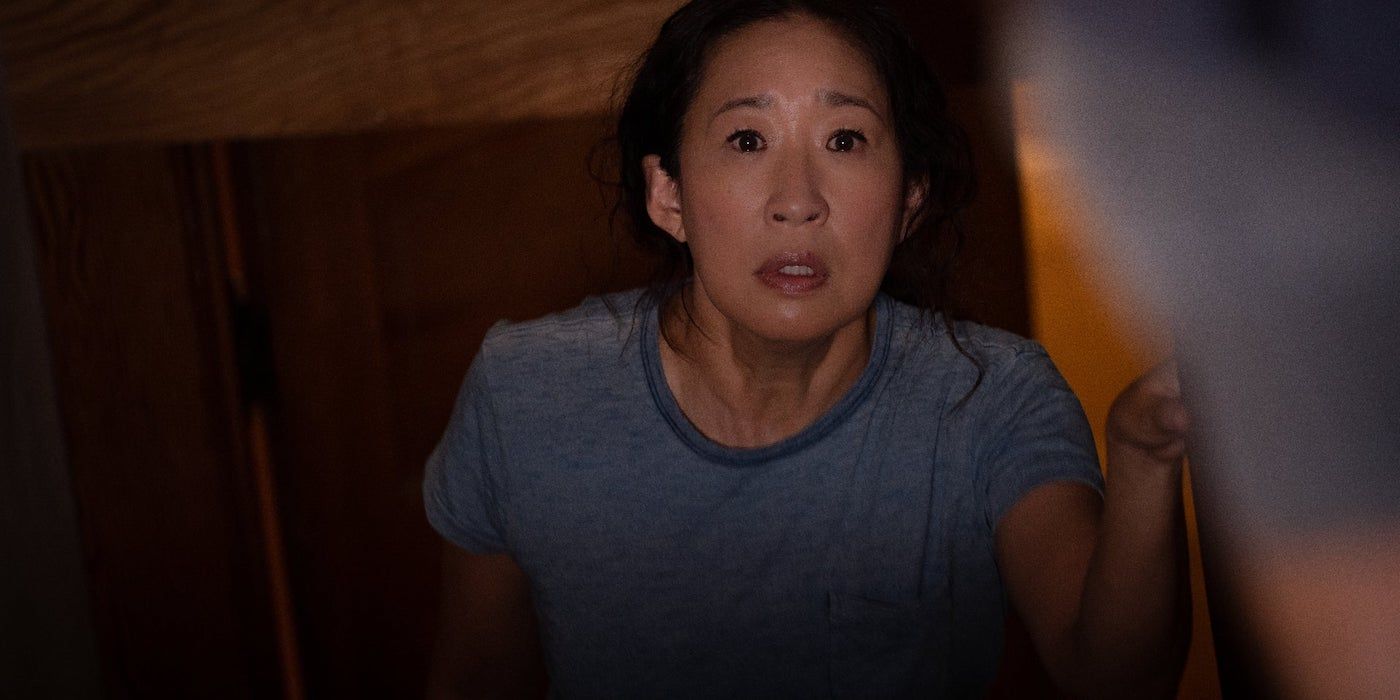
Thus, one might’ve expected Umma to follow this path when Sandra Oh’s Amanda slowly began to feel a darkness swelling in her. It occurred when her wicked mother’s ashes came from Korea to her American farm, dredging up bad memories the two shared due to Umma being abusive. Luckily, when Amanda eventually got possessed by her mom’s malevolent, roving spirit, the flick smartly sidestepped and improved the trope of how these vessels look and act. In the process, it made Umma more powerful in delivering its message.
Umma tortured Amanda, who eventually fled home and changed her identity from Soo-Hyun. Scrubbing her culture was the only way to forget her past with Umma and how living with one parent was the most traumatic experience in her life. However, seeing as Amanda grew to resent her own daughter, Chris, for wanting to leave her to go to college, Umma got an opening. When Amanda tried to bury her ashes, she possessed her daughter, hoping to then take her rage out on Chris as well.
Umma didn’t transform Amanda, though, by deviating from her current form and creating something grotesque. Instead of props or heavy makeup to indicate Amanda was becoming Umma, it told the first part of her becoming a monster through her insults. She demeaned Chris wanting to leave the nest, poking fun at the girl’s introverted nature, which left viewers wondering if this was really Umma or Amanda’s words. It was a mix of both, ultimately, with this play on toxic honesty informing how the possession would manifest in the physical space.
As the corruption progressed, the VFX team majestically but subtly warped Amanda’s face in key shots to create a demonic Two-Face of sorts. They blended her and Umma’s face, so in the right shadow, Amanda looked distorted to indicate the monster within was in control. It was a clever choice, playing on their resemblance while blurring the lines of reality and the family’s generational trauma.
It also spoke to them being the same spiritually and showed that Amanda had no clue she was becoming the very picture of harmful perfectionism she hated. She couldn’t even recognize her skin drooping or becoming more wrinkled in the dark because she’d look normal again in the light, which created a more psychological conflict.
This had viewers scouring to see when Amanda’s face wilted of ‘old age,’ whether she was in her apiary, at home in the tub, or having a beer with her friend, Danny, under lamp-light. It shaped a distracting but thoroughly-engrossing supernatural hunt to spot the mark. It really messed with Umma‘s theme of abuse and abandoning one’s identity, reminding Amanda that no matter how much she hated Umma, she couldn’t escape the need to control that her mother passed down. Ultimately, this crafted a more profound take on what Amanda needed to escape: not just her mom but her own unhealthy brand of parenting.
See how Amanda’s possession is unique in Umma, now in theaters.
About The Author
