If there were any questions about Charlie Cox’s popularity as Daredevil, his cameo in Spider-Man: No Way Home answered them. His gritty Netflix series launched a wave of mature-themed street-level Marvel Cinematic Universe shows that proved an instant and enduring hit. They were dropped, for a number of reasons having comparatively little to do with their respective qualities, but fan enthusiasm was enough to induce Disney+ to add mature content controls to its squeaky-clean content rating. Cox’s enduring – and rightful – popularity as Daredevil deserves a reasonable amount of the credit for that.
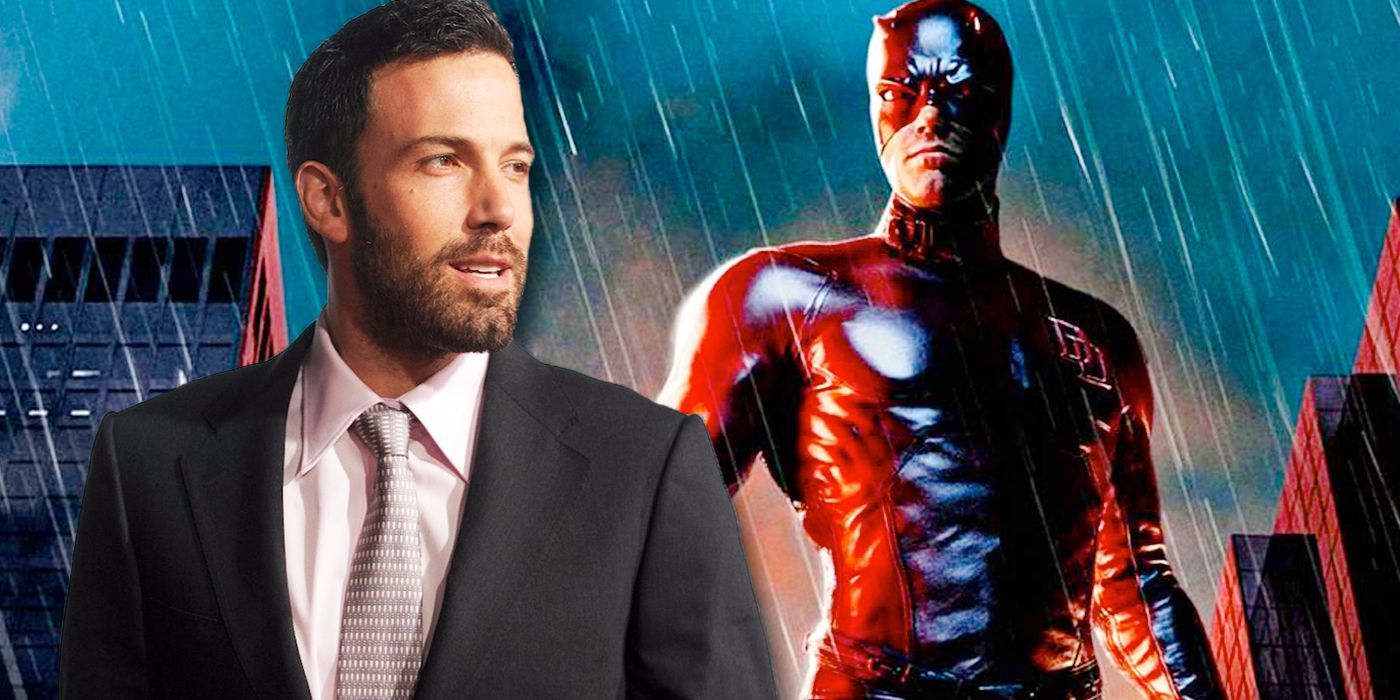
Amid the accolades and talk of a formal return to the MCU for Matt Murdock, it’s easy to forget that Cox wasn’t the first A-list attempt at the character. Ben Affleck starred in a big-budget 2003 film that was widely regarded as a failure at the time and has been neglected in the wake of Cox’s indisputably terrific version. In point of fact, the Affleck Daredevil is much better than its reputation suggests. With both the character and key figures like Colin Farrell in the spotlight again, it’s well worth another look.
Daredevil appeared during a very different era for superhero films. Sam Raimi’s Spider-Man had been released just one year earlier to ground-breaking box office figures, joining the X-Men who already had a burgeoning franchise of their own. Suddenly, Marvel properties were hot, especially with rival DC flagging in the wake of the disastrous Batman and Robin several years earlier. Daredevil appeared in front of the likes of the first Fantastic Four movies and Ang Lee’s Hulk, as studios sought to recreate Spider-Man’s box office magic.
It suffered at first blush in part because the character’s gritty take on superheroics was not in vogue. Blockbuster films of the era tended to seek out teen-friendly PG-13 ratings, diluting the content by default and blunting the very qualities that make Matt Murdock distinctive. An R-rated “director’s cut” eventually made its way to DVD, and is not only the stronger version, but makes an apt comparison of why some superheroes don’t benefit from a gentler treatment.
Tabloid gossip played a large role as well. Affleck was in the midst of a public and messy break-up with then-fiancé Jennifer Lopez. The two met in 2002 while filming the infamous Gigli. Affleck proposed, and a wedding date was publicly set for September 2003 – one month after the release of Gigli. It was called off with just a few days to go, and the couple announced their break-up in 2004. Affleck and Jennifer Garner – his co-star in Daredevil – announced that they were seeing each other shortly thereafter.
All of which created a lot of blowback for a movie that had comparatively little to do with any of it, and yet was inextricably bound up in the consequences. Daredevil was released in February 2003, at about the time when the public was growing tired of the Affleck-Lopez overexposure. The film’s tepid critical and financial response was compounded by the colossal failure of Gigli six months later, making it easy to lump the movie in with the whole mess. The tabloid love triangle at the heart of it has proven one of the most formidable and longest-lasting in Hollywood history, with Garner and Affleck ending a 10-year marriage in 2015 and Us magazine reporting on a resurgent relationship between Affleck and Lopez in March, 2022. Against that, Daredevil couldn’t help but falter.
It deserves much better, particularly the R-rated version. Director Mark Steven Johnson stuck close to the tone and spirit of the comics, particularly Frank Miller’s famous “Death of Elektra” storyline. Its version of Matt Murdock spits teeth out after his first onscreen fight before revealing a medicine cabinet stocked to the brim with prescription painkillers. He’s forced to sleep in a sensory deprivation chamber in order to “turn off” his abilities long enough to get some rest. The film’s arc develops serious questions about his purpose and sometimes-shaky morals, while using a strong cast to leave memorable impressions of such figures as Bullseye and the Kingpin. Its more colorful universe feels surprisingly close to the MCU in a number of ways, and what was dismissed at the time as an effort to cash in on a fad now looks a little ahead of its time.
When push comes to shove, the Cox version of the character is undoubtedly better. The freedom of a streaming service like Netflix made it easier to push harder content from the beginning, along with season-wide arcs that could better reflect Murdock’s psychological state than a big-budget effects-driven feature film. But Affleck’s turn as Batman has undergone serious revision among fans the last few years, with his tortured Bruce Wayne now cited as one of the high points of the DCEU. His Daredevil – and the movie surrounding him – both merit the same consideration.
About The Author
