Marvel’s slate of Disney+ shows have been met with broad critical acclaim and have proven that the appetite for Marvel Cinematic Universe content can thrive in the episodic landscape of home viewership. The framing of these series has always been incredibly ambitious as many have presented dynamic shifts that redefine iconic characters or chronicle their ascension toward a powerful destiny. Sam Wilson took on the mantle of Captain America after conversing about the plight of Black manhood with Isaiah Bradley, the forgotten and first Black sentinel of liberty and Wanda Maximoff became the Scarlet Witch. Rife with stunning reversals and monumental world building, the Disney+ series have changed the expectations of what can be accomplished in that format.
Loki and What If…? however changed the understanding of how the MCU works on a fundamental level. They not only served as gateways into the broader multiverse, they also created concrete concepts about how these parallel dimensions operate. One of these is the law of Absolute Points and the other is the construct of the Sacred Timeline. After analyzing what each of these precepts outline it leads to an understanding of Thanos’ role in grand scheme of existence and answers the question, was the Mad Titan inevitable after all?
What Is an Absolute Point in Time in the MCU?
Reddit user BlipMeBaby ushered in this debate a couple of weeks ago, and the conversation splintered into a lot of different places but they also provided a great place to start. “What If…Doctor Strange Lost His Heart Instead of His Hands?” is perhaps one of the most pivotal television episodes in MCU history. In this chapter of the animated anthology, Uatu the Watcher observed a reality where that variant of Doctor Strange had much deeper feelings for Christine Palmer than the version depicted in the film. Strange and Palmer are en route to an awards dinner in his honor for successfully performing a rare type of experimental brain surgery when their car is hit from behind by another vehicle, resulting in Palmer’s death. This becomes the impetus for Strange’s pursuit of the mystic arts as he seeks a way to bring her back from the grave. Two years after the defeat of Dormammu he is still haunted by her death and used the Time Stone to try and change the past.
In a montage reminiscent of the Final Destination franchise, no matter what Strange does the result is the same, Christine dies. The Ancient One appears after one of his countless attempts and relays to Strange that nothing can bring her back because her death is an Absolute Point in reality. She describes it as unmovable and unchangeable because it was what set Strange on his path to becoming the Sorcerer Supreme. Strange though must learn this for himself, erroneously thinking that a lack of power is all that is required to bridge the gap and consequently begins to consume powerful extra dimensional creatures using unholy rites to achieve his goal. Now known as Dark Strange or Strange Supreme, he is vastly more powerful than his MCU film counterpart. He successfully prevents Christine’s death, momentarily, but this causes his reality to crumble now that this essential building block to its metaphysical cohesion has been removed and leaving him as the sole survivor of his universe imprisoned in a pocket of mage wrought reality for eternity. This moment has several important implications.
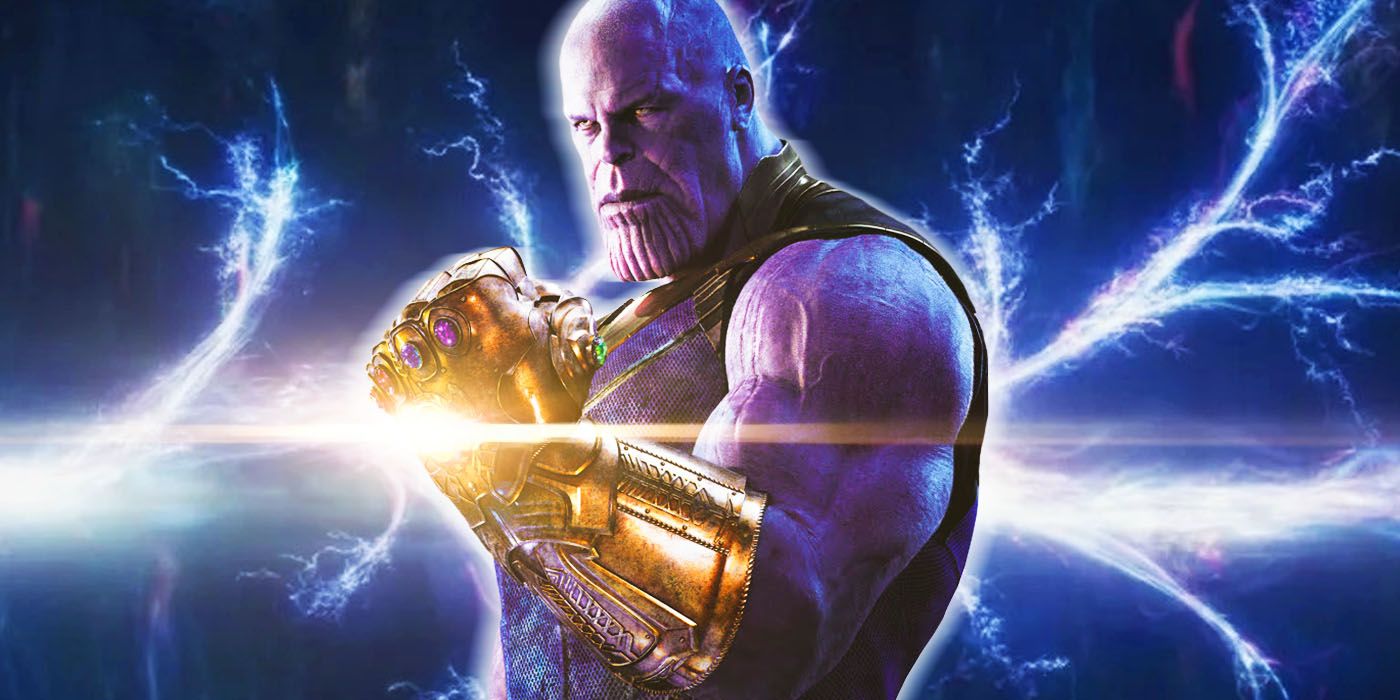
Firstly, it establishes a canonical multiversal constant. Given how profoundly the multiverse continues to play a role in this phase of the MCU, any flags planted as to how its mechanics are governed are seismic in their contribution to the lore going forward. Secondly, it establishes that in the timeline of Strange Supreme, his existence was absolutely necessary. Palmer in and of herself is not as important as the impact that she had on someone who truly was integral to that specific timeline and one could not exist without the other. Strange Supreme operates on a power level comparable to Thanos when imbued with the power of the Gauntlet, specifically in their ability to shape reality to their desires. This lends credence to the argument that beings on that scale may be necessary to the cosmic order, especially since it is in part the result of intelligent design.
What Is the Sacred Timeline?
Tony Stark figures out how to time travel over the course of a weekend, inspired by a quantum theory conversation with Scott Lang. This leads to the time heist that makes Avengers: Endgame possible, but also creates the Loki variant featured in the eponymous show. After grabbing the Tesseract and absconding with the Infinity Stone inside Loki becomes someone who should not exist, at least according to the Time Variance Authority or TVA. Its enforcers hunt him down and prune him from the timeline so that it doesn’t branch into its own separate reality. When Loki variant LL130 pleads his case that he is indeed the one true Loki and that any issue with time travel infractions should be taken up with the Avengers, the judge tells him bluntly that the Avenger’s temporal jaunt was sanctioned. The TVA, the audience later finds out, is tasked with trimming the timeline into a single reality, essentially caging the multiverse ultimately on behalf of He Who Remains.
When a pair of Lokis confront He Who Remains at his Citadel at the End of Time he offers them authority of the TVA as well as the Infinity Stones as payment for simply maintaining the status quo. His fear is that versions of himself have proven to be so deadly to the existence of all things everywhere that neutering them before they can ever become mature realities is preferable to even the possibility of his own variant. This establishes that not only is the reality of the MCU scripted, it is organized around a hierarchy of principles. He Who Remains doesn’t care about giving ultimate power to Loki because any “mischief” he might cause it is till constrained to one specific reality, the Sacred Timeline.
Was Thanos’ Snap an Absolute Point and, in Fact, Inevitable?
From a certain perspective Morgan Howard Stark is as essential to the Sacred Timeline as the Christine Palmer variant was to hers. As the daughter of Tony Stark and Pepper Pots, she was the only reason Tony wasn’t willing to try and change anything that had happened in the five-year span of the Blip. Since it was a non starter no one ever even argued the point and that may have been the point. When Doctor Strange scanned the more than 14 million possible outcomes of a confrontation with Thanos, there was only one in which they succeeded and even that was only after the Snap.
If one considers the futures that Strange observed as the first drafts of He Who Remains’ artistic vision then it becomes clear that this nexus event was not only intended, it was necessary to the Sacred Timeline’s primacy. One can interpret Strange’s augury in the same vein as the Palmer death sequence and that preventing the Snap wasn’t impossible because Thanos was too powerful, but because it was indeed inevitable.
About The Author
