Sometimes certain anime series seem like they can do no wrong. They start with an enticing premise, a great cast, strong visuals, and memorable dialogue. As each episode airs, more people tune in and hype generates. But toward the end, things start to go off the rails.
Anime like this are rare. Many series that show promise tend to deliver. It’s not every day when a show trips right before the finish line. Be it wild plot twists or the culmination of myriad minor issues, the final episodes of some shows halt the momentum and rouse disappointed groans from their fans.
10 Durarara!! Turns Out To Be Fangless
The last few episodes of Durarara!! focus on the Yellow Scarves, a gang created by middle schoolers. While this arc allows the show to explore Kida’s character, it does this at an expense. The show becomes much slower as it flashes between Kida’s past as the head of the Yellow Scarves and the present. Durarara!! tries to build up to the threat of a gang war but deflates once Anri uses her cursed sword to cause infighting within the Yellow Scarves.
The gang falls apart once confronted by all of the supernatural elements in the show, ending with the new leader, Horada, comically being chased down by both Celty and Shizuo. The final actions of the show are so anticlimactic that it feels more like the conclusion of a filler arc than the entire anime.
9 Kids On The Slope Rushes Its Conclusion
Acclaimed director Shinichirō Watanabe working with legendary composer Yoko Kanno for a jazz anime is the kind of dream scenario that sounds so good it must have a catch. Sadly, that catch is the dramatic climax of Kids on the Slope not being given the amount of room needed to really stick. Sentarou’s character is rushed at the end of the show.
He abruptly runs away from his home, his school, and his best friend Kaoru. Their reunion at the very end of Kids on the Slope is robbed of any real weight since it occurs after a time skip. The two characters play a medley of their favorite songs to reestablish their bond, but the fans are denied any real closure when it comes to the relationship.
8 Panty & Stocking With Garterbelt Teases A Phantom Sequel
Panty & Stocking with Garterbelt‘s comedy is lurid and irreverent, but nothing can prepare its audience for the downright mean-spirited ending. After defeating Corset and closing Hell’s Gate, Stocking randomly betrays the other main characters and reveals that she’s a demon.
The quest to rescue and revive Panty is then teased as the premise for the next season. The joke is that the show’s studio, Gainax, had no plans to produce another season. Panty & Stocking with Garterbelt would be one of Gainax’s last anime, leaving many fans confused and frustrated.
7 Soul Eater’s Original Ending Fails To Impress
One of the risks of adapting a manga that’s still in serialization is that the anime will catch up too quickly. While this is not an inherently bad thing, sometimes the anime-original content does not match the quality of the prior episodes. By the point that Soul Eater ends, it is clear that the series has run out of steam.
By the end, Soul Eater‘s quality of animation drops and becomes stiff. Asura’s presence as a villain devolves into being the giant evil monster that must be defeated. Equally important characters like Black Star and Death the Kid are pushed aside so that Maka can beat Asura with a punch full of friendship and determination.
6 The Convoluted Finale Of ACCA: 13-Territory Inspection Dept.
It can be hard to reconcile the strengths of ACCA: 13-Territory Inspection Dept. (its composure, tone, and cool & laidback pace) with how convoluted the ending is. The story was perfectly sensical until it was revealed that Jean and his sister were royals & potential heirs to the throne.
Once this strange twist is added to the plot, the whole story goes through a paradigm shift. Suddenly, it turns out that the whole country was secretly conspiring around Jean. His best friend turns out to be an undercover spy who has been monitoring him from childhood. It’s too much, with too little evidence in earlier episodes to justify the retconned past.
5 Fate/Zero Was Doomed As A Prequel
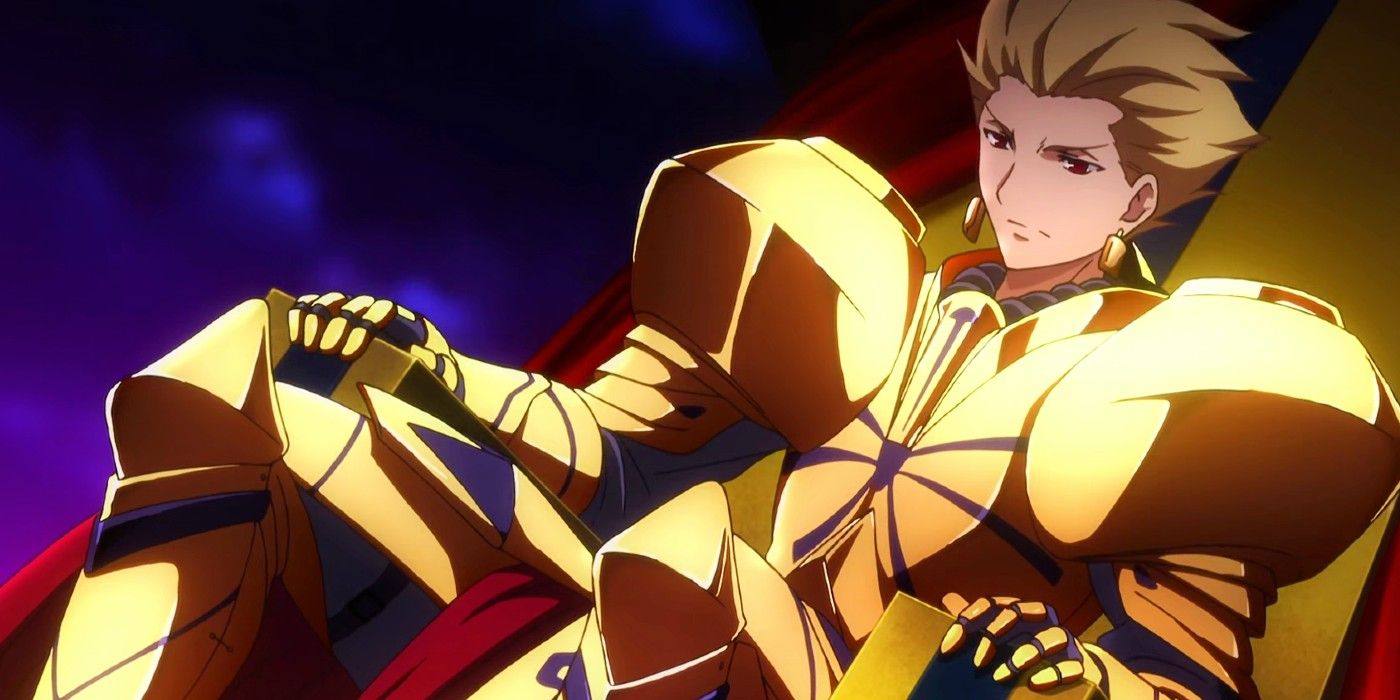
Nothing takes the energy out of a battle royale show like knowing how it ends. Fate/Zero could not escape its ending. Being the prequel to Fate/Stay Night, its ending was already predetermined. This deprives the show of any stakes, especially since it denies a good number of compelling characters any real chance to go forward.
Characters are unceremoniously discarded in Fate/Zero. Many losses that the masters go through feel like they serve the greater lore of the Fate franchise, rather than the immediate drama of the anime. The ending is a showdown of two of the most hollow stoic men in the show and it could have been felt much more if only it were divorced from its parent show.
4 Sword Art Online Has No Real Motive
Sword Art Online got so lost in the splendor of its virtual world that it forgot to write a motive for its villain. Akihiko Kayaba loses to Kirito at the end of the show. Before he disappears, he tells Kirito that he forgot why he made Nerve Gear and Sword Art Online, instead saying that the journey and the adventure were fun.
Kirito agrees that it was fun, but fans will remember that Sword Art Online literally traps people online against their will and will kill them if they die in the game. It is too steep a price to just shrug off and say it was all for fun.
3 Time Travel In Orange Was Too Random
It can be dangerous to introduce a time travel element to an otherwise very grounded story. In Orange, a bottle from the future carries a warning, telling the main characters that their friend will pass soon. The story then focuses on how the characters will save their friend, with all of the romance and drama that entails.
It is when Orange has to return to the message from the future that viewers get to see how far its setup goes. The Bermuda Triangle should never be used as a mechanism to facilitate alternate reality time travel. Or at least, a story should start with that detail to ease its viewers. Orange undercuts most of the experience with a bad decision.
2 Clannad: After Story Forces Emotion At All Costs
Tomoya went through enough. Clannad: After Story deals with accepting loss and moving forward despite how painful it might be. That is, until the last few episodes. The show decided that Tomoya needed to lose another important person in his life so all the growth and healing from the previous episodes were thrown aside.
The last few episodes of Clannad completely negate the anime’s themes. It is a blatantly manipulative ending that wants its viewers to cry, even though it isn’t earned. The result is an ending that’s cruel as opposed to cathartic.
1 Wonder Egg Priority Was A Complete Mess
Perhaps Wonder Egg Priority was too short for its own good. Spanning 12 episodes and a finale special, the anime did not have a lot of room to explore the many concepts that it brought to the table. Especially considering that the series had a recap episode eating up space where the animators could not meet a deadline, the show clearly bit off more than it could chew.
The big issue was that Wonder Egg Priority never stopped adding things to the table. Even as the show was ending, it kept introducing new plot points and refused to unravel the existing threads. The final episode is a chaotic slow burn that amounts to very little, denying its viewers any closure.
About The Author
