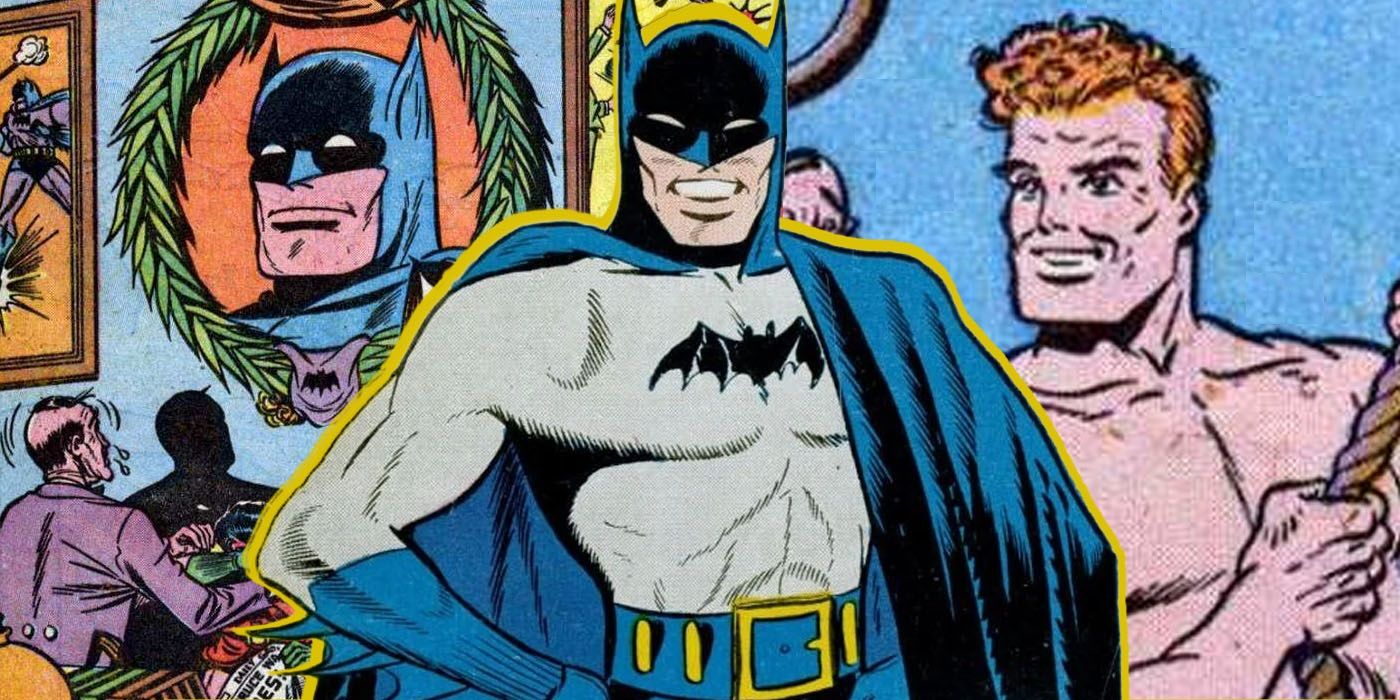
Today, we go back 75 years to see the first successor to Batman, a man named Bill Randall, who became Batman II. Or did he?
This is “Look Back,” where every four weeks of a month, I will spotlight a single issue of a comic book that came out in the past and talk about that issue (often in terms of a larger scale, like the series overall, etc.). Each spotlight will be a look at a comic book from a different year that came out the same month X amount of years ago. The first spotlight of the month looks at a book that came out this month ten years ago. The second spotlight looks at a book that came out this month 25 years ago. The third spotlight looks at a book that came out this month 50 years ago. The fourth spotlight looks at a book that came out this month 75 years ago. The occasional fifth week (we look at weeks broadly, so if a month has either five Sundays or five Saturdays, it counts as having a fifth week) looks at books from 20/30/40/60/70/80 years ago.
We go back to February 1947 for “The Case of Batman II” from Batman #40 by Don C. Cameron (probably), Dick Sprang and Gene McDonald (also probably…credits on Golden Age comics are hard).
WAS IT THAT UNUSUAL FOR SOMEONE ELSE TO DRESS AS BATMAN IN A BATMAN COMIC OF THE ERA?
One of the interesting things about the early days of the Batman comic book character is that it really wasn’t all THAT unusual to see someone other than Bruce Wayne wearing Batman’s costume. I’ve discussed this a few times before, but it is important to note that the early days of comic books were in an anthology format, meaning lots of short stories in a single comic book. When a comic book character received his or her own solo comic book (Superman as opposed to Action Comics, for instance), the concept just meant that the book would be filled with the same basic stories, just MORE of them. In other words, the stories that appeared in the pages of Batman were no different than the stories that appeared in Detective Comics, there were just MORE of them (in fact, the Hugo Strange story in Batman #1 was literally originally intended for an issue of Detective Comics before it moved over to Batman).
Because of that, the writers behind these stories had to come up with SO MANY story ideas. Have you ever noticed that Archie Comics tend to have Archie and the gang go through a lot of the same plots? Because they historically used an anthology format WAY past when other companies stopped doing it, so Archie comics had to come up with these multiple stories for DECADES. Over at DC, it was only about twenty years or so of having to do multiple Batman plots in each issue of Batman. In any event, the end result of that setup is that certain ideas would repeat and “Someone else wearing Batman’s costume” was a notable one.
That, though, was a lot different than Batman literally having a successor, which is what appeared to happen in Batman #40. The story opens with Bruce Wayne apparently dying in a car crash…
Robin and Alfred don’t know what to do. There is a villain who is causing a problem and they have to stop him, but Robin can’t do it by himself. So the two decide that they have to recruit a new Caped Crusader, a Batman II!
WHO WAS BILL RANDALL, THE FIRST “OFFICIAL” REPLACEMENT BATMAN
In a pretty hilarious bit, the two start checking out possible candidates, before settling on an amazing gymnast…
The man is named Bill Randall…
They convince him to take over the mantle of Batman, and he agrees. Alfred feels that he can’t possibly compare to the original Batman, but he’s willing to make do.
So Batman II and Robin take on the bad guy and in the end, Alfred ends up saving the day and he is kind of smug about how the original Batman wouldn’t need his help like this, but at the same time, he is legit happy that it looks like there is a new Batman who can at least adeqautaly fill in for the dead Bruce Wayne.
Then Bruce’s will is read and his lawyer notes that a certain foundation will be getting some of Bruce’s assets. The REAL Bruce Wayne then steps in! HE’S NOT DEAD, Y’ALL!
He knew that his lawyer was shady, so by faking his death, he could prove that the lawyer was substituting in a shell corporation to steal Bruce’s money. Bill Randall, of course, was Bruce in disguise! Robin kept Alfred in the dark because they needed him to seem legit upset about Bruce’s death (and meanwhile, the other crook was causing trouble that Batman had to deal with, so they came up with the Batman II idea to keep Alfred in the dark until the lawyer crook was taken care of).
Ah, overly complicated comic book plan that prey on the emotions of your friends and family, is there anything better?
If you folks have any suggestions for March (or any other later months) 2012, 1997, 1972 and 1947 comic books for me to spotlight, drop me a line at brianc@cbr.com! Here is the guide, though, for the cover dates of books so that you can make suggestions for books that actually came out in the correct month. Generally speaking, the traditional amount of time between the cover date and the release date of a comic book throughout most of comic history has been two months (it was three months at times, but not during the times we’re discussing here). So the comic books will have a cover date that is two months ahead of the actual release date (so October for a book that came out in August). Obviously, it is easier to tell when a book from 10 years ago was released, since there was internet coverage of books back then.
About The Author
