Avatar: The Last Airbender is arguably one of the greatest animated series of all time. Since its debut back in 2005, it has captured the hearts of fans of all ages. From the setting to the characters, the world of Avatar is unique and rich in culture. Many say that it’s nothing short of a masterpiece.
However, even masterpieces have their flaws, and Avatar: The Last Airbender has plenty. From clichés and tropes to unexplained backstories, there are a lot of aspects of the series that could be better. But for most fans, the flaws only make it that much more lovable. Even with its problems, Avatar: The Last Airbender is considered a beloved classic by everyone.
10 That Poor Cabbage Merchant Becomes An Overused Running Gag
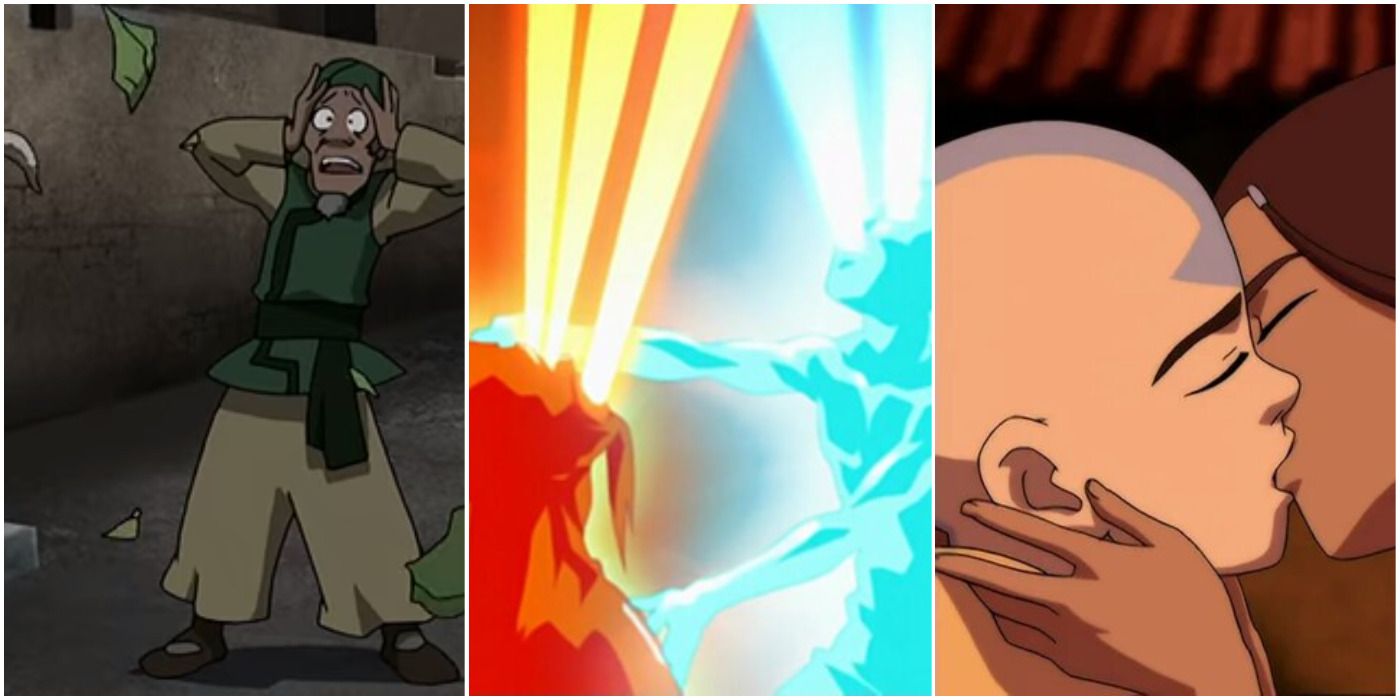
Fans can never forget the cabbage merchant, who always seemed to be at the wrong place at the wrong time. Aang and the rest of Team Avatar were always finding some creative way to accidentally destroy his cart, along with his beloved cabbages. It’s a running gag that is repeated over and over throughout the entire series and while it’s admittedly hilarious every time, viewers can’t help but feel bad for the poor cabbage merchant.
All he wants to do is make a living selling cabbages, but something always gets in his way. The joke gets run into the ground a bit too much, but fans still laugh at the poor cabbage merchant’s pain every time.
9 It’s A Typical Good Vs Evil Story, But It Still Works
It’s easy to point out who’s good and who’s evil in Avatar: The Last Airbender. The series may be one of the greatest modern stories to date, but that doesn’t mean it isn’t a cliché premise.
The Fire Nation is the clear villain of the story, the Firelord seeming evil for evil’s sake. It’s a tired trope, especially given the element of fire is the one portrayed as evil, but the series presents in a way that makes it feel far less cliché than it really is. And cliché or not, fans adore the premise of Avatar, so it’s a win-win.
8 The Series Pulls Off The Chosen One Trope Without Feeling Lazy
Fans have seen the Chosen One trope time and again, and Avatar certainly isn’t the first instance of it. Setting Aang up as the only one with the power to save the world sounds like a lazy and overused plotline, but somehow the series pulls it off.
Its well-written and three-dimensional characters carry the story with ease, and even with the urgency and high stakes, the Avatar’s importance doesn’t feel forced or placed on a pedestal. As a result, the characters feel much more natural and likable, especially Aang.
7 Zuko Is A Typical Angsty Teenager And Fans Love It
From his first introduction, Zuko is the very picture of teenage angst. He is pouty, emotional, and filled with anger. Some may argue that he feels like a very stereotypical teenage boy, at least at the beginning.
True or not, fans love the angsty side of Zuko. His teenage melodrama often makes for some hilarious moments, especially when it comes to his banter with Iroh. It shows the audience a lighter, more relatable side to Zuko and plays a huge role in his later character development as well.
6 The Show Features A Group Of Kids Fighting To Save The World
With the rise of dystopian stories and apocalyptic worlds, the trope of kids saving the world is more prominent than ever. It’s something viewers see over and over in media, and many are beyond tired of it. However, even those who hate the trope agree that Avatar pulls it off flawlessly.
Team Avatar may be made up of a bunch of kids and teenagers, but their youth doesn’t make them any less relatable for all fans. The series shows how living in a war-torn world forces kids to grow up sooner and take charge. It only makes sense that Aang and the rest of Team Avatar would have to band together and save their world. Fighting for freedom and survival is all they know, and Avatar portrays this perfectly.
5 Bloodbending Is Inherently Evil
The episode “The Puppetmaster” introduces fans to a brand-new type of bending known as bloodbending. It is portrayed as nothing but sinister, from start to finish. Even in The Legend of Korra, bloodbending continues its legacy of evil. It’s disappointing that the technique is never shown in a more positive light, considering the good it could potentially do.
Avatar is normally a nuanced and complex story, so it’s surprising that this never plays out. However, the introduction of bloodbending is chilling and unforgettable, showing that other elements can be used for evil as well.
4 Azula Never Redeems Herself, Despite The Potential Being There
From Book Two onward, Azula shows herself to be rotten to the core. Sometimes the Fire Nation Princess is even more wicked than her villainous father. However, as the series reaches its conclusion, fans see another side to Azula that she keeps locked away. It’s clear that the abuse and torment her family subjected her to has left her scarred, desperate for love and acceptance.
Unfortunately, Azula never gets the chance to turn a new leaf as Zuko does. It’s disappointing that viewers will never know the whole story behind Azula and what made her who she becomes. However, at the same time, her defeat and breakdown at the very end is impactful and leaves behind a strong message for fans to take in.
3 Aang And Katara’s Romance Is Awkward And Forced, But Still Enjoyable
After Aang is freed from the iceberg, fans can tell just from the looks on their faces that Aang and Katara will be endgame. Throughout the series, little hints are dropped here and there that the two will be together, and Aang’s feelings are obvious from the start.
However, Katara’s feelings remain a mystery, creating a “will they, or won’t they?” scenario between the two. While this certainly built up hype for the pair. But when the two finally become a couple, it feels forced and out of nowhere. Still, Aang and Katara make for a very cute couple, so fans can forgive the poor direction of their romance.
2 Not All Questions Get Answered In The Finale, Making Way For The Comics
As great as it is, the series finale of Avatar leaves a lot of plot holes. From the whereabouts of Zuko’s mother to Toph’s fractured relationship with her family, so many questions get left unanswered at the end.
These cliffhangers drove fans crazy, many begging to know what happens. Lucky for them, the series continued on in the form of comics that answered many of these questions. While it’s a shame that viewers don’t get to see these storylines in action in the show, it’s a great way for the franchise to live on long after the original series’ end.
1 The Introduction Of Energybending At The Very End Of The Series
A lot happens in the four-part series finale of Avatar: The Last Airbender. One of the most surprising and controversial is the introduction of energybending, the ability to bend a person’s life energy. Aang is torn and doesn’t want to have to kill Firelord Ozai, even if that’s the only way to save the world. When he encounters a lion turtle, he gains this mysterious power, freeing him from this fate.
Many fans feel that the addition of this power is lazy writing and used as a cop-out to keep their main character from killing. It’s introduced without warning at the series end, which many still have a problem with to this day. Despite the issues surrounding it, energybending is a unique and interesting concept. It also paves the way for some of the best lore and world-building to come out of the franchise.
About The Author
