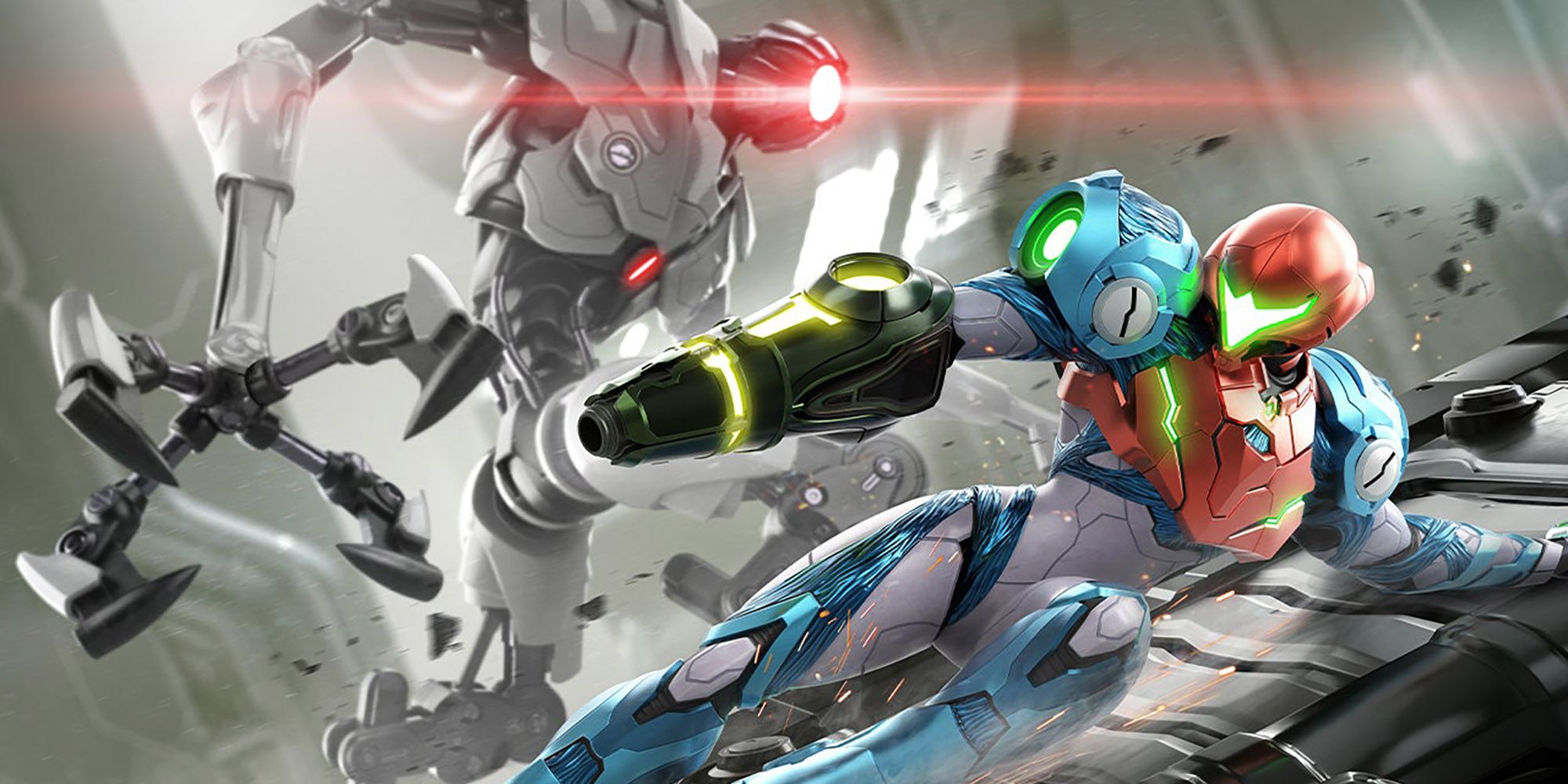
Metroid Dread was incredibly well-received when it was released in October 2021. Its smooth gameplay and brilliant level design were highly praised, and it even earned its share of award nominations, including one for The Game Awards’ Game of the Year. Set after the events of Metroid Fusion, Dread follows protagonist Samus Aran as she uncovers the mysteries of planet ZDR.
Alongside the stellar gameplay and map design, the game’s story is also one of the best developed in the franchise. It reveals that the EMMI (Extraplanetary Multiform Mobile Identifiers), which were sent to track the X parasite, have been compromised and turned into new stalker-like enemies. Although they do offer an interesting new style of gameplay, in reality they are more frustrating than fun. They feel very unfair compared to other boss fights and become more like a chore that must be completed before getting to the rest of the game (which is fantastic). They also appear far too frequently.
Metroid Dread‘s combat and traversal systems feel incredibly smooth, especially as players unlock new abilities and armor suits. The enemies are varied and offer good challenges. The boss fights, however, are where the game really shines. They are, as expected in a Metroid game, very challenging. However, they are designed in a way that means no attack is unavoidable. This means, when players die, it’s always because of something they did, whether that’s not reacting quickly enough to an attack or being too impatient with their own assault. Players feel completely in control, and learning a boss’ attack patterns and how to defeat them is highly rewarding.
The EMMIs, however, are the complete opposite. Once an EMMI catches Samus, the player has such a slim chance of successfully countering its instant-death attack that there’s almost no point trying. This wouldn’t be such an issue if the stealth mechanisms implemented to evade these enemies were more effective. In reality, a player’s best chance of successfully navigating through an EMMI zone is by franticly speed-platforming their way out.
Done well, speed-platforming can be an exhilarating and satisfying experience. Games like Ori and the Blind Forest, and its sequel deliver brilliant escape sequences that players reward players for perfectly timed platforming combinations. Metroid Dread‘s EMMI zones, however, do not always feel like this. For example, later EMMIs have more abilities, such as being able to freeze or stun Samus. Some EMMI zones also force players underwater, slowing Samus down. Even if players time every jump, grapple and slide to perfection, they can still get caught. This feels overly punishing, as escaping an EMMI encounter feels like it’s reliant on luck more than player skill.
These EMMI encounters are made even more disappointing by the fact that the rest of the game is exceptional. In addition to Metroid Dread‘s fantastic boss fights and regular enemy encounters, the map exploration and design are incredible, and the hidden items reward players who spend time fully exploring the map. The EMMI encounters, on the other hand, take the player away from these brilliant parts of the game. In that sense, they feel more like a chore that must be completed before being allowed to return to the good parts of Dread.
The disappointment of these EMMI sections would be a lot more tolerable if they weren’t so frequent. Metroid Dread takes on average just under nine hours to complete. With seven EMMI encounters spread across the game, that’s roughly one per every hour and a quarter of gameplay. This constant appearance of the EMMIs makes them a frequently occurring burden, as players start to get that “here we go again” feeling.
The introduction of the EMMIs as new enemies for Samus to overcome had a lot of promise. If the game had nailed the stealth mechanisms for evading them or made escaping them entirely reliant on perfectly timing the game’s platforming elements, these encounters could have offered a great change of pace and style to the gameplay, elevating Metroid Dread beyond other games in the genre. Unfortunately, they come up short and just feel frustrating and unfair, which is such a shame given the brilliance of everything else in the game.
About The Author
