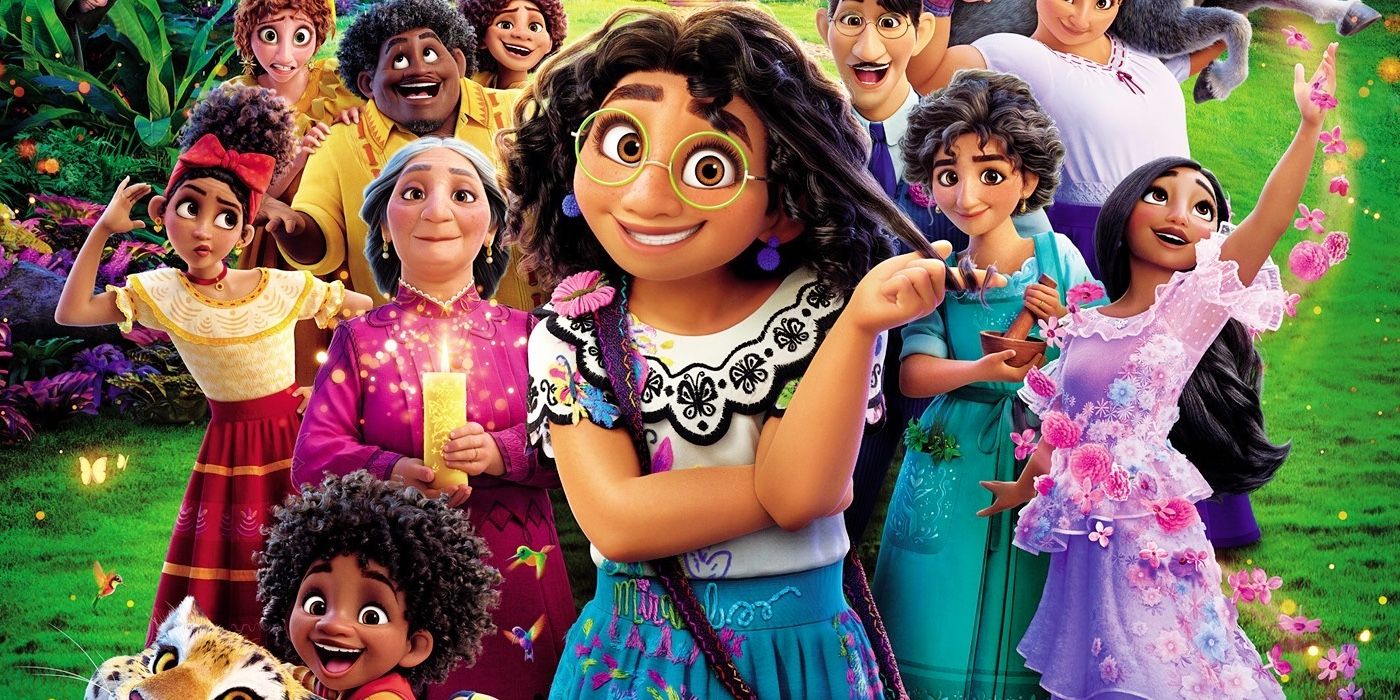
Encanto tells the story of Mirabel Madrigal, a regular girl in a family whose members have magical gifts that grant them super abilities. Although Mirabel doesn’t think of herself as special, she soon realizes she’s the only one that can save her family’s magic, but for this, she needs to learn more about their past. Encanto is a delightful movie for the whole family, but it also tackles serious topics such as transgenerational trauma and family dysfunction.
Since Encanto is set in Colombia, the country’s culture is a key component of this story. Of course, this movie features very obvious references to Colombian culture, like the Spanish words, the clothing design, and the music. However, other more obscure Colombian elements in Encanto also celebrate this culture.
10 Kids Drinking Coffee Isn’t An Uncommon Sight In Colombia
No, it isn’t. At least not in Colombia. For Colombians, coffee isn’t about the energy pump on the way to the office. This beverage is meant to be properly savored. Besides, it’s an essential element of social interactions. Colombians can spend hours chatting with friends and family over a cup of coffee. Given that coffee is such a core element of Colombian culture, it’s only natural that children are allowed to enjoy it too.
9 Butterflies Mean Good Things Are Coming
Butterflies can be found all-over Encanto: in Mirabel’s clothing, in Alma’s Candle, all around the scenery, and even in the “Dos Oruguitas” song, which is about two caterpillars undergoing their metamorphosis. The promotional images for the movie also include yellow butterflies around all the Madrigal family members.
Not only is Colombia home to 20% of the world’s butterflies, but they also are a symbol for the country. Everyone knows butterflies mean change, but in Colombia, they also mean happiness and hope. Especially thanks to prolific Colombian author Gabriel García Marquez, who includes yellow butterflies in his work as a reminder of everything good, because they reminded him of his childhood.
8 Colombia’s Wildlife Is All Over Encanto
Colombia is also present in the movie through its biodiversity. First, Antonio’s animals are a great sample of Colombian fauna: coatimundis, chigüiros (aka capybaras), jaguars, tapirs, and tucans (like Pico!) are all creatures that can be found in any Colombian jungle. In fact, Antonio’s room was based on the Chocó rainforest, in Western Colombia.
In addition to this, many of Isabela’s flowers belong to Colombian flora. In her song “What Else Can I Do?” the girl mentions different species, such as Flor de Mayo, Jacarandas, Tabebuias, and Palma de Cera. These aren’t mentioned just because. Flor de Mayo and Palma de Cera are native to Colombia, while Tabebuias and Jacarandas are very common in this country.
7 Colombians Come In All Shades And Encanto Knows It
With Encanto, Disney takes an important stand in regards to cultural diversity in its movies. Of course, everyone understands the importance of a Latinx story on the screen, but Encanto takes it a step further. The Madrigals are a racially diverse family. For instance, Aunt Pepa has auburn hair and green eyes and Uncle Felix is an Afro-Colombian man, so their kids are biracial Latinxs.
Afro-Latinxs aren’t just found in Colombia. They also live in Brazil, Haiti, Mexico, and pretty much every Latin American country. In fact, they make up 5% of the Black population in America. However, they suffer a lack of representation in media. But not in Encanto. As Stephanie Beatriz, who voices Mirabel, told The Grio, “it’s vital for audiences to see that Latinxs don’t just look one way.”
6 ‘Miercoles’ Is An Euphemism For A Spanish Curse Word
Right around the first half of the movie, Dolores catches Agustín and Mirabel discussing the family magic dying and the house breaking right in front of Mirabel’s eyes. Agustin realizes the terrible repercussions of this information getting out and utters a cryptic word: “Miércoles,” “Wednesday” in Spanish.
For non-Spanish speakers, this moment is very confusing. But any Latino understands perfectly that Agustin was censoring himself. “Miercoles” is another way of saying “Mierda”, which translates as “sh*t.” This is a common way of cursing without cursing in Colombian culture.
5 The Pink River Is Inspired By A Colombian Landscape
At the peak of the movie, after Casita collapses, Mirabel and Abuela Alma have a heart-to-heart moment in the same place where Abuelo Pedro was murdered: a pink river where both women share an emotional hug surrounded by butterflies while the audience undoubtedly bawls their eyes out.
This paradisian place isn’t exactly fictional. In fact, it’s inspired by a famous touristic spot in Colombia, Caño Cristales, at the Parque Nacional Nautral Sierra de la Macarena in Los Llanos. Its water is crystal-clear and its colors come from a river weed species that grows underwater, Podostemaceae. This river is usually referred to as an “arcoiris líquido”, a liquid rainbow.
4 Parce The Jaguar Is Antonio’s Closest Friend
At the beginning of Encanto, Antonio, the youngest of the Madrigal clan, receives his gift in a public ceremony: he’s now able to communicate with animals and his new room includes all types of creatures. Although it doesn’t appear in the movie, Jared Bush has confirmed that Antonio named some of these animals. While his capybara is Chispi, his Jaguar is called Parce.
The Chispi moniker has been theorized to come from “chispa”, the Spanish word from “spark”, but nothing has been confirmed. However, Parce is a clear reference to Colombian slang. This word is a shortened version of “Parcero”, a word used in all Colombia to refer to a close friend, something like “dude” or “bro.”
3 Julieta’s Arepas Con Queso Are Like Medicine
Almost at the beginning of the movie, Mirabel tries to talk to grandma about Casita’s issues and is dismissed. She then seeks Julieta, her mother, for consolation. During their conversation, Julieta is seen making arepas con queso, which she then gives to Mirabel in order to heal a cut hand.
Not only Julieta’s healing gift is an obvious take on the very Latin American idea that a loving mother’s homemade dish can cure anything, but arepas are a must in Colombian (and Venezuelan) gastronomy. In addition to queso (Spanish for “cheese”), these maize dough patties can be filled with meat, vegetables, and all types of spreads, just like sandwiches.
2 The Movie Showcases Colombian Musicians
In addition to having a cast full of Colombian and Colombian descent actors, such as John Leguizamo, Carolina Gaitán, Mauro Castillo, and Diane Guerrero, Encanto served as a platform for Colombian artists to showcase their talent in a more international market.
On one hand, Sebastian Yatra, a singer and songwriter from Medellín, Colombia, whose career gained recognition in 2016. Yatra sings “Dos Oruguitas”, the emotional ballad playing during Alma’s flashbacks to her life with Pedro. On the other hand, Carlos Vives, who has a long-standing career in Latin music, sings “Colombia, Mi Encanto”, one of the credit’s songs.
1 Colombia’s History With Forced Displacement
After Casa Madrigal is destroyed, Abuela Alma explains to Mirabel everything about her past. Through flashbacks, viewers learn the Madrigal family’s dramatic backstory: when Julieta, Pepa, and Bruno were still babies, the family was forced to leave their town due to armed conflicts. After Pedro died protecting his family, the Madrigals received their miracle and the whole village was able to start again under Abuela Alma’s leadership.
Although the movie doesn’t explore which armed conflict the Madrigal’s were running from, this isn’t an uncommon occurrence in Colombia. Throughout history, millions of Colombians natives have been forcibly displaced from their homes due to the war between paramilitary groups, guerrillas, drug trafficking gangs, and the Colombian army. Sadly, this internal conflict has been going on for longer than 60 years.
About The Author
