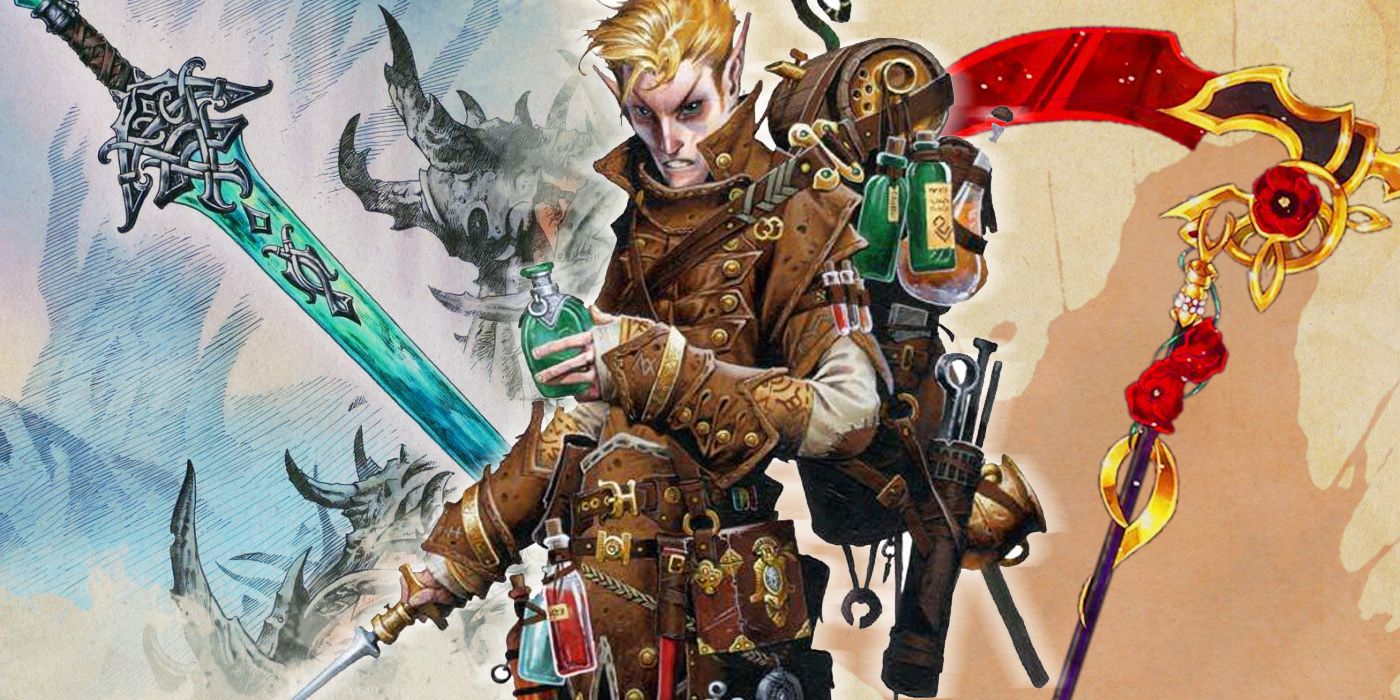
Cursed items are some of the most fun to deal out in a Dungeons & Dragons campaign. The chaos that follows a sentient evil object around is sure to inject a level of intrigue, danger and even hilarity into any game. Unfortunately, there aren’t many legendary cursed items to challenge high level players — at least not many that an experienced player isn’t already aware of. This means that creating one that matches the campaign’s unique feel is often the best option for a Dungeon Master.
Achieving high-level play in D&D is a feat all by itself. At a certain point, finding the right monsters, weapons and encounters for a strong, cohesive party can be a challenge. Crafting a cursed item can fill all those needs when a DM wants to create a memorable experience with a magic item. Here’s how to achieve the best results.
Start By Making a Basic Magic Item
First, it’s important to determine what type of item is being created. Magic items come in various forms, from weapons to jewelry. Choosing the form at the start lays the foundation for building out its features. For example, weapons have base features that they all offer. A sword will always be a sword at its core, offering the benefits that come with one. When trying to determine the item type, think about how it will be used during the game.
For instance, if making something for a large character who wields huge weapons, a greatsword or greataxe may be perfect. If the item holds spells for a magic user, a staff, wand, or even amulet could be the way to go. The Dungeon Master’s Guide or D&D Beyond are great resources for fining an existing item to use as a template.
Cursed Items Should Have Personality
Next, DMs should figure out the purpose and personality behind the item. Cursed items are often so powerful because they are, to some degree, sentient and have a will of their own to carried out. As stated in the DMG, it can be best to think about this item as an NPC. Choose what the item wants and what type of person it would be. Sentient items also have Charisma, Intelligence and Wisdom scores. DMs can roll for these or decide its scores based on its personality.
The DMG also suggests basic purposes the item might have, such as Destroyer or Bane and item alignments. When homebrewing a legendary item, DMs can choose from the list provided or develop a specific purpose that suits their needs. For instance, if a halberd is a sentient evil item that despises all life, the Destroyer purpose could fit, goading the users into fights and wanting to see blood spilled.
When designing evil and cursed items, it’s also helpful to think of a theme to convey. The aforementioned halberd could actually be a giant scythe representing death. Properties related to death — like necrotic damage and special feats that are triggered when the wielder kills something — makes sense for that type of item.
Additionally, the DMG provides a list of Quirks and Minor Properties that help round out the item’s personality and cursed nature. For instance, Painful can cause the object to give off a harmless burst of pain and Repulsive puts a bad taste in the user’s mouth. Hungry is an especially interesting one for an evil cursed item. It prevents the magical properties from being used unless the user supplies fresh human blood.
Powerful Magic Items Should Come at a Cost
When making a cursed legendary magic item, balance isn’t necessarily a major concern. After all, it is legendary. However, these cursed items should impose quite the cost for those who wield their ultimate power. A good place to start is by focusing on abilities that support the item’s personality. For example, giving that halberd that hates all life the power to apply bleed damage is fitting. Perhaps, when the wielder successfully hits a creature, they can use a bonus action to do an extra 1d10 piercing damage — but have to take half as much damage themselves. The damage could then repeats on the following two turns, doing less damage on subsequent turns.
Instilling fear and gaining advantage on reaction attacks can also be great for a deadly weapon. However, in the case of cursed items, the user should also suffer several detrimental effects. When making a cursed item, especially a legendary one that will grant the user incredible boons, adding two minor and two major detrimental properties is best. There is a helpful list in the DMG under Artifacts for inspiration, but those looking to devise their own should think about what would be a minor nuisance or a major burden.
Finally, it’s important to remember that, when the wielder doesn’t do what the sentient item wants, a conflict can arise. This can be minor and as simple as the item demanding to be used by someone else. However, it could also result in a major conflict, that involves the item trying to overtake the wielder, especially is the character has refused to serve their sentient item for a few days. For example, in Critical Role, Craven Edge sucked Grog’s soul into the sword. This shows just how powerful cursed legendary items can be, forcing players to make the difficult choice between gaining their power and avoiding unforeseen consequences.
About The Author
