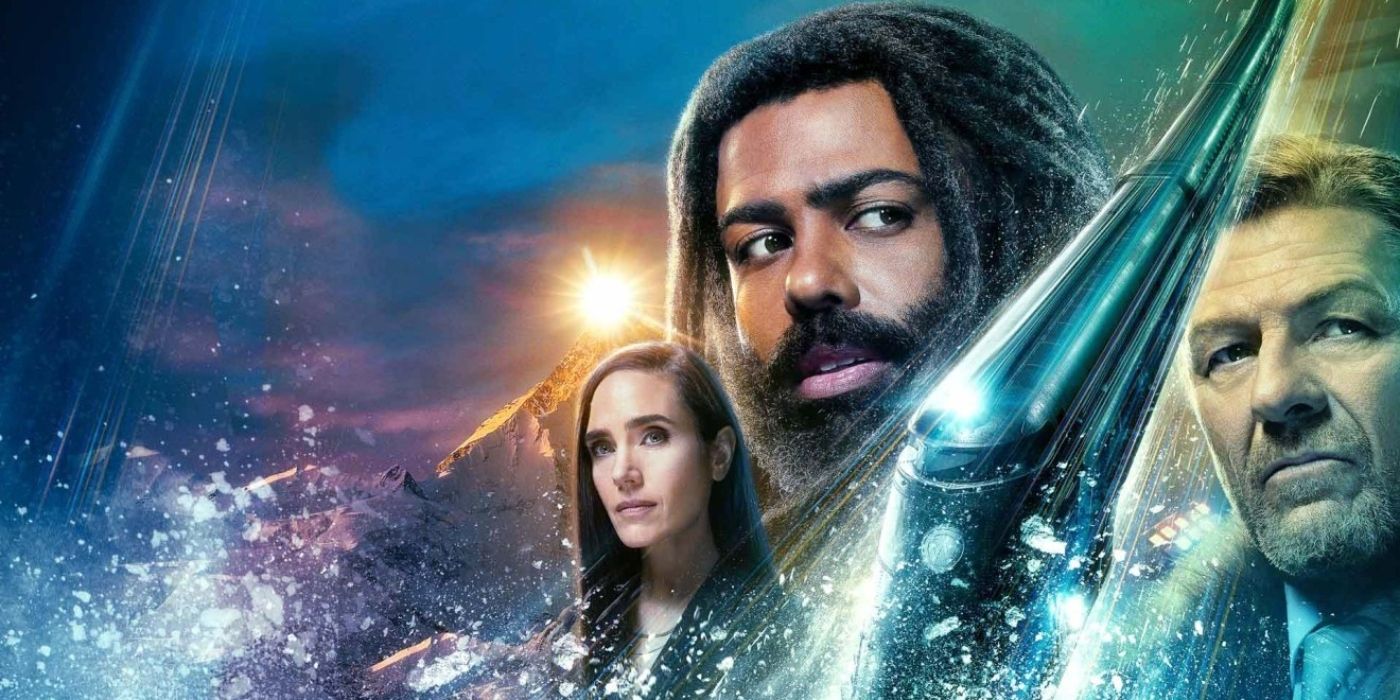
In Season 3, Snowpiercer ratchets up to an entirely different level. Unlike prior seasons, Season 3 opens with more dangerous personal conflicts than ever. With Snowpiercer on the run from Mister Wilford (Sean Bean) and the hulking Big Alice, Layton (Daveed Diggs) and his allies face several new problems. Despite the fantastical nature of the show’s premise, the TNT drama remains grounded by a firm and grim sense of reality — thanks to its directors like Christoph Schrewe who helmed multiple episodes in Snowpiercer Season 3.
During an exclusive interview with CBR, Snowpiercer director Christoph Schrewe broke down the elements that broaden the TNT series’ scope and look. Schrewe also discussed juggling multiple tones across the expansive sci-fi series and shared how the third season of Snowpiercer embraces a more thorny central conflict than previous seasons.
CBR: The first two seasons of Snowpiercer were much more of a slow burn. More time was spent setting up characters and their conflicts. This season, we’re off immediately. What surprised you the most from a creative position about Snowpiercer‘s third season?
Christoph Schrewe: Yeah, I think we did the first step to this with Season 2 already, where we tried to amp things up more. When I’m working on this show, I don’t want to repeat what we did. [I want to] amp it up more. To give it more energy, to give it more drive, more intensity. I think that we see something we haven’t seen before, and that goes into the episodes. I think each episode in Season 3 is a little bit different. Episode 1 is this pirate train adventure. Episode 2 is a wedding, so it’s very different. But then, what is the same is the pace that energizes the story.
I think that comes from everyone: it comes from me as a director, and it comes from the actors who know their parts better than ever. It comes from the writers who just understand what show we are doing, so each season is better and better. We eliminated the stuff which we thought wasn’t as great. We just focused on the stuff which works, and where we thought, “Oh, more of that, let’s push it further!” I think that’s something we really have on Snowpiercer. Everyone who works on the show loves the show. All the actors love the show. We push each other.
And that really benefits the way that the show is able to juggle all of these different tones. As you said, every episode of this season is a little bit different. You get a little bit more romance, you get a little bit more tragedy, you get a little bit more comedy — and definitely, intensity. Is that ever difficult to keep it all grounded in the show, despite having all of these very unique tonal shifts?
I love this question. It makes me so happy that you ask it because this is such a challenge on Snowpiercer. We have so many main characters, and then secondary characters we all care for, and so, we have all these people with their stories. What we all try to do is — every time with the camera work and with the way we block the scenes and light it — to make this fictional universe as real as possible. Our basic baseline is always, “What would actually happen in this situation? How we ground it in a reality, this story of this train?”
Most of the camera work is like — we hang out, the cameras are in these wagons, they don’t have second doors, we can’t open the sides. We are just like, “Throw the cameras in with the actors, and give the audience the experience to be just with them on this train.” That is the part I find so much fun in. We have camera angles, but they just happen because we are with them, and that’s a big part of how you keep it all together. And the other thing is, Snowpiercer keeps it together because of being stuck on a train… So, that keeps it visually together.
This season also introduces some uniquely complex moral conundrums for characters to confront. Why was that important to you, as a director and as a creative voice on the show, to see Snowpiercer head in that direction?
The first season was about class. The second season was the battle between authoritarianism and democracy. Now that we have told these stories, and now that we’ve entered a new universe, it allows us to explore more journeys of the characters and go deeper, especially with Layton. We go deeper into their world, and what they really want, and ask the question of hope versus survival. It’s a more complex question with a not-so-clear answer. I think that helps to dig deeper into the season.
You would think the limits of the locations of these two trains would affect other settings. But all of the settings within the train actually get to feel unique. They all get to have their own little bit of special energy that helps them stand out visually and tonally. What is the trick, from a director’s perspective, of having these locations feel unique, but still feel part of a whole?
The first thing is: all these sets look different. Then, just by the production design, how the wagon looks, you know you are in one place. Some of them have a unique branding point — like with the bar in the Night Car or the library with all their books. So, we have kind of these classic shots, which everyone who watches the show now knows. With one little glimpse of it, we know where we are. I think what I try to make sure is, I know where [we are]. There’s no confusion. That’s super important.
We have a complex system about which wagon follows which one, and how you go up and down the train, and we follow these rules. I think we set ourselves a rule set, and I follow these rules. In these rules, we are completely free. That’s where things get unique inside the set of these rules to say, “Okay, this is how a door works, this is how you go in and out.” And so, it’s a combination between trusting the train, and then the key is to follow the emotions of the characters, and don’t betray anything there.
I think at the end of the day, the train is the world, but we care about the people. If I care about Ruth and know where she comes from, not only from the other train car she comes from but where comes from emotionally when she enters the scene, then I’m with her. We have to track a lot of these characters and know where they are emotionally, and I think it works. We know where they are, we know what their trouble is, and how they feel.
This season, there are two trains. We have the pirate train, and we have Wilford’s gulag train. The pirate train, because it runs hot and because it’s so short, the engine overheats. So, we created this very different look where everything is warmer, most of the time. [The cast are] in T-shirts or tank tops and sweating, and it’s different. This train goes with only a bunch of people around the world very fast. So, it has a very different visual vibe to it. On Wilford’s train, everything is under a complete authoritarian regime to make things work. The train is cold… Everything is gray, dark, unpleasant, and cold. That is part of how we differentiate stuff visually.
Enter the wily world of Snowpiercer on Monday nights at 9 pm ET/PT on TNT.
About The Author
