Director and producer DeMane Davis’ career spans decades, beginning in advertising before making her mark as an indie film director at the Sundance Film Festival. After a slow period in Hollywood led her back to advertising, writer/activist/filmmaker Ava DuVernay contacted Davis to direct and produce the ground-breaking drama Queen Sugar. Since then, Davis directed episodes of Clarice, You, Station 19, How to Get Away with Murder, and For the People. Davis is currently collaborating with DuVernay on The CW’s Naomi.
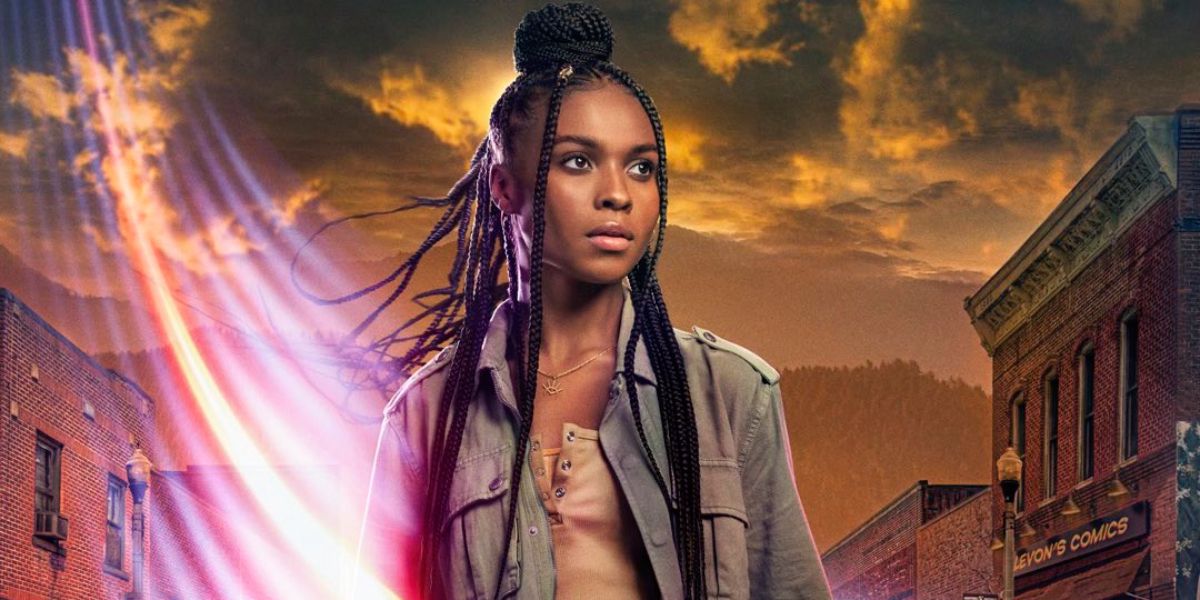
Based on the comic series of the same name, The CW’s Naomi follows the titular teen hero investigating an otherworldly event in her small town. Naomi soon discovers emerging superpowers, aliens, and explores her identity. Davis spoke to CBR about joining the Arrowverse, what makes Naomi special, and normalizing multiracial casts and stories.
CBR: You began your career helming indies, but you left the Hollywood rat race to go back to advertising before returning with a vengeance. How did that long and bumpy road shape you as a director?
DeMane Davis: I was a copywriter in advertising. I got the idea to make an indie film, made that film while I was still working in advertising and then went to Sundance. I had another script, which was Lift, which became Kerry Washington’s first solo feature film. I continued to work in advertising because I was raised by a mother who went to night school and had two jobs. You were supposed to hustle. I was always doing advertising in the background, and I always thought, ”I’ll have this to do and to fall back on as a writer,” which I considered myself first before all of this happened. I was like, ”In advertising, you keep writing. It helps you hone your skills,” so that contributes to the whole of everything I do.
What I learned the most in advertising, that I bring to film and television, is brevity, especially today in our 140-character world. Also, just toning it down to, ”What is the intent here?” That’s what I always ask every writer that I have the honor to work with — ”What do you mean? What is the intent? What did you want to see from it?” I’m now responsible for interpreting that, making it visual, and learning communication. It’s about understanding we are a team. In Hollywood, it’s a team. It’s a crew of people that brings this vision to life. That’s a little bit of how it shaped me, and I tap into those things every day on set.
How did you become involved in the TV series, Naomi?
Well, Ava DuVernay called me. When you get that call from Ava, you know it’s going to be something incredible. You know it’s going to be something that uplifts people and gives people a sense of belonging. You know it’s going to be made by a crew that’s reflective of the world and crafts people and technicians of all hues and all genders. When you get that opportunity, you say, ”Yes.”
How does a show being part of the Arrowverse amplify the challenge of directing?
The Arrowverse has a really deep and considerate following. People are in love with all of those characters. For me, it meant dedicating myself to the characters and making sure that I have read the bible that stems from the comic books. And then, it stems from Ava and the showrunner, Jill Blankenship, and their intent. What are they trying to say? What are they trying to do? It’s super-exciting to be involved in that in any way.
Growing up, I read the Archie comics. I loved Archie so much. Then, I got into Watchmen. I got that graphic novel, and I would read it religiously once a year. I would sit down and reread it because I was so in love with that story and in love with those frames and the way that it looked. Later, I got into Batman Black and White. I was a big fan of Shade the Changing Man. I really love that comic series. I had a friend talk me into World War Hulk. This was the first time that I got to really get back into comic books and make it real.
Naomi is definitely not Watchmen. What spoke to you about the character?
First, to see a character that looked like me in the comic world in the present day. Representation is important. I grew up at a time when my favorite television show was Mannix. Mannix was a white private detective. He had Peggy, who was his black secretary. I became a secretary at an advertising agency before I became a copywriter. When I thought about it, she’s the reason why, because I used to watch her while I ate my Captain Crunch/ I was like, ”OK, she’s typing. She’s filing some papers. I can do that. That’s cool.” To think about what this character is going to do when little girls of all hues see her is super exciting. That spoke to me.
Also, Naomi has a great group of friends. They are all different types of friends. This is a character that appeals to all these different groups. She doesn’t throw them any shade. She doesn’t judge them. She’s just accepted by them, opens up to them, and is excited to be around them. Then, she learns she has powers. Naomi is questioning everything.
Your directorial debut for this series is Naomi‘s Season 1, Episode 2. What was your initial reaction to the Unidentified Flying Objects script?
First of all, as a director in television, everything I have worked on, I’ve been a massive fan of. I worked on How to Get Away with Murder. I watched that show from day one. When I get the scripts, the first thing I have to do is read them as a fan. I’ll read it and I’ll pace and go, ”Oh my God!” I’ll start yelling. When I was on Queen Sugar, I was like, ”I get to direct the episode where he…” I get all that out and then I go, ”Oh snap. I have to direct this. What’s up?” Then I go back and read it again. ”Let’s figure this out.”
I love Jill Blankenship’s writing. I love the tone that she sets. The tone of the show is unlike any other because you have the superhero, so you know there is going to be action. You know there is going to be special effects and VFX and stunts. Then, there’s also this mystery because she’s questioning things and trying to figure it out. Of course, Naomi is a teenager. She shouldn’t be out of the house, but she’s out of the house at night. On top of that, it’s dramatic. She realizes something is up and she’s like, ”What?” She has to deal with that and the people around them and what they know. And then, it’s funny. Mary-Charles Jones is ridiculous as Annabelle, Naomi’s best friend. Together, their chemistry is incredible. Getting to see them together and work with them, you just let it go.
In your episode, there’s that standoff between Naomi and Zumbado (Cranston Johnson). What kind of conversations did you have with Kaci and Cranston about the beats and how they would play out?
What’s great about that is you are going to see growth. In the pilot, you saw how she had a little conversation with him and how that ended. Standoff is the right word. She stands and has to make a decision.
It was great seeing the two of them working together. One of the throughlines of the show is, “Don’t believe everything you think.” Naomi has assumptions about him, and he certainly has assumptions about her. Instead of talking about it, you are going to see them communicate in a different way. It was cool to be able to talk them through what was happening around them. They were both really wonderful. They were both totally game for it. I noticed Cranston separated himself and stayed away a bit. It’s always interesting to see actors choose to distance themselves because it keeps that relationship fresh. You get to capture that on camera. Kaci was responding to him, so that energy becomes real in that space.
That sequence also features Naomi’s powers, which are obviously added in post-production. How pleased were you with how that effect turned out?
The most exciting thing about these effects is that they are going to continue to evolve as she evolves. It’s not just seeing this character evolve, but seeing Kaci evolve. Naomi is learning about herself, learning about these powers. They are going to get even bigger, even better, and even brighter as she begins to control them. They will turn from bursts into something a little more pointed and focused. That’s all exciting.
What can you tease about the episode you are currently directing?
It’s Naomi‘s Episode 4. I got to direct Episode 2, and then Episode 8. I can tell you when I read it, I teared up in two places at least. Jill called me right away. She was like, “What did you think? What did you think?” [I said,] ”I loved it!” I think what’s going to be really satisfying for people is to see this journey. It’s not just Naomi growing. It’s these other characters growing as well, and some of them growing towards each other or individually. Seeing how they change and how they affect each other. That’s going to be a pretty big part of what happens.
You signed an overall creative deal with Warner Bros. TV Group. What other Arrowverse series, or TV series, would you like to direct?
I haven’t thought about it. When you are making a show, you never have time to watch any other show or be aware of anything else. As a producer and director, it’s 16 to 18 hour days, every day. You are completely immersed. I don’t think I could say. For me, as someone growing up and eating Captain Crunch, the other shows I watched all the time were cartoons. Bugs Bunny was my favorite. I could sing all the songs the characters sang. To get to be a part of Warner Bros. is mind-blowing to me. I will say, I haven’t heard anything about it, but I really do love Shade the Changing Man. I would love to do something with that. Put that into the universe!
Naomi debuts new episodes on Tuesdays at 9 pm ET/PT on The CW.
About The Author