Few classic authors have found as much success as the works of H.P. Lovecraft in the genre of horror games. Despite the author’s death over 80 years ago, his signature horror stylings have continued to be a popular choice for setting in many cerebral horror games over the years. Although Lovecraft’s themes continue to inspire developers, the types of games based on his work have often been all too similar in nature. Many Lovecraftian games tend to be more subdued gameplay experiences and focus on adventure game mechanics instead of dynamic action, which often suits the more subdued horror of Lovecraft’s works.
Games like Call of Cthulu feature a focus on storytelling over gameplay and prefer a slow build to weave its tales of madness and unspeakable terror. When Lovecraftian themes do appear in action games like Bloodborne, they often eschew the narrative for a more aesthetic approach and a focus on action. However, one new game intends to try and combine the storytelling of these slower-paced narrative adventures with dynamic action. That game, Forgive Me Father puts a new spin on the popular Lovecraftian genre of horror games by placing it in a retro throwback first-person shooter which also matches the pulpy feel of Lovecraft’s best works.
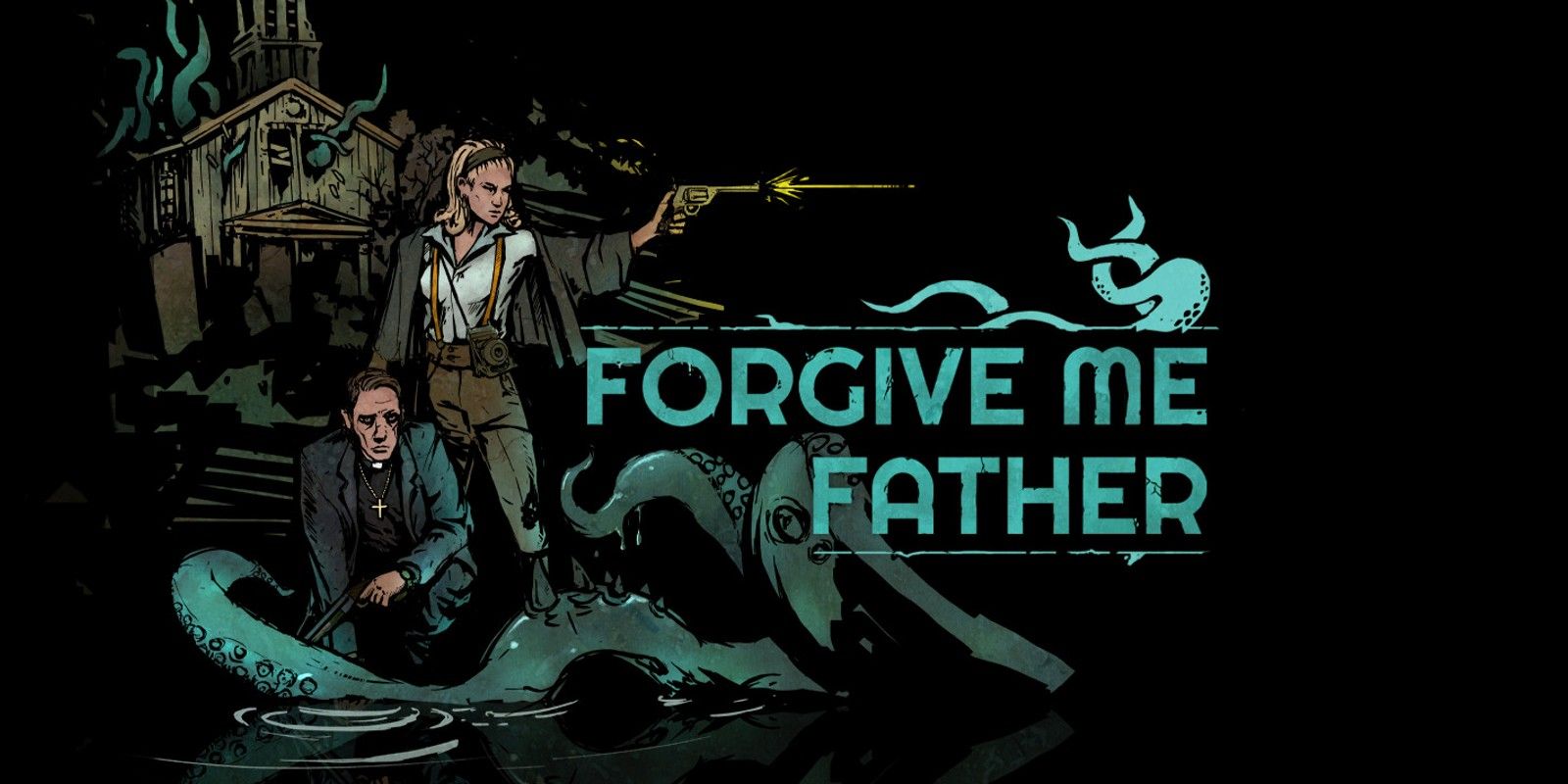
Forgive Me Father places players in the familiar Lovecraft setting of New England, albeit one that has recently undergone an apocalyptic disaster. Players take on the role of a Catholic priest who somehow survives the mysterious disaster and is forced to navigate this post-apocalypse as one of the few humans with his senses still intact. The only way to stay alive is to take up arms against the monsters that have arisen in the wake, and desperately try to find out what happened to the world.
One of the main ways the game instantly differentiates itself from other Lovecraft games and retro shooters is through its comic art style. This highly stylized and colorful take not only evokes the history of classic horror comics like Tales From the Crypt and Creepy but also helps to serve the Lovecraftian creepiness that it is set in. The horror works majorly because of the art style, which helps to deliver the otherworldly creatures in a surreal way.
Forgive Me Father manages to capture the sense of dread and terror lurking around the corner and the otherworldly threats that exist in the shadows by utilizing both its art style and combat mechanics effectively. Players are able to have agency against these threats and fight back against the cosmic horror, and through its excellent atmosphere Forgive Me Father nails this tone. For example, in between blasting hideous monstrosities, players can find lore pickups that hint at just what transpired, but keep things just obscured enough to push players further into the mystery.
Like many other new retro shooters of late, the game features 3D levels designed with 2D sprites of tentacled beasts and crazed mutated cultists. Players stalk the environments wielding a combination of powerful faith-based powers and conventional weaponry combined with otherworldly firearms powered by an unknown source. Players can collect a double-barreled shotgun, dual revolvers, and even holy weaponry like the priest’s scripture and crucifix to help battle against the plentiful enemies.
On top of this, the game also takes a popular mechanic from other Lovecraftian games in the form of the madness meter and evolves it to fit the shooter gameplay. As players encounter and dispatch more horrors, the player’s psyche begins to crack and a gauge fills up over time. This gauge can be used as a form of currency to empower the player with new abilities, like a paralyzing attack or a healing skill. However, as a player’s madness rises the more the screen begins to shift and blur, and players must now try to survive with visual filters placed over the action. This risk/reward is a brilliant way to tie the gameplay into the Lovecraftian themes while empowering players.
Forgive Me Father takes Lovecraft’s more ambiguous frights and places them inside of a fast-paced shooter atmosphere, and it works excellently. The combination of the madness mechanic coupled with the throwback shooter action gives those who may be interested in Lovecraft-style games but not the adventure game mechanics that so often accompany them a new way to delve into the works of the famous author. Available now in Early Access on Steam, this clever shooter is a great way for Lovecraft fans to experience the popular horror genre in a new light and give players a way to fight back against a world of madness.
About The Author