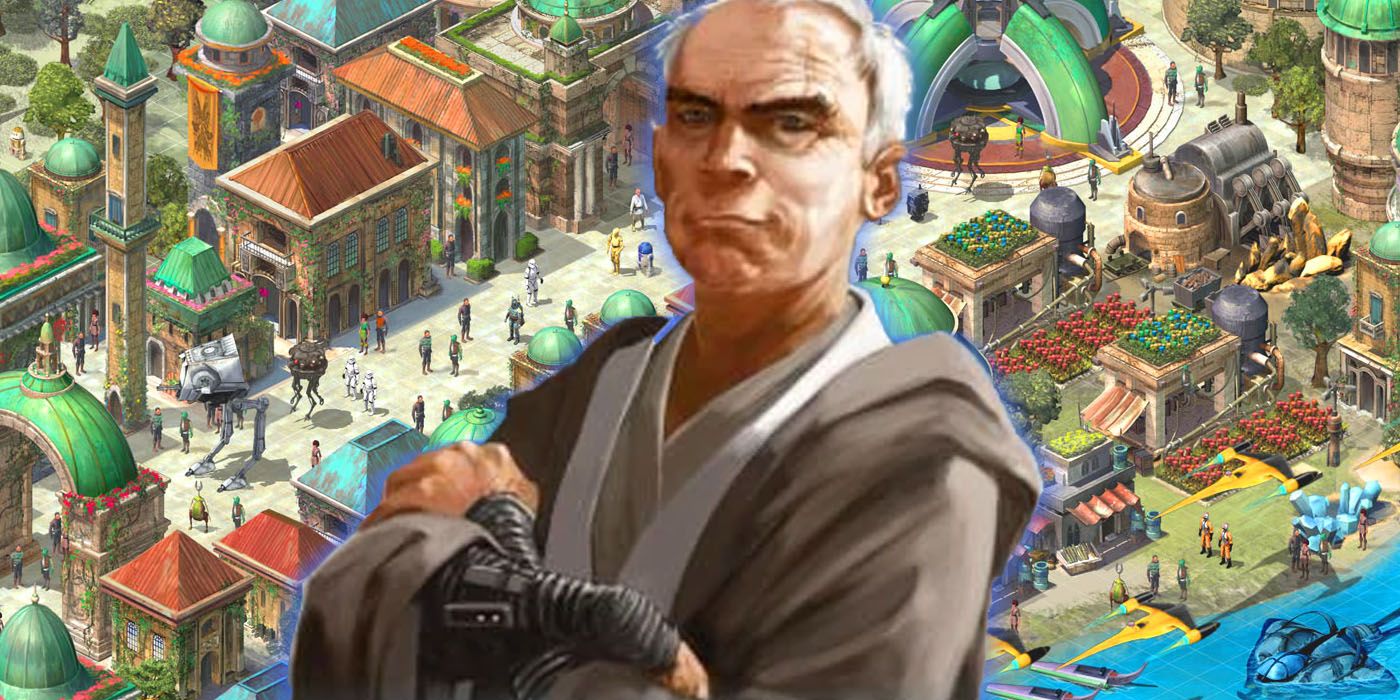
Before Disney purchased the Star Wars brand, the company had its own studios, like LucasArts. Under the studio, creators offered some fantastic video games from Star Wars: Knights of the Old Republic to the original Star Wars: Battlefront franchise. But before its closure, many other titles were in the works. One of the best examples of this was the ill-fated Star Wars 1313, which was meant to be a gritty third-person experience. But before its cancelation, there was another title that had the potential to revolutionize mobile games.
Star Wars: Outpost was a mobile title with a unique premise similar to Star Wars Episode I: Gungan Frontier. But instead of trying to make a stable ecosystem to sustain life, Outpost acted more like a FarmVille clone and let players create their own community to earn currency and expand their business. At the time, Star Wars wasn’t known for these types of games and instead always relied on more action and strategy-based titles. But rather than go entirely against their previous styles of games, Outpost planned to establish itself as a unique blend that connected to other future titles in unprecedented ways. While LucasArts and the games that came with it are no longer in operation, Outpost offers enough unique ideas that it could still work in the modern mobile gaming atmosphere.

Like FarmVille, the basic premise of Outpost is for players to create their own outposts in various locations from the films. No matter the location, players would be capable of placing farms, mines, and shipyards and using the resources gained from the area. However, what separates the title from other clones is that it doesn’t solely rely on communicating with real people for trading. While talking to friends is an option, players can also speak with characters from the Star Wars universe, like RD-D2. Using this mechanic allows players to keep their gameplay momentum without relying too heavily on other players to move ahead. However, there is also an opportunity for players to betray others for resources, making trading just as risky as it is in the films.
As players grow their outpost into a community, even more pathways open that include upgrade options for each building. These paths allow players to dive deeper into the game’s story, and as they invest in the title, more opportunities open that would have grown the title to new heights. For example, at the time of its development, LucasArts was also planning a new first-person shooter titled, Star Wars: First Assault. Outpost players who unlocked the option to manufacture weapons could use those creations in First Assault. By connecting the two titles, players would have enjoyed Star Wars games in ways never before seen. Since interconnectivity is such a big part of mobile gaming in the modern age, this mechanic could work even more if it is officially released.

Since it’s a Star Wars game, players can also tailor their decisions to lean either to the Rebels or the Empire. Depending on the allegiance, players could also be given a chance for even more opportunities for success. For example, as they help their faction take over the galaxy, their outpost occupied by their side could open players up to more bonuses, meaning even more income. However, if players didn’t want to wait, microtransactions were included but weren’t detrimental to advancement.
Star Wars: Outpost was undoubtedly ahead of its time. While it could have succeeded when it was initially developed in 2013, the opportunity for it to be an even more significant success now is even higher. Outpost allows players to connect and participate in the Star Wars universe in ways other mobile games in the universe could never achieve. As a result, it could also give the company a more prominent footing in the medium. Star Wars: Outpost’s concept shows how it could push similar titles to grow in its genre and proves it deserves a shot now more than ever with its unique gameplay ideas and innovative mechanics.
About The Author