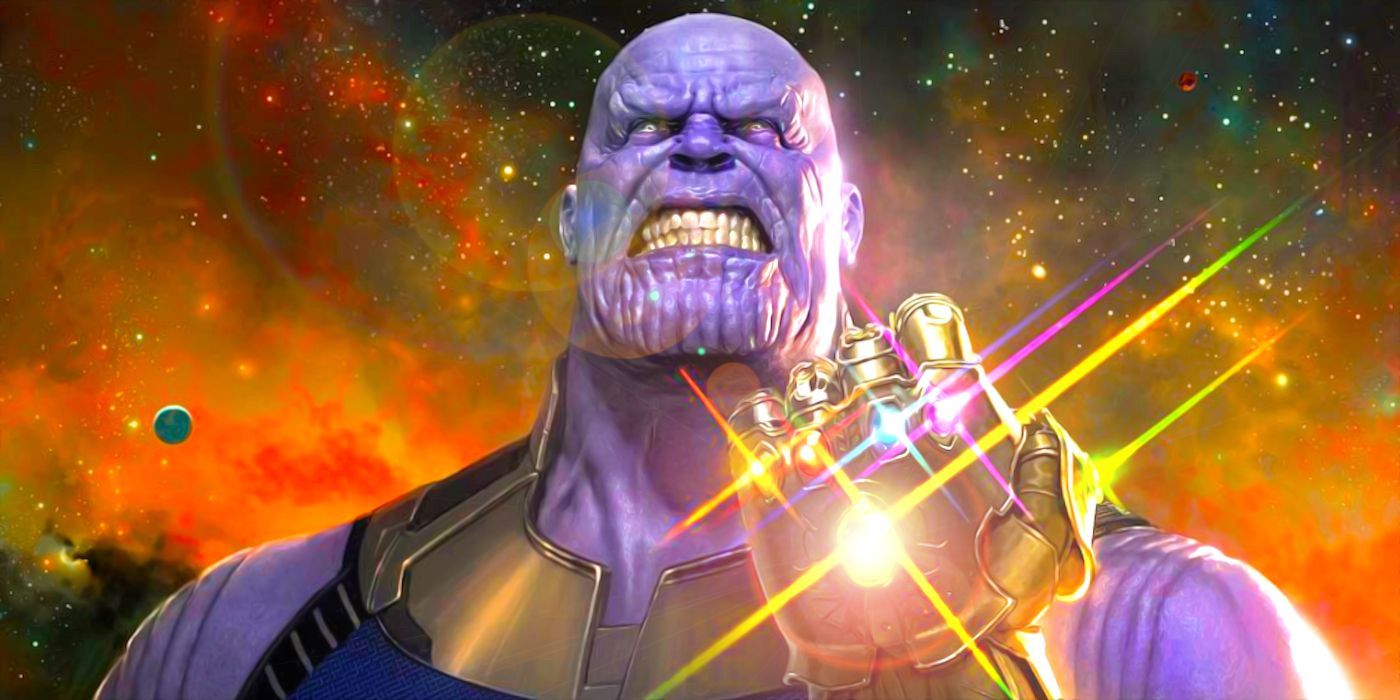
The comparative powers of the Infinity Stones in the Marvel Cinematic Universe beggar belief, fitting their status as god-makers to anyone who can wield them. Of the six, the Soul Stone at first seems the quietest and least powerful. It’s not used often in and of itself in the franchise, though Thanos’s ability to make the Snap wouldn’t be possible without it. As it turns out, it might be the most dangerous of the Stones, not only for the power that it wields but for the cost it extracts from the user.
Its exact powers and abilities stem from a long history in the comics. Its appearances in the MCU – specifically in Avengers: Infinity War and Avengers: Endgame – pay careful respect to its origins, but differ in key ways. In both cases, however, the Soul Stone possesses one ability that sets it very much apart from the previous five. It’s sentient, or at least possesses a will of its own. “You might say it has a certain wisdom,” the Red Skull explains to Thanos as the mad Titan arrives to claim it. That makes it particularly dangerous even to those who believe they can master it. Here’s a quick breakdown of the Stone’s abilities… and the cost of using it.
What Are the Marvel Soul Stone’s History and Powers?
The Soul Stone first appeared in Marvel Premiere #1 in 1972, when it was green instead of orange. The High Evolutionary used it to help create Adam Warlock, embedding it in his head similar to the Mind Stone embedded in Vision’s in the MCU. It possessed the ability to shape and alter souls. That included the power to attack and destroy souls, reshape them, evolve or de-evolve them, and even absorb them. Absorbed souls appeared in a peaceful realm within the Stone, where the wielder could interact with them. The Stone can also reveal any information that a given being knows, making it a powerful source of knowledge in the universe. Finally, the Soul Stone carried a specific link to Adam Warlock, rendering him immune to its effects even if wielded by someone else.
Warlock is slated to appear in the MCU, but the casting of actor Will Poulter in the role was only recently announced. Regardless, Warlock played no role in either Infinity War or Endgame, necessitating a few changes. The Stone possesses the ability to change destroy living souls — a key part of Thanos’s plans, as well as the ability to commune with the souls of the dead. While it doesn’t have the ability to bring the dead back to life, it can restore souls that it previously destroyed — as it presumably did when the Hulk undid the Snap in Endgame. It possesses a “Soulworld” where the user can interact with souls it has taken – specifically Gamora, who appears within the world as a child to speak with Thanos – and identify and pinpoint specific souls. This is shown in one of the few times it was wielded without the power of the remaining Stones, when Thanos identified the real Doctor Strange from among numerous duplicates during their conflict in Infinity War.
The biggest difference between the Soul Stone in the MCU and its counterpart in the comics is that apparently anyone can use it, or at least hold it, after its price has been paid. Hawkeye, an ordinary man with no superpowers, comes into its possession during Endgame and safely returns it to Earth. That may come about in part due to its self-awareness, which would allow it to choose who it serves.
What Does It Cost to Use the MCU Soul Stone?
Part of the difficulty in using the Soul Stone lies in locating it. It lies on the planet Vormir at the center of the known universe, hidden in a shrine. As Thor explains in Infinity War, not even the Asgardians are aware of its exact location. Thanos’s daughter Gamora learns of it, but conspires to keep knowledge of it from him, surrendering only after he tortures her sister Nebula. Nebula’s subsequent knowledge of Vormir allows Black Widow and Hawkeye to reach it during the “time heist” of Infinity War.
But its true cost is infamously much greater, and the terrifying logic of it stems from its supposed sentience. Anyone who wishes to use it must first sacrifice a loved one – someone they truly care about – in order to gain it. Whoever is killed in this fashion can’t be brought back by any means known in the universe. It prevents the Red Skull from using it, since he loves nothing and no one but himself: turning his quest into fitting punishment as he spends eternity within reach of the power he always wanted and will never hold. Both Thanos and the Avengers are forced to pay the price – Thanos by killing his daughter Gamora, the Black Widow through her own self-sacrifice – giving the Stone a brutal means to “test” those who seek to claim it for their own.
About The Author
