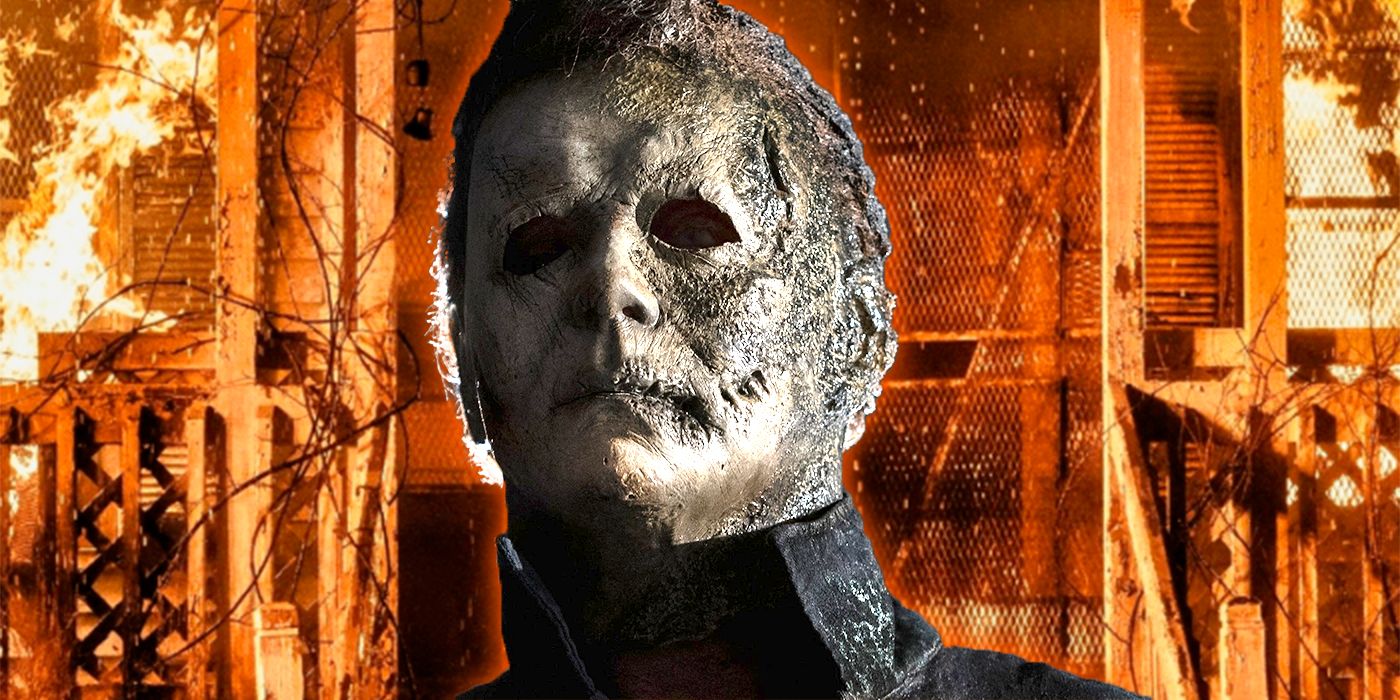
The Halloween franchise has undergone an unusual number of twists and turns in its 40 plus year history. The iconic original gave way to the inevitable sequels, reboots and reimaginings, even getting entirely away from its signature killer Michael Myers at one point only to bring him back in the next outing. There are currently twelve films in the franchise, with a thirteenth coming next year, as well as numerous non-canon installments as well. And unlike most other entries in the slasher film canon, it can’t easily be watched front to back.
Instead, the franchise more closely resembles Choose Your Own Adventure, the popular series of children’s books from the ’80s where readers decided which path the protagonists would take. Instead of reading one page after the other, the reader would be instructed to skip to a specific page based on their choice, sending the stories in wildly different directions. The Halloween movies operate on a similar premise, owing to all the shifts and changes. The best way to experience them is to follow the Choose Your Own Adventure format and select a “path,” leading to a different conclusion. Four separate options exist, plus a fifth standalone that is utterly unconnected to the remainder of the series. A quick rundown of each path follows.
The Halloween Stand-alone Films
The franchise began with John Carpenter’s low-budget breakout hit in 1978, following a silent maniac in a white mask who stalks a trio of babysitters on Halloween. As with most originals, it was created as a stand-alone story, though the famous twist ending opened the door for the sequels that followed. As the first — and still the best — entry in the series, it’s both an ideal introduction to the franchise and an excellent stand-alone horror movie with no further need to delve into the sequels.
This category also includes Halloween III: Season of the Witch, an attempt to move the franchise away from Myers and toward a proposed anthology format. The film even entails characters watching the Carpenter movie to emphasize its place in a separate universe. It can’t match the original, but it finds its own story to tell, and over the years has amassed a devoted cult following.
The Halloween Sequel Cut
The Sequel Cut is simple enough to follow chronologically. It consists of the first five Michael Myers movies played in order, with Halloween III simply removed from the count. That includes Halloween, Halloween II, Halloween 4: The Return of Michael Myers, Halloween 5: The Revenge of Michael Myers and Halloween: The Curse of Michael Myers. The thread follows the pattern of most slasher films of the era, creating an increasingly elaborate backstory involving both Michael’s family and dark druidic magic that resulted in increasingly diminishing returns before finally bottoming out with Curse in 1995. Donald Pleasence remained the star in all five movies, reprising his role of Dr. Loomis from the first movie and giving interminable chase to his former patient throughout.
The Halloween H20 Cut
The seventh film in the series Halloween H20 adopted the same tactic as the 2018 version, ignoring the later sequels and adopting a new storyline to pursue. Accordingly, it ignores Return, Revenge and Curse. In favor of picking up after the original and Halloween II. Jamie Lee Curtis returned to the franchise for the first time since part II, as Laurie Strode once more found herself the target of Michael’s wrath. The film was a huge success and earned comparatively strong praise from critics, prompting a sequel — Halloween: Resurrection, which ended with Laurie’s death. Plans for further sequels were scrapped in favor of the Rob Zombie reboot. The H20 cut covers four films in order: Halloween, Halloween II, Halloween H20 and Halloween: Resurrection.
The Rob Zombie Halloween Cut
Director Rob Zombie undertook a well-publicized reboot of the original movie in 2007. His Halloween stuck closely to the events of the first film, though he included a backstory that made heavy use of developments from the sequels. The first film did well — with over $80 million in box office revenues — and found an audience drawn to its intense violence and often nihilistic tone. Zombie directed a sequel in 2009, Halloween II, which followed the anticipated pattern: severely reduced box office and negative reviews. Both films retain a cult following, and both tell one interconnected story, making the pair a stand-alone cut on their own.
The Halloween ’18 Cut
The 2018 reboot of Halloween arrived as a watershed among fans, eclipsing even H20 with its critical and box office success and pronounced the best of the lot since the Carpenter original. It also ignores every film except for the 1978 version, implying that the sequels are “urban legends” and not making use of any of their content. That gives it the benefit of bringing Laurie Strode back to life, reimagined here as a scarred survivor of the 1978 attack and waiting for Michael’s inevitable return. The sequel, Halloween Kills, opened in October 2021 — again, with a big drop in critical approval. A finale, Halloween Ends, is slated for release in 2022. The Halloween ’18 cut entails the 1978 original, followed by those three latter-day films in order.
About The Author
