When it comes to film intrigue, there are a number of different ways that a writer can try and shock the audience with a plot twist. One of the most powerful plot twists is when a movie is able to take a single event, or a single plotline and completely change the audience’s interpretation of that moment.
It works so well because audiences are predisposed to identify with the main character’s point of view. Going back and seeing how events played out from another character’s perspective is challenging to pull off, but there are more than a few examples of a film completely shocking the audience with this plot device.
10 Courage Under Fire Is A Military Example
1996’s Courage Under Fire, Denzel Washington plays Nat Serling, an army veteran who is tasked with evaluating the merits of another soldier, recently deceased Karen Walden, to see if she is worthy of a posthumous medal of honor. Serling tracks down other soldiers who had worked with Walden in the past and each member gives him a wildly different story from the last. Some say that Walden is deserving of the medal, others say that she was a coward and doesn’t deserve anything. The movie is extremely emotional, showcasing the effects that military life can have on someone.
9 Snake Eyes Star Nicolas Cage
1998’s Snake Eyes sees Nicholas Cage star as Rick Santoro, a detective at a boxing match when an assassination suddenly occurs in broad daylight. Santoro starts taking accounts of the different suspects behind the murder, all of whom tell versions of events that are different from each other in significant ways. The film increases the tension by giving Rick a limited amount of time to figure out who the mastermind is and arrest them. The film was fairly criticized when it came out, many citing that a lot of the film didn’t seem to have substance, but its mystery elements were widely praised.
8 The Usual Suspects Is A Cult Classic
1995’s The Usual Suspects covers the interrogation of the only living member of a heist group, Verbal, after the robbery goes horribly wrong. The entire film is told from the perspective of Verbal, but despite this, the film is still able to surprise the audience at every turn as the story of the heist is recounted. The film is absolutely filled with plot twists, as Verbal answers his interrogator’s questions, more and more revelations about the origin of the heist group and how their plans came into fruition completely grab the audience.
Everything leads up to one final excellent plot twist that once again turns everything on its head.
7 Hero Only Reveals The Truth At The End
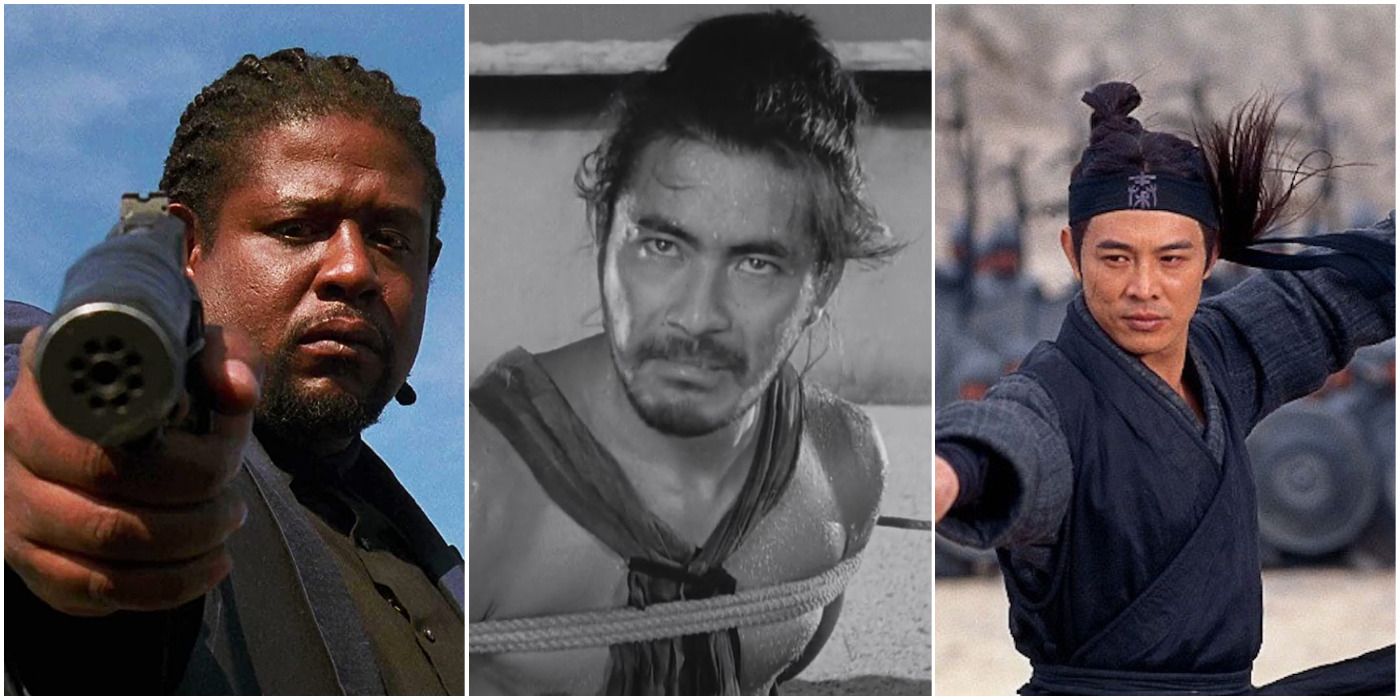
2002’s Hero was inspired by Akira Kurosawa’s 1950 classic Rashomon. The film follows a nameless mercenary, played by Jet Li, who is telling a story to China’s emperor about how he had eliminated three assassins. The film follows the mercenary’s interpretation of events before the emperor himself to respond with his own version of the story, providing his own interpretation of events based on his critiques of the mercenary’s story. The audience does not know who is telling the whole truth until a plot twist in the third act fills in the gaps and puts all the pieces together.
6 The Handmaiden Has A Surprise Twist
2016’s The Handmaiden was an adaptation of a book titled Fingersmith. The story follows a girl who was hired as a handmaid for a Japanese heiress. The initial plot twist of the story is that the handmaiden is actually a part of a fraud scheme and actually works for a con man. The initial twist comes about when the handmaiden and the empress end up falling in love with each other. However, it doesn’t stop there, and the second half of the film has more surprises in store for the audience. Eventually, the film goes back to the beginning, replaying key events from another character’s perspective, adding new context to several moments.
5 Ghost Dog Tells A Selfish Tale
1999’s Ghost Dog utilizes the plot twist in a comparatively minor way — it happens once and doesn’t exactly change the trajectory of the story — however, it’s still an interesting subversion of things that the audiences had believed to be fact. In particular, the scene in Ghost Dog refers to the origins of the titular character. Ghost Dog, a hitman has made himself completely loyal to his retainer for decades thanks to a complete misunderstanding. The audience is told about the situation from the retainer’s point of view and learns that their actions were much more selfish than originally believed.
4 The Outrage Leaves Viewers Guessing
1964’s The Outrage is another example of a Western adaptation of Akira Kurosawa’s classic films, in this case, 1950’s Rashomon. It is extremely similar to Kurosawa’s original, almost to a fault, as many critics felt underwhelmed that this film didn’t bother to add any unique flair to its narrative. Regardless, the story follows the case of the assault and murder that were committed by a notorious bandit. The film spends its runtime going over the event from a number of different perspectives, while never explicitly stating which perspective is an accurate re-telling of what actually happened.
3 Elephant Is A Controversial Movie
A controversial movie, designed to be a meditation on the Columbine massacre, the bulk of 2003’s Elephant was told from the perspective of several students as they go about their high school lives. The film focuses on these students and their daily routines, up until there is a massacre at their school. This proved to be a contentious approach, as some praised this approach to the narrative, and others considered it utterly boring. These different perspectives also place the violence into further context, as the audience sees characters that they have spent much of the runtime empathizing with killed.
2 Gone Girl Flips The Story On Its Head
In the 2014 film adaptation of Gillian Flynn’s novel, Gone Girl follows Nick Dunne, a teacher who becomes a suspect in the disappearance of his wife. The two halves of the film are told from the perspective of two different characters. The first half of the film is told from Nick’s perspective as he deals with the stress of his missing wife and the process of being a suspect. Then, the movie switches perspectives and tells the story from the perspective of his wife Amy. When this happens, everything that the audience has been led to believe as true becomes completely turned on its head.
1 Rashomon Was One Of The First Examples Of This Genre
Akira Kurosawa’s 1950 classic Rashomon was the first time a filmmaker had presented a single event and told it through multiple perspectives. The film drove home the fact that multiple eyewitnesses to an event can actually complicate the situation further and is the origin for the term “Rashomon Effect.” The film follows the court hearing of an infamous bandit on trial for assault and murder. Multiple points of view of this same event are told, though the different perspectives are wildly different from each other and the audience is never told which perspective is correct.
About The Author