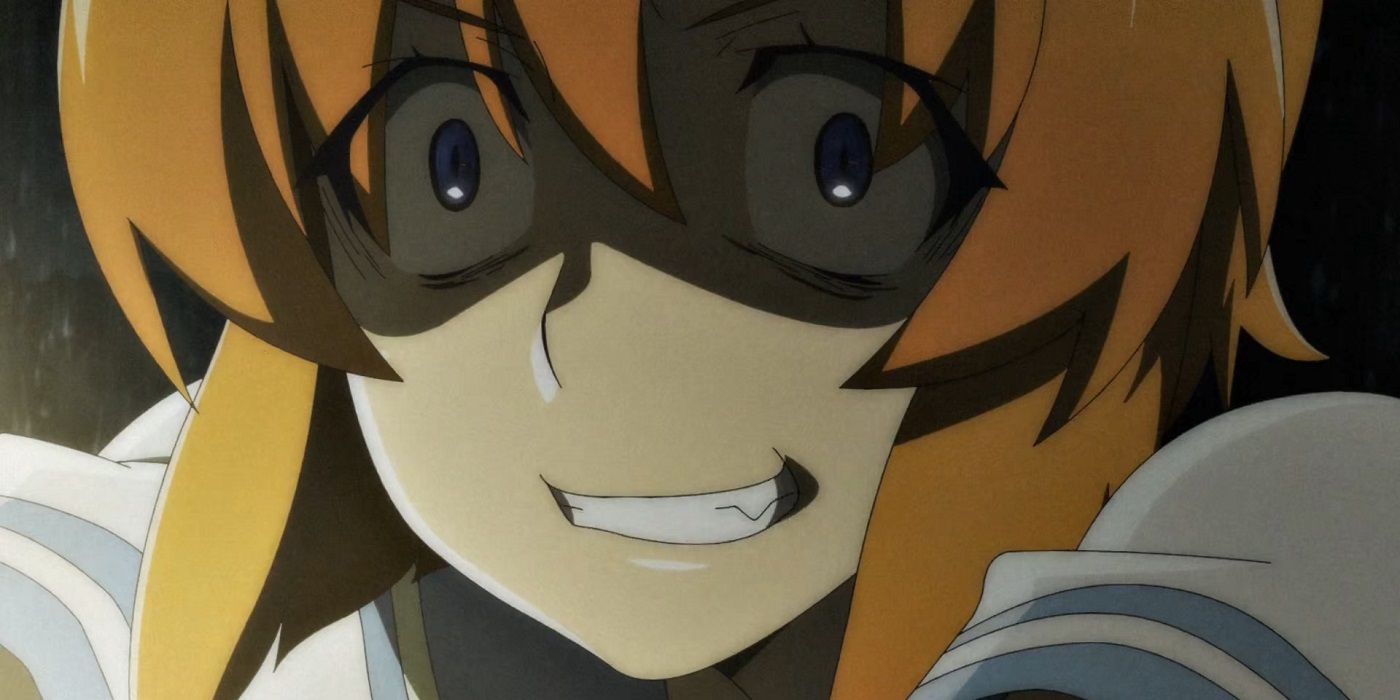
Hinamizawa Syndrome is the mysterious and questionable disease that serves as a key plot device in the Higurashi: When They Cry franchise. For many viewers, Hinamizawa Syndrome can completely smash their willing suspension of disbelief since it’s a poorly understood fictional disease. Nevertheless, series creator Ryukishi07 has tried his best to explain Hinamizawa Syndrome and how it works.
Some of the characteristics of Hinamizawa Syndrome are based on existing medical science that Ryukishi07 was inspired by while other characteristics rely on the fictional village of Hinamizawa and its lore. Most of these details are easier to pick up when reading through the visual novels and manga, leaving anime-only fans scratching their heads at the hints scattered throughout the anime series.
10 Hinamizawa Syndrome Mimics A Combination Of Real Medical Conditions
The hallmark symptoms of Hinamizawa Syndrome include paranoid delusions, reduced impulse control that frequently leads to physical violence, and an irritating itching sensation in the neck. While all these things happening at once seems improbable, the symptoms nevertheless stem from real-life conditions. Since Hinamizawa Syndrome is caused by a brain parasite that lies dormant, it mimics the single-celled Toxoplasma gondii that’s responsible for toxoplasmosis. The paranoid delusions and hallucinations are based on symptoms of paranoid schizophrenia. And the neck scratching is related to a rare psychiatric condition called delusional parasitosis.
9 The Neck Scratching Symptom Is A Real Life Phenomenon
The technical term for the itching sensation people feel when experiencing high levels of Hinamizawa Syndrome is called “formication.” Formication is a type of tactile hallucination that’s frequently experienced by people under excessive psychological stress, especially if it’s linked to addiction to amphetamines or cocaine. This symptom is also related to delusional parasitosis, which Hinamizawa Syndrome is partially based on. Delusional parasitosis is a condition that convinces people that they’re infested with parasites that are crawling just beneath the skin.
8 Everyone In Hinamizawa Is Infected With Hinamizawa Syndrome
Since Hinamizawa Syndrome is unique to Hinamizawa, it’s presumed that every resident living there has the brain parasite that’s responsible for the disease. More alarming is the fact that anyone who visits Hinamizawa runs the risk of catching the disease, and characters who mostly live in the nearby city of Okonomiya have exhibited symptoms even if they weren’t born or haven’t lived in Hinamizawa.
Shion Sonozaki is an example of a character who, despite spending most of her life outside the borders of Hinamizawa, nevertheless has Hinamizawa Syndrome because she was born there.
7 Physiological & Psychological Stress Make Hinamizawa Syndrome Worse
Even though everyone in Hinamizawa most likely has Hinamizawa Syndrome, they’re still able to live their lives without the illness ever becoming active. This is mostly due to the presumption that the parasite stays inactive unless something agitates it. Common agitators that induce high levels of Hinamizawa Syndrome include both physiological and psychological stress. Satoko Hojo’s abusive home life, for example, caused great physical and psychological distress that led her to exhibit increasingly high levels of Hinamizawa Syndrome. Her symptoms became so bad that medical intervention was eventually required.
6 Lord Oyashiro’s Curse Is Bolstered By Hinamizawa Syndrome
Hinamizawa Syndrome is undoubtedly rooted in medical science, but before anyone started researching it, it was commonly referred to as Lord Oyashiro’s curse. Since everyone born in Hinamizawa contracts the disease and stress is an inescapable fact of life, it’s inevitable that they would begin to exhibit symptoms no matter where they lived. Despite this, however, many emigrated sufferers of Hinamizawa Syndrome reported feeling relief once they returned to the village. This behavior fueled the superstition of Lord Oyashiro’s curse, who, according to legend, forbade Hinamizawans from leaving the village or letting outsiders in.
5 Koizumi Links Hinamizawa Syndrome To A Real Historical Event
In the Higurashi: When They Cry manga, there’s a scene where Koizumi – one of Takano’s benefactors in researching Hinamizawa Syndrome – links Hinamizawa to World War II. The Marco Polo Bridge incident is a real historical event that led to Japan legitimizing war with China after the Chinese and Japanese armies exchanged fire on July 7th, 1937. The exact cause of the exchange is unknown to this day, but Ryukishi07 used this event to add legitimacy to Hinamizawa Syndrome. Koizumi states that a Japanese soldier from Hinamizawa succumbed to Hinamizawa Syndrome and fired the first shot.
4 The Queen Carrier Theory Is Most Likely False
More than one character in the Higurashi franchise has spoken about Rika Furude as the “Queen Carrier,” a cryptic term that isn’t delved into thoroughly. Since Hinamizawa Syndrome is caused by a parasite, researchers incorrectly assumed there is a source – a host that can presumably control the parasites in those infected.
Miyo Takano falsely assumed that parasites activate in patients if they’re far away from the Queen Carrier or if the Queen Carrier dies. Several scenes in the anime have proven that this theory is questionable at best and most likely untrue.
3 H173 Was Initially Created To Be Used As A Biological Weapon
Since the Marco Polo Bridge incident is linked to Hinamizawa Syndrome in Higurashi, the Japanese government within the fictional world took interest in the disease. Specifically, Takano was able to convince Japanese politicians that Hinamizawa Syndrome had applications as a biological weapon, which helped secure her the financial backing she needed to complete her grandfather’s work and further research into the illness. Takano created a drug known as H173 that artificially induces high levels of Hinamizawa Syndrome in those who are injected. H173 serves as a crucial plot device.
2 Dr. Irie Has Created More Than One Medicine To Treat Hinamizawa Syndrome
Part of the research into Hinamizawa Syndrome is focused on curing the disease as well since it needs to be stoppable if it’s intended to be used as a biological weapon. Kyosuke Irie has developed a few medicines and even a vaccine that helps keep Hinamizawa Syndrome symptoms at bay. Notably, the medicines created to combat Hinamizawa Syndrome are made with Rika Furude’s blood since the Furude family has a natural resistance to Hinamizawa Syndrome’s effects. She initially agrees to help Irie because she wants to help treat Satoko’s Hinamizawa Syndrome.
1 C120 Is Dangerous To People Who Don’t Have Hinamizawa Syndrome
One of the medicines created by Dr. Irie is C120, a drug that can reduce dangerously high levels of Hinamizawa Syndrome down to a manageable point with only one injection. Before C120, up to three injections were needed to suppress high levels of Hinamizawa Syndrome in patients, meaning C120 is quite the breakthrough. It comes with a significant risk, however, since it will have the opposite effect in people who aren’t suffering from high levels of the disease, or who don’t have it at all. This effect was evidenced when Rika tries to treat Shion but gets injected herself instead.
About The Author
