Like other anime genres, shojo has a variety of established classics. Over the years, the genre has adapted to encompass more than just the protagonist pursuing a crush, even though romance remains a central point in many shojo series.
Some mangaka don’t hesitate to explore other subgenres, from family drama to fighting in wars. These anime pushed the boundaries of what defines a shojo series, exceeding fans’ expectations, leaving them wanting more. On the other hand, there are shojo anime that fell by the wayside, with lousy timing or questionable story material leading to their downfall.
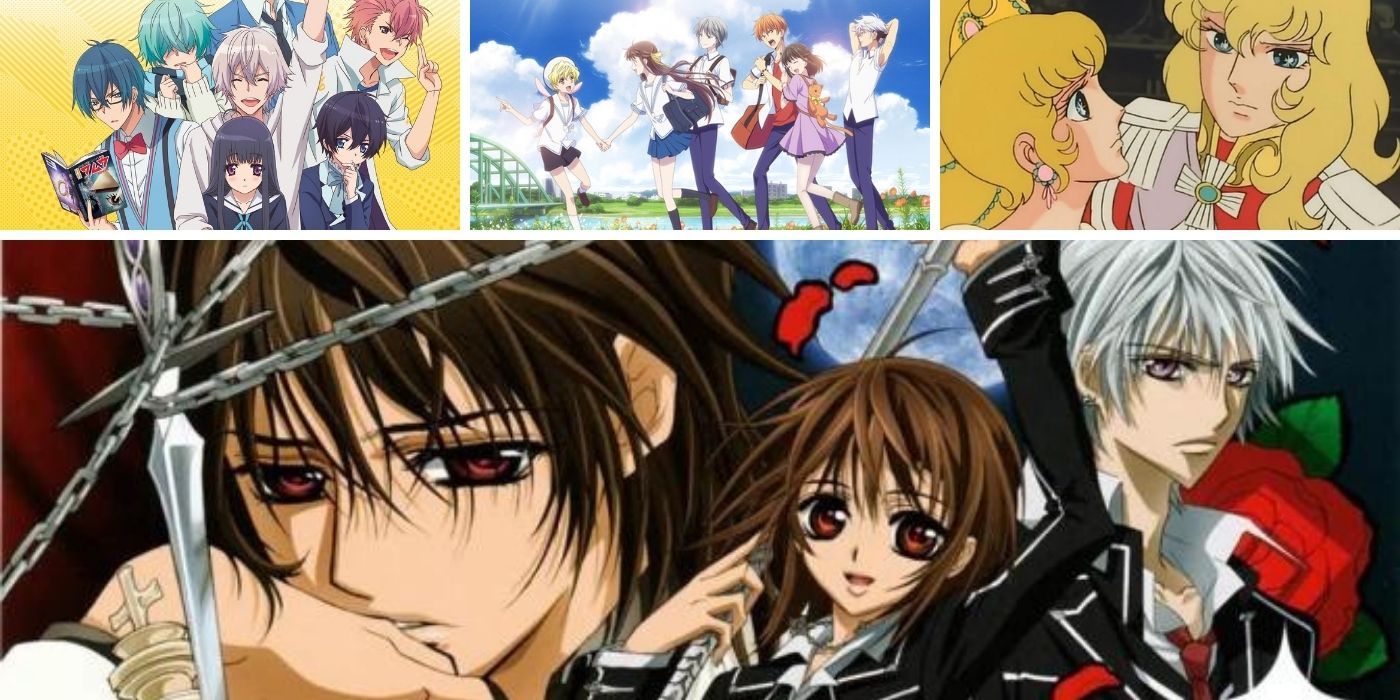
10 REINVENTED THE GENRE: Rose Of Versailles Inspired A New Generation Of Strong Women
Thanks to its recent resurgence, The Rose of Versailles has brought new eyes to its classic tale. The story centers around Oscar François de Jarjeyes, a young woman born into the esteemed Jarjeyes family. Desperate for a male heir, her father raised her as a man, grooming her to become a soldier. Oscar is calm and confident, besting any man in swordsmanship. She eventually became the head of the Royal French guard and Queen Marie Antoinette’s bodyguard.
The Rose of Versailles became a cultural and feminist icon, inspiring newer mangaka to create strong female protagonists. Oscar’s character influenced other shojo protagonists and supporting characters throughout the years, such as Utena Tenjo from Revolutionary Girl Utena and Haruka Tenoh from Sailor Moon.
9 DIDN’T REINVENT THE GENRE: Vampire Knight Didn’t Age As Well As It Should Have
Everyone loves a good vampire story, especially during Halloween. There are plenty of anime highlighting tales of these dangerous bloodsuckers. Vampire Knight took the anime community by storm in 2008, but it didn’t age well.
Yuki Cross goes through her high school life not knowing her background. The only thing she remembers is Kaname Kuran saving her from a rogue vampire. Now, the two attend Cross Academy, and Kaname’s more than just overprotective of her. Their relationship may seem wholesome on the outside, but more profound, taboo connections intertwine the two as the story progresses.
8 REINVENTED THE GENRE: Fruits Basket Tackled Mental Health Struggles Flawlessly
In 2019, Fruits Basket made a comeback with a new animated reboot for both new and seasoned fans. Anime fans who watched the 2001 version were thrilled to see how the remake would hold up. In fact, it exceeded everyone’s expectations by tackling the manga’s darker subject matter.
Tohru Honda is a cheerful high school girl trying to survive after her mother’s passing. As she stays with her classmate, Yuki, and his relatives, Tohru learns more about the esteemed Sohma family secrets, including the psychological torment they face at the head member’s hands. Fruits Basket hits hard with its intertwining stories about mental health struggles, social anxiety, broken relationships, and self-acceptance.
7 DIDN’T REINVENT THE GENRE: First Love Monster Only Made Viewers Uncomfortable
Relationships with large age gaps are some of the more controversial in shojo anime. A few manage to establish themselves as fan favorites, mainly when the relationships are healthy and well-written. However, First Love Monster took it a step too far.
The anime is comedic and light-hearted, but Kaho and Kanade’s budding relationship is more serious despite the five-year age gap. Like most first-time couples, their romance is awkward, but it’s somewhat awkward to see a 15-year-old pining for a 9-year-old, both of whom barely understand romance itself.
6 REINVENTED THE GENRE: Yona Of The Dawn Is More Than Just A Princess And Her Knights
At first glance, Yona of the Dawn seems like a typical historical romance. Yona is a beautiful princess living her peaceful life, tucked away in her castle with her father, childhood friend (Son Hak), and cousin (Soo-won). Everything seems perfect until Yona is thrust into chaos after Soo-won murders her father in cold blood. She’s forced to flee with Hak and learn to fend for herself in the wilderness. Hak is determined to protect Yona, but she grows frustrated with her inability to defend herself.
Yona of the Dawn shows Yona’s growth as she meets the other “Dragons,” mythical warriors blessed with admirable and fearful superpowers. She discovers more about herself as she learns to live on her own. Modern-day historical shojo stray away from war and political drama, but Yona of the Dawn dives headfirst into such topics, showcasing Yona’s coming-of-age story with it.
5 DIDN’T REINVENT THE GENRE: Revolutionary Girl Utena Wasn’t All That Revolutionary
Revolutionary Girl Utena gained a cult following when it aired in the 1990s, but it still has its flaws. The heavy amounts of symbolism can go over new fans’ heads, just like Neon Genesis Evangelion, a series also famous for its confusing symbolism and themes. In addition, the random inclusion of filler episodes deter the serious storyline.
Unlike the more mature anime adaptation, the manga was much tamer with more prominent LGBTQIA+ themes. Several publishers had the manga censored and watered down, and the mangaka had no say in the direction of the anime. Revolutionary Girl Utena is a series that would benefit from a more accurate remake.
4 REINVENTED THE GENRE: Kimi Ni Todoke Brought More Than Just A Wholesome Romance
Despite its simple plot, Kimi Ni Todoke made a name for itself in the shojo genre in terms of romance and slice-of-life. Most shojo series focus on a protagonist’s personal and romantic developments, but this anime delves deeper into the lives of the supporting cast.
Sawako Kuronuma struggles to fit in at school. She’s soft-spoken and afraid to show her emotions, save for a creepy smile here and there. Her classmates nicknamed her “Sadako” due to her likeness to the horror movie character from The Ring. However, Shota Kazehaya, the school’s popular boy, isn’t scared of Sawako and greets her like everyone else. She slowly develops an admiration for Shota, calling him “refreshing,” and strives to become a friendlier person.
3 DIDN’T REINVENT THE GENRE: Wolf Girl And Black Prince Tried To Make Toxic Relationships Look Funny
A “rough around the edges” character is good here and there, but there’s no need to glamorize a complete sadist. Kyoya and Erika’s “relationship” borders on abusive, making the anime seem more quirky and funny than it should be.
Erika’s desperate to prove she has a boyfriend and chooses the worst possible candidate. After getting caught sneaking a photo of Kyoya, the school’s popular bad boy, he offers to keep her secret only if she acts like his “dog.” This false relationship takes a dive and devolves into Kyoya bullying Erika for the duration of the anime, with Erika gradually developing feelings for him. It’s like an odd case of Stockholm syndrome but meant to be funny and light-hearted.
2 REINVENTED THE GENRE: Paradise Kiss Is A Relatable Story Of Self-Discovery
Yukari Hayasaka’s life is dull and repetitive. Every day, she commutes from home to school, spending her time on nothing but studying. Getting good grades is the most important thing to her, but she doesn’t know why. She has no idea of what career to pursue, so all this studying is pointless to her. It’s not until she meets the members of Paradise Kiss, a student-owned fashion brand, who ask her to model for them. At first, Yukari is frustrated by the offer, but her perspective begins to change the more she hangs out with them.
Paradise Kiss shines a light on self-identification and finding one’s calling in life. Readers can relate to Yukari’s frustration with her mundane life, not knowing where to go after graduation. Everyone is going to face one or two crossroads at some point in their lives. They just need a push or the courage to move in the right direction.
1 DIDN’T REINVENT THE GENRE: Alice In The Country Of Hearts Wasn’t Well-Written
Even though the popular book Alice in Wonderland inspired it, Alice in the Country of Hearts‘ anime didn’t live up to expectations. The anime film was initially adapted from a visual novel of the same name, centering around the adventures of Alice Liddell in the mythical Wonderland.
Unlike the visual novel, the anime provided minimal plot and had no clear direction. The film didn’t bother to explain itself or its characters while jumping straight into the story without explanation, turning off first-time watchers who don’t know about the visual novel.
About The Author
