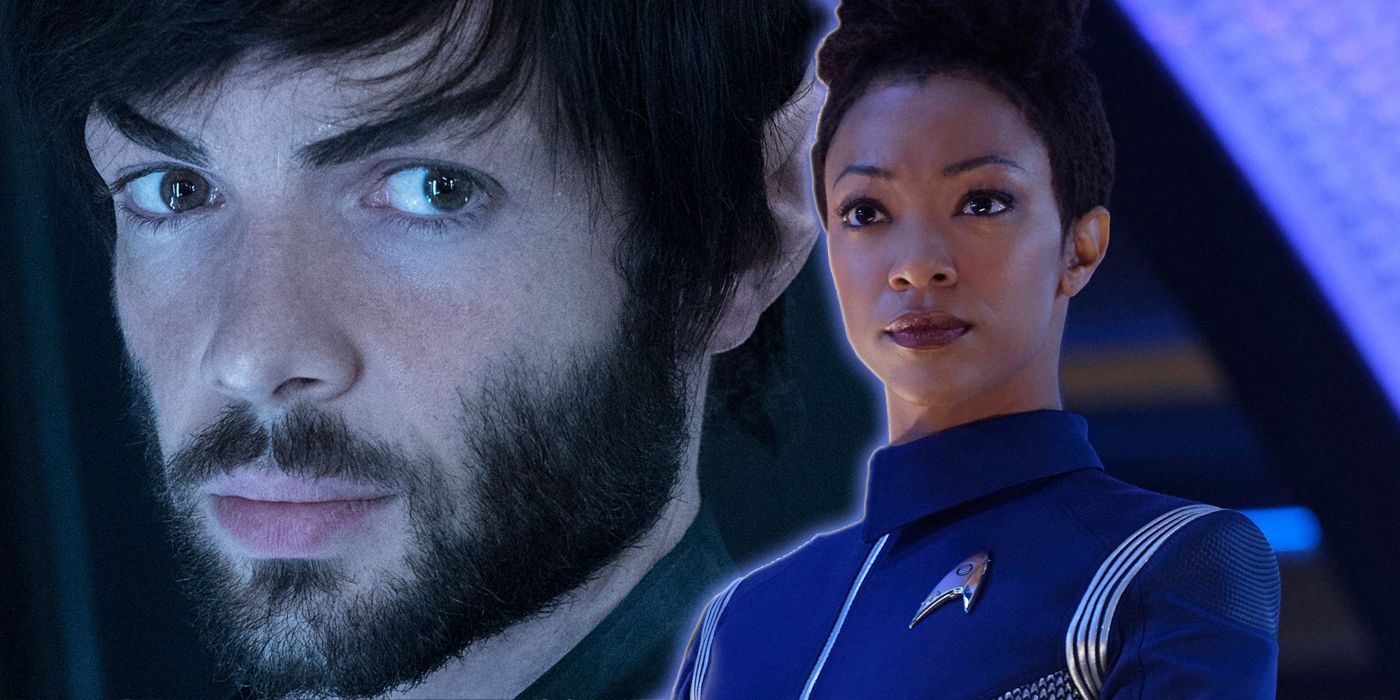
As the first new Star Trek series in over a decade, Star Trek: Discovery broke the mold on a number of levels. Chief among them is its position in the timeline, which may cause newcomers a little confusion. With Paramount all-in on Star Trek and five series under the franchise banner preparing for release, new fans are taking the opportunity to explore the latter-day series for the first time. The question is simple enough. However, exactly where Discovery sits in relation to earlier Star Trek remains rather complex.
Time travel plays a large role in Discovery’s complex plot arcs, which makes pinning the exact date down more involved than it seems. The series is clear about it all, but jumping in blind is not recommended.
Discovery Seasons 1 and 2 Take Place Before The Original Series
Discovery‘s first season begins in the year 2256, eleven years before the beginning of the Enterprise’s five-year mission comprising Star Trek: The Original Series. The period marks the beginning of the Federation-Klingon War, in which the Discovery crew plays a huge part. The first season ends with the crew bringing the war to a successful end in 2257 and the arrival of the Enterprise then under the command of Christopher Pike.
That timeline holds until the second season’s end, though some plot factors might obscure the specifics. The Discovery spends multiple Season 1 episodes in the Mirror Universe, for instance, and returns nine months later. The easiest way to tell the era is actually the crew’s uniforms, which are blue like those of Star Trek: Enterprise but have department and rank insignia closer to The Original Series. The arrival of the Enterprise in Season 2, with its more traditional three-color uniforms and the presence of Ethan Peck’s Mr. Spock, makes the era much easier to spot.
Discovery Seasons 3 and 4 Take Place in the 32nd Century
The shift comes at the end of Season 2. To stop the rogue AI Control from wiping out all sentient life in the galaxy, the Discovery catapults 930 years into the future. They find the Federation shattered in the 32nd century, with interstellar travel crippled by a cataclysm known as The Burn, and set about re-establishing the foundations of the government they left behind. Season 4, and presumably all seasons after that, will continue to take place in the 32nd century.
The reasons why make a good deal of sense. By setting the show so close to the events of The Original Series, Discovery ran a serious risk of breaching continuity. While the show did a masterful job of dancing between those lines — particularly with the introduction of Spock — efforts to stay in-canon meant hampering Discovery’s storytelling potential. There were also questions about Federation technology that the showrunners simply couldn’t address since many examples of future tech in The Original Series closely resemble today’s technology. Moving the crew forward in time — centuries past any established canon — let the show craft its own narratives without disrupting the continuity of earlier series.
The change can easily lead to puzzlement, though Discovery’s lengthy season-long arcs typically require viewing from the beginning rather than jumping in the middle. Strange New Worlds, which follows Pike and the Enterprise through the same era as Discovery Season 2, will reportedly focus on single-episode stories rather than more complicated arcs. That will make it easier to adhere to established continuity and evade the issues Discovery jumped into the future to resolve.
About The Author
