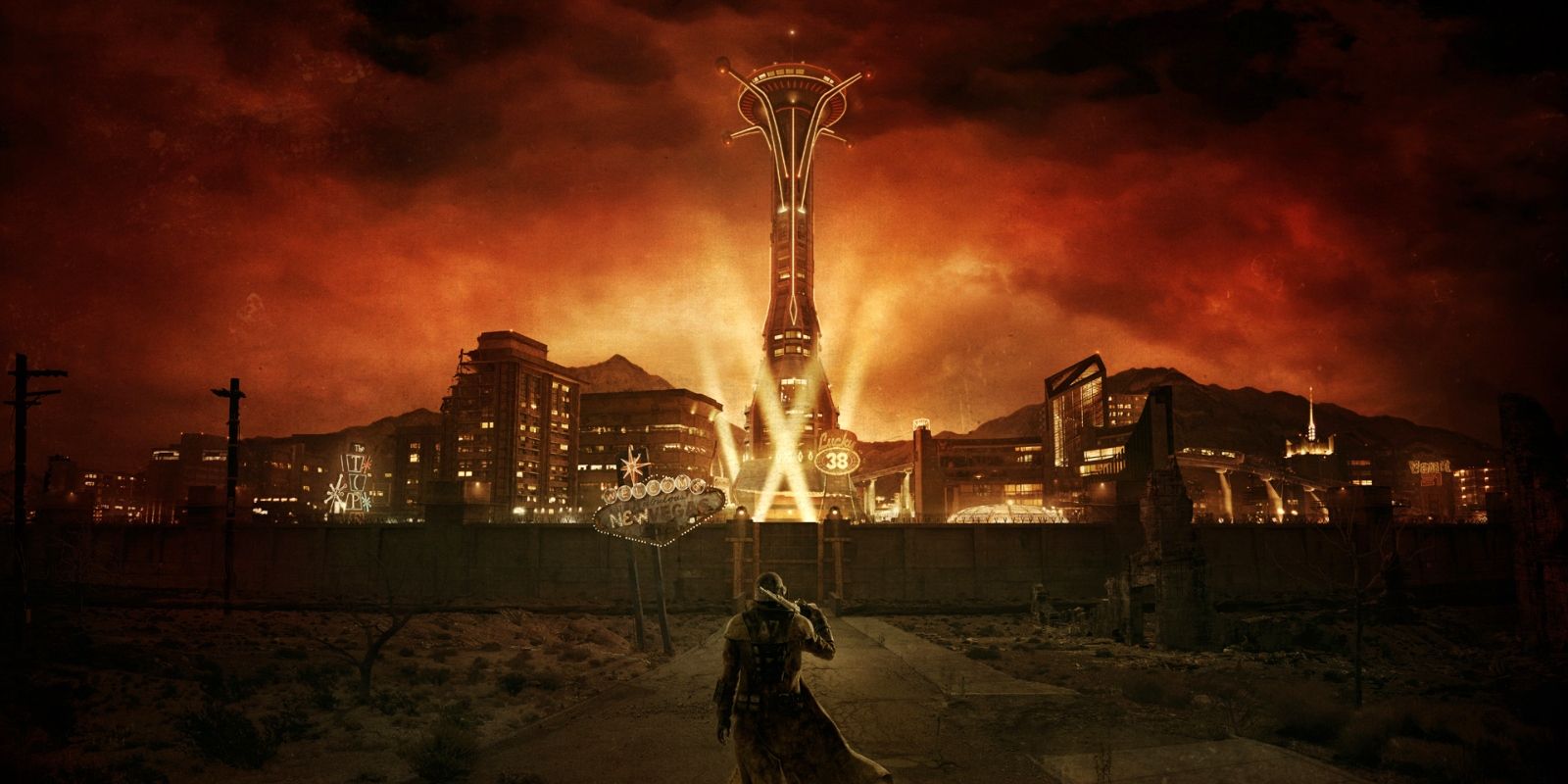
The wastelands of Fallout have always been battlegrounds between factions vying for power and resources. The Mojave Wasteland of Fallout: New Vegas is no exception, as it’s the site of an ongoing conflict between the New California Republic, Caesar’s Legion and New Vegas led by Mr. House. However, while these are the most powerful factions of the region, they are far from the only ones.
The Mojave is home to plenty of smaller factions with their own goals, philosophies, positions of power and relationships with other factions. Some considered nuisances, while others are potentially valuable allies. The fates of these smaller factions rests on the ultimate outcome of the conflict, as well as the decisions made by the Courier during their travels.
Powder Gangers
When the NCR moved into the Mojave, they commandeered an abandoned prison to create what became known as the NCR Correctional Facility. Under supervision, the prisoners were tasked with maintaining a railroad along the I-15 highway as part of a work release program. However, the war with the Legion caused more military guards to be reassigned to the front, and the prisoners were able to gather improvised weapons and explosives used for construction. This resulted in them escaping from their cells, killing the guards and warden, and taking control of the prison with Eddie as their leader.
Taking their name from their preference for explosive weapons, the Powder Gangers engage in raids all along the I-15, spreading as far as Vault 19 and terrorizing nearby towns of Goodsprings, Primm, Sloan and Nipton. Meanwhile, the NCR is too preoccupied with fighting the Legion to deal with the escapees.
Great Khans
A raider tribe with a long history, the Great Khans were once a force to be reckoned with, often at odds with communities that later formed the NCR. After a series of campaigns against the Khans, the tribe moved to the Mojave to continue its raiding way of life — until the NCR attacked their main camp of Bitter Springs. However, the camp was home to mostly civilian members of the tribe, including children and the elderly. The massacre that followed devastated the tribe, but it left the remaining Khans with burning hatred.
While the NCR permitted survivors to resettle in Red Rock Canyon, this did little to abet their anger towards them. Their diminished power has forced them to depend on producing drugs for income. The situation has also pushed the Khans to seriously consider offers made by the Legion to align with them to get revenge on the NCR.
Brotherhood of Steel
While the Brotherhood of Steel is depicted as a major player in most Fallout titles, the Mojave Chapter is struggling to survive. Under the leadership of Father Elijah, this Brotherhood Chapter attempted to recover an advanced weapon from the HELIOS One power plant. However, when the NCR made their way to the Mojave, conflict broke out. The NCR military launched an attack on the plant, overwhelming the defender’s superior training and tech through sheer numbers.
With half of their forces decimated and Elijah having disappeared, Senior Paladin McNamara took the role of Elder and ordered the survivors to their new headquarters in Hidden Valley Bunker. The Chapter has since maintained a strict policy of isolation, rarely sending members to the surface for supply runs and patrols. Without reinforcements from the rest of their order or any other long-term solution, the future of the Mojave Chapter is in jeopardy.
Followers of the Apocalypse
A humanitarian organization, the Followers of the Apocalypse have always made it their mission to help those in need. Their services include providing food, water, medical aid and education to the less fortunate, as well as researching new technologies for non-military use. Originating from California, the group was originally firm allies with the NCR, but has since cut most ties, mainly over the NCR’s policies becoming more expansionist and imperialistic.
In the Mojave, the Followers are based out of the Old Mormon Fort in Freeside under the leadership of Julie Farkas. Due to their altruistic goals, they’re generally welcomed by most wasteland communities, though many powerful factions are concerned about their anarchist ideology influencing their citizens. However, the Follower’s actions can have unpredictable effects. For instance, when trying to assist the Great Khans, the tribe used the knowledge given to produce and sell drugs. Another is a former Followers researcher named Edward Swallow — now known as Caesar, ruler of the Legion.
Boomers
The Boomers are a tribe that originated from Vault 34, which, as part of its social experiment, was stockpiled with military grade weapons. When a destructive riot erupted, the Boomers left with most of the weapons, eventually making their way to Nellis Air Force Base. After restoring the base and recovering artillery guns from another location, the Boomers enacted a strict isolationist policy, firing at anyone who came near the base and forbidding their own from leaving.
While they’ve prospered inside Nellis, the tribe also hopes to one day recover a prewar bomber plane that crashed into Lake Mead and add it to their arsenal. Due to their overwhelming firepower, virtually all of the major factions in the Mojave have attempted to get them on their side of the conflict, either through favor or by force, though all have failed.
The Kings
When Mr. House emerged from his long slumber, the tribes that swore loyalty to him got to run their own casinos on the Strip, making up the Three Families. However, the tribe that would morph into the Kings refused, choosing to remain in Freeside. Led by a man inspired by a prewar celebrity icon known as “The King” (most likely Elvis Presley), the gang took on his name and appearance, dressing in leather jackets and hair gel, and talking like him. They also follow a philosophy of respect and personal freedom, that way, anyone can be a “King.”
The gang is based out of The King’s School of Impersonation and are the dominant force in Freeside. The Kings are respected throughout the area for helping to maintain some semblance of peace and order in the neighborhood, maintaining good relations with the Followers, who are also based in Freeside. However, they’re fiercely independent and reject the idea of being ruled by any of the main factions. NCR refugees and squatters arriving in Freeside are seen as a drain on already over-taxed resources.
About The Author
