WARNING: The following contains spoilers for Old, now playing in theaters.
The Sixth Sense, M. Night Shyamalan‘s 1999 supernatural thriller about a boy who can speak with the dead, was a cultural phenomenon, grossing $672.8 million at the global box office and racking up six Oscar nominations, including one for Best Picture. It also established the filmmaker as a storyteller who loves to subvert conventions with third-act twists designed to force audiences to re-examine everything they just saw. More than two decades later, however, the response to Shyamalan’s latest movie, Old, illustrates his signature twists are increasingly falling flat.
A loose adaptation of the 2013 graphic novel Sandcastle, by Pierre Oscar Levy and Frederik Peeters, Old follows a group of characters vacationing at a tropical resort as they find themselves aging one year for every half-hour they spend on a secluded beach, with no clear way to escape. Interestingly, for as much time as the movie spends explaining how the cove works, its big twist has nothing to do with the beach itself. Instead, Old‘s third act reveals the resort is a front for a pharmaceutical company that’s testing its products on guests with underlying medical conditions, using the beach to complete clinical trials over a day instead of a lifetime.
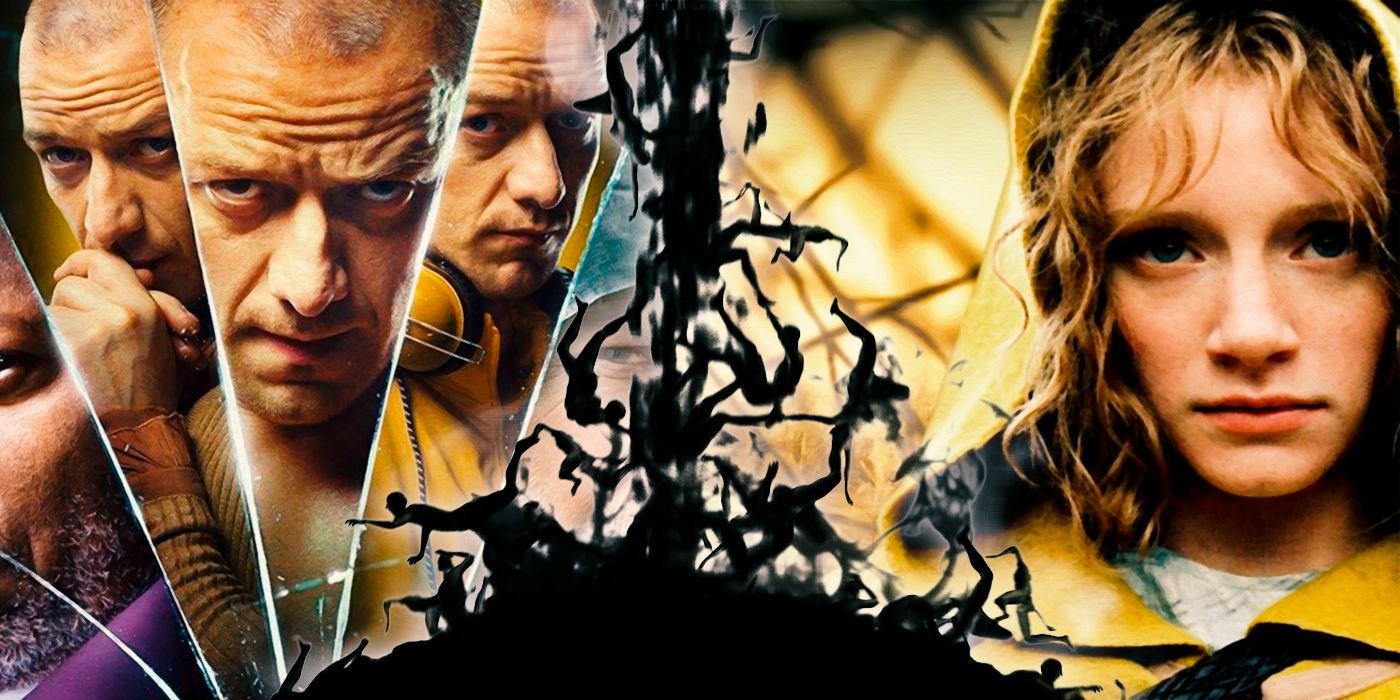
As is par for the course with recent Shyamalan films, Old is dividing audiences — continuing the trend where, in the years since The Sixth Sense, the writer/director’s movies keep getting weirder, yet his subversion technique isn’t up to his early standard. That was also the case with 2019’s Glass, a sequel to Shymalan’s Unbreakable and Split that ruminates on the concept of superheroes and what it would mean if comic book characters actually existed. In that case, the film ends by revealing there’s a millennia-old organization dedicated to keeping the world from learning that super-humans are real.
Glass‘ twist misfires because it doesn’t build upon the movie’s themes or re-contextualize its narrative in a different and unexpected light. Rather, all it does is raise an additional set of unrelated questions about its antagonists and how they operate, which the film then proceeds to ignore. Old has the same problem: Its rug-pull in the third act leaves audiences wondering how the tropical resort kept a scheme of this magnitude off the radar for years, despite the movie’s attempts to hand-wave away such concerns. Moreover, this turn of events clashes with Old‘s first two acts, which unfold as a meditation on the inevitability of death and the things people focus on when confronted with their mortality.
Compare that with The Sixth Sense, a movie about the importance of healthy communication and how helping others can lead us to gain a better understanding of ourselves — a story that takes on a deeper meaning once the viewer realizes the main character was dead the entire time. The twist ending to Shymalan’s The Village is similarly effective in that it reframes the rest of the film, painting its themes about grief, and the way trauma drives people to reject their present in favor of clinging to the past, in a richer shade. That’s also why The Village has undergone a critical re-evaluation since its release in 2004, when many people dismissed its twist as too predictable.
Therein lies the problem: As audiences became savvy to Shyamalan and his bag of tricks, the filmmaker kept trying to up his game by delivering bigger and bolder twists to match the ever-stranger premises for his movies. As much as one admires Shyamalan for aspiring to outdo himself, especially after he stepped away from big-budget franchises and began to focus on more personal, low-budget thrillers in the 2010s, his recent twists hurt his movies more than they help.
Tellingly, in an interview from 2013, Peeters revealed he and Levy nearly gave Sandcastle a twist ending of its own before deciding that “it was useless, and would have destroyed the frightening dimension of the book.” It’s too bad Shyamalan didn’t take that message to heart while making Old.
Old is now playing in theaters.
About The Author
