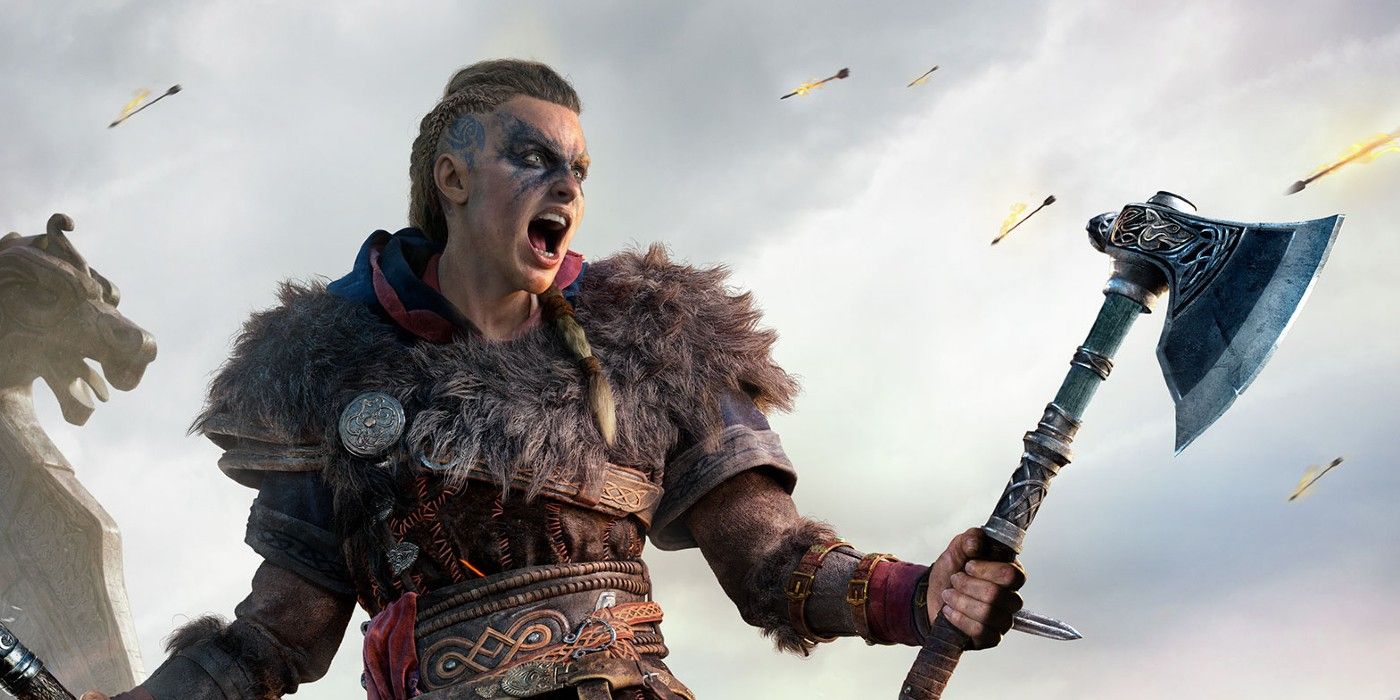
Assassin’s Creed: Infinity is the upcoming entry in the Assassin’s Creed franchise, which turned many fans’ heads with its ambitious direction. Following over a decade of success as a third-person adventure RPG series, the franchise is now looking to become a live service title. While there are many pros to consider for this shift in direction, games like Assassin’s Creed Valhalla prove that live service titles don’t need to be the next phase.
Assassin’s Creed is no stranger to changing up its format. In the past, the series used to change its gameplay style with each new engine to always keep players learning new ways to enjoy the game. When Assassin’s Creed Unity was released, it changed the gameplay style entirely. However, Assassin’s Creed Rogue came out for previous-gen consoles utilizing a past gameplay format. This helped maintain the fanbase that loved the older Edward Kenway style gameplay while also telling a story from a different perspective on two console generations. While this method hasn’t been done since, it shows why live service shouldn’t be the only direction.

Assassin’s Creed Valhalla already utilizes particular live service elements like new events and gear. The only difference is that it can’t consistently update its protagonist and era like Infinity promises. While this is great for Infinity, it limits the gameplay changes that new entries often offered for the series. While it’s great to have one game that promises various Assassin’s Creed titles, painting this level of gameplay consistently could drive away its current fanbase.
To counter this, Ubisoft could utilize one of its many studios to create a completely parallel series still in canon with the universe but isn’t tied to the live service model. This helps keep veteran fans who prefer a single-player experience while offering variety in gameplay and narrative. Valhalla already utilizes many live service elements like DLC events and limited edition gear, but it never compromises the overall feeling of the story. It still feels like a traditional RPG title and shows that the franchise doesn’t need a massive shift in genre.

Valhalla shows that gamers who play the newer titles enjoy the massive worlds created and the ever-changing landscape they can explore. But what separates it from a traditional live service title is that it feels like an adventure and not just another event to grind through. This is largely due to the team’s devotion to the one project and a wider range of gameplay and graphic capabilities, which most live service titles struggle with to some degree.
Assassin’s Creed Valhalla shows the possibilities of a live service title and a single-player experience coexisting. However, as it continues to remain a success, the possibility of two styles of storytelling fades in the distance as it becomes clear that the franchise doesn’t need a live service title. Additionally, by implementing events and certain RPG elements found in games as a service, Valhalla shows that updating its gameplay model is unnecessary and may hinder the overall quality of the franchise.
About The Author