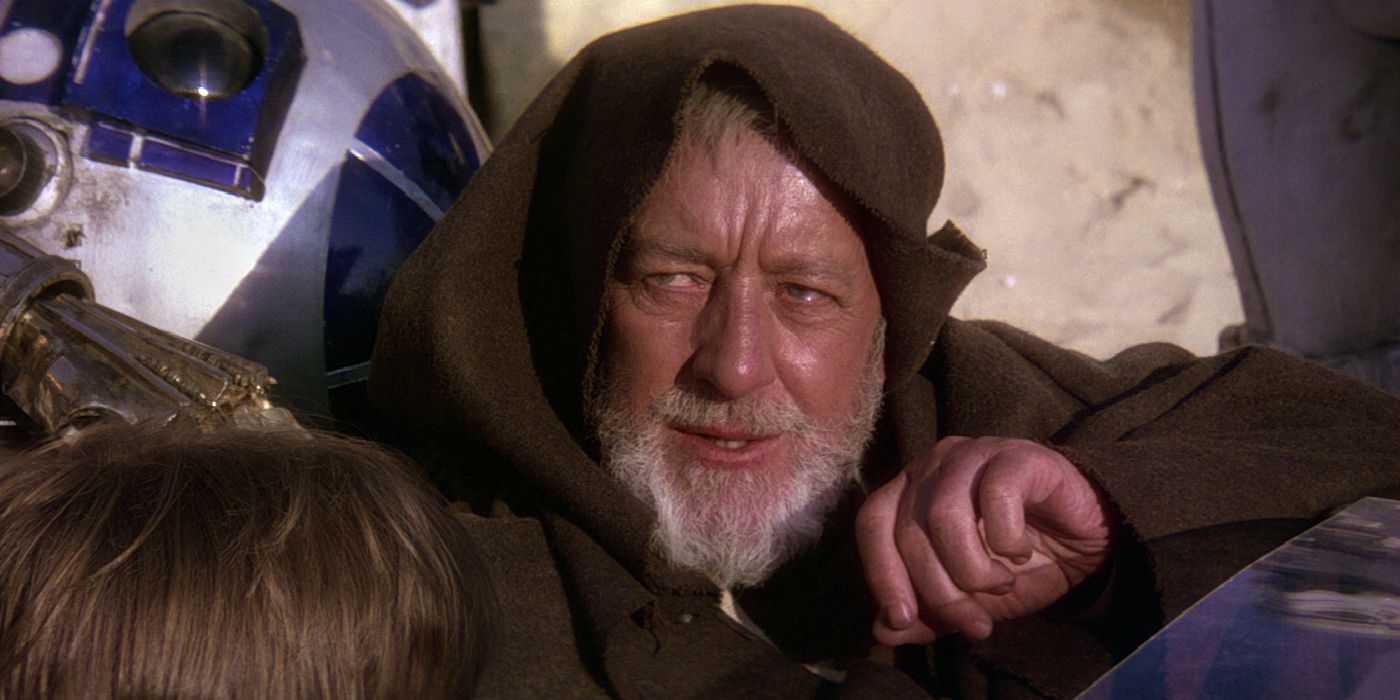
The original Star Wars introduced audiences to a new universe filled with timeless tropes reskinned for a new age, including the battle between good and evil. However, Star Wars shows this both physically, with the Rebels and the Empire, and metaphorically, through its use of the Light and Dark Side. This is best exemplified through the first on-screen use of the Force: the Jedi mind trick.
In Star Wars: A New Hope, Luke Skywalker, Ben Kenobi, C-3PO and R2-D2 try to gain access into Mos Eisley but need to remain in hiding since the Empire is hunting the droids. When confronted by a group of stormtroopers, Ben uses his Force abilities to trick them into thinking they aren’t the droids they’re looking for. Like all good Jedi, Ben uses the ability to avoid confrontation, finding a peaceful solution to achieve his goal; however, a mind trick can become a slippery slope when learning to use it.

A rule of thumb that accompanies the ability is that it can only work on the weak-minded. This is why Ben and other Jedi can use it so well against the stormtroopers, but with the galaxy so full of its fair share of weak-minded individuals, it’s easy to let the power of the mind trick corrupt a Force user. When controlling a person to listen to their every suggestion, it becomes even easier to steal and create conflict.
In Legends, the darker side of the mind trick is often used by Sith Lords to dangerous effect, as seen with mind control. As the name implies, it allows the user dominion over a person’s mind and has been used by Galen Marek’s clone in Star Wars: The Force Unleashed II. The mind trick could also be evolved to create fear or confusion in others and temporarily corrupt them.
For instance, in Star Wars: The Clone Wars, Asajj Ventress captures Captain Rex and uses a mind trick to coerce Rex into calling Anakin into a trap. While it isn’t like the Legends applications, her intentions show the importance of restraint when using the ability. Ben could have easily told the stormtroopers in Star Wars to walk into the desert until they pass out or shoot one another. However, by choosing to use the mind trick passively, he shows its power doesn’t control him as it did other Force users.

Kenobi is of the best users of the mind trick, on top of being the first to use the Force on-screen. Throughout his time in the prequels and during the Clone Wars, Obi-Wan uses his abilities to find passive solutions to otherwise hostile situations, including escaping cells and quelling hostage situations. However, one of his most famous uses of the mind trick is in Star Wars Episode II: Attack of the Clones when he tells Death Stick dealer Elan Sel’Sabagno to go home and rethink his life. It’s one of the few instances of the mind trick being used to turn a life around and shows its capacity for good.
Star Wars’ success comes from its subtlety and ability to restrain some of its more bombastic Force powers for later films. Using less to convey more, the Jedi mind trick becomes one of the most important moments in the franchise and only grows in importance with each installment. Since the first film, the lore has reached new heights and shown how much power the Force can give to a user, but Ben’s subtlety using the mind trick on those stormtroopers now serves as a way to ground viewers, reminding them that even the simplest Force power can change a person. Ben never allowed the Dark Side or the full power of the mind trick to corrupt him. In a small exchange of words, he captures how being a Jedi is a constant battle between what is easy and what is right.
About The Author