There’s no lack of groundbreaking television and it’s remarkable how the industry has been able to take such significant leaps forward in terms of storytelling and the quality of content. A modern trend that’s impossible to escape is every form of media’s intense obsession with superheroes and comic book adaptations. Superhero properties are now everywhere, and every studio and streaming service want a piece of the trend.
The television industry has recently figured out how to translate superheroes to television in a satisfying manner, but it’s taken decades of troubleshooting. It’s exciting to have masterful takes on the genre like The Boys or Doom Patrol, but there are also plenty of superhero projects that have crashed and burned harder than a Green Kryptonite-infected Superman.
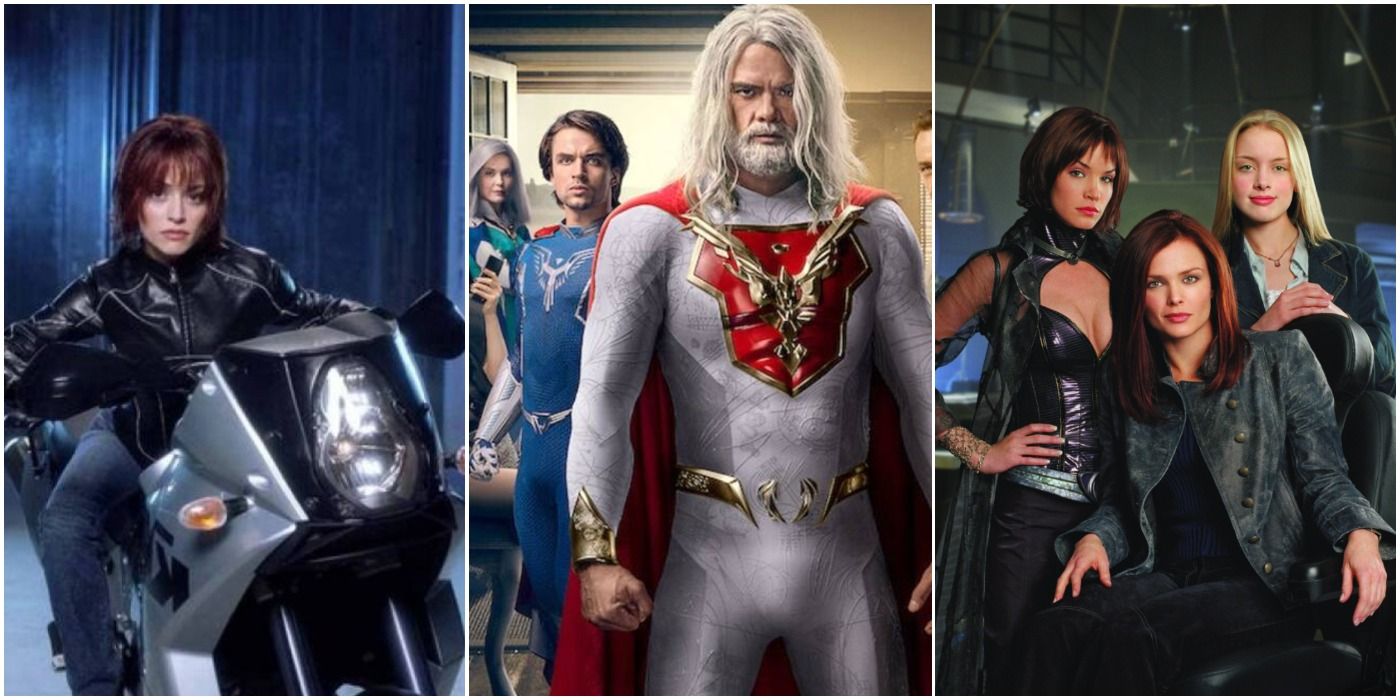
10 Jupiter’s Legacy Killed Any Enthusiasm For Netflix’s Big Superhero Gambit
Netflix made a major power play to compete in the superhero game with their acquisition of multiple Mark Millar properties and the intention to build a larger universe, which is now left in serious doubt. Jupiter’s Legacy was supposed to be the flagship program of Netflix’s Millarverse, but it’s only pushed audiences to superior content.
Jupiter’s Legacy analyzes rich material like toxic family dynamics and destiny, but it needlessly stretches out its source material in a way that dilutes the premise. Additionally, Netflix’s budget for Jupiter’s Legacy is astronomical, yet it somehow looks subpar to productions from a decade earlier.
9 Birds Of Prey Mixed Dark DC Iconography With A Young Adult Energy
Birds of Prey is now a pillar of the DC Extended Universe due to Margot Robbie’s iconic performance as Harley Quinn. Audiences are now ready for a Birds of Prey series, but the WB Network actually tried to explore this territory nearly two decades ago. The WB’s one-season Birds of Prey focuses on Oracle, Huntress, and Black Canary’s efforts to patrol New Gotham. It’s impressive to see something like this get tackled back in the early 2000s, while also taking big swings like the murder of Catwoman, but it’s very much a product of its time and the network’s teen demographic.
8 Marvel’s Inhumans Has Practically Been Scrubbed From The MCU
The Marvel Cinematic Universe has become such a well-oiled machine that it’s now quite surprising when a property fails to connect. Marvel’s Inhumans was a vestige of Marvel’s old TV division, but there were such high expectations for it that the pilot received IMAX theatrical screenings.
The Inhumans are an important counterpoint to Marvel’s mutants, but the more eccentric nature of the central characters and the show’s production design immediately deterred audiences. Inhumans will hopefully properly enter the MCU at some point, but any hesitation is because of the bad taste that still lingers from Marvel’s Inhumans.
7 Automan Created An Artificial Superhero Who Belongs In The Trash Bin
The 1980s are full of zany television series high on camp that celebrate some especially ridiculous ideas. In that sense, Automan feels par for the course for ’80s television and its perception of superheroes. The series features a computer genius and his artificially-created superhero companion, the Automatic Man. Automan is remembered most for its TRON-like special effects, but not because they’re impressive. All 13 episodes of Automan didn’t even air on ABC and it remains a regrettable relic of its time.
6 The Cape Became Generic Cop Fodder Rather Than A Subversive Take On Superheroes
The Cape is a 2011 NBC drama that went for a gritty vigilante aesthetic. An altruistic cop gets framed for murder, which pushes him into donning the identity of his son’s favorite superhero, The Cape. The Cape mixes police procedural action with comic book tropes, but it’s clear that NBC never had any faith in the program considering its final episode only aired online. Oddly enough, The Cape’s biggest cultural impact is that it’s the impetus for Abed’s “six seasons and a movie” mantra, which has gone on to define the fandom around the television gem Community.
5 Black Scorpion’s Vigilante Efforts Made Her Feel Generic Instead Of Spectacular
Roger Corman is one of the most notable names when it comes to low-budget success stories in cinema. Corman crafted his own sensationalist vigilante crimefighter, Black Scorpion, who received two TV movies in the 1990s.
In 2001, Black Scorpion made the transition over to television, but the one-season endeavor never properly connected with audiences. It’s encouraging to get a female-led superhero series, but Black Scorpion just feels like budget Batman. There are some strong casting choices, like Adam West as recurring villain, Breathtaker, but it’s hardly essential viewing.
4 Manimal Is The Best Symbol Of Absurdist ’80s TV Superheros
Glen A. Larson is responsible for some of the more ridiculous TV series of the 1980s, with Manimal quite possibly being one of his most popular endeavors, but not for the right reasons. Not unlike Animal Man, Manimal is an original superhero with the ability to turn into any animal, which he uses to fight crime. Manimal is endlessly silly, which often comes at the expense of the suspense that its crimes try to create. Manimal didn’t get past eight episodes on NBC, yet it’s still remembered because of its ridiculous title and campy special effects.
3 Painkiller Jane’s Generic Premise Didn’t Do It Any Favors
Casting can often make or break a superhero project, but 2007’s Painkiller Jane found an excellent lead in Terminator 3’s Kristanna Loken as the titular hero. Painkiller Jane is set in a futuristic setting where Lokan’s Jane has self-healing powers that verge on immortality. She uses this advantage to take on enhanced superhumans who threaten the world. Painkiller Jane is serviceable, but there are just so many other heroes with comparable powers and missions who aren’t restricted to episodic storytelling and a limited budget.
2 Heroes Reborn Only Emphasized That Audiences Had Moved On
NBC’s Heroes was a revolutionary piece of television when it first debuted. At the time, an original superhero property on network television was a big deal and the first season showcased the universe’s vast potential. Sadly, Heroes hit diminishing returns for each of its subsequent seasons and went out with a whimper.
NBC attempted to return to this well in 2015 with Heroes Reborn, a new series that functioned as a continuation of the original. What was supposed to rejuvenate the property only underscored how much Heroes had lost its magic. The 13 episodes came and went with minimal fanfare.
1 Helstrom Was Dead On Arrival After Failing To Access The MCU’s Dark Side
There used to be some distinction between the Marvel Cinematic Universe and their related television properties. These two worlds have since successfully merged together and Disney+ is now full of MCU TV shows that complement the film universe. Helstrom was one of the final series from Marvel Television’s old guard, which gave audiences zero faith that it’d develop into anything beyond a one-off anomaly. Helstrom’s aim was to mesh horror and darker storytelling with superheroes, but it’s a muddled mess lost in endless compromise.
About The Author
