It’s taken some time for video games to gain the same level of popularity as movies and television, but the growth that the industry has seen over the past decade is unbelievable. Video games are always looking forward and ready to push technology to exciting, new places that allow them to evolve in crucial ways.
There’s an inherent level of interactivity in video games where audiences feel more connected and immersed in the story due to their level of involvement with the characters’ actions. This principle can get pushed even further when it comes to meta-narratives and titles that seek to break the fourth wall. This can be done in subtle ways, but other video games really take advantage of the concept and its connection with the player.
10 Metal Gear Solid’s Psycho Mantis Knows The Player’s Game History
Hideo Kojima, the mastermind behind the Metal Gear series, is one of the most ambitious and self-aware video game developers of all time. His games regularly break the fourth wall and feature characters with nonsensical names and frequent references to his larger body of work. One of Kojima’s most celebrated moments of innovation occurs against Metal Gear Solid boss, Psycho Mantis. The psychic character seriously weirds out the player by “reading their minds,” telling them which video games they love. In reality, it’s the game reading the data on the player’s memory card. This is just the tip of the iceberg with Psycho Mantis’ tricks.
9 Eternal Darkness’s Sanity Effects Intentionally Break The Fourth Wall
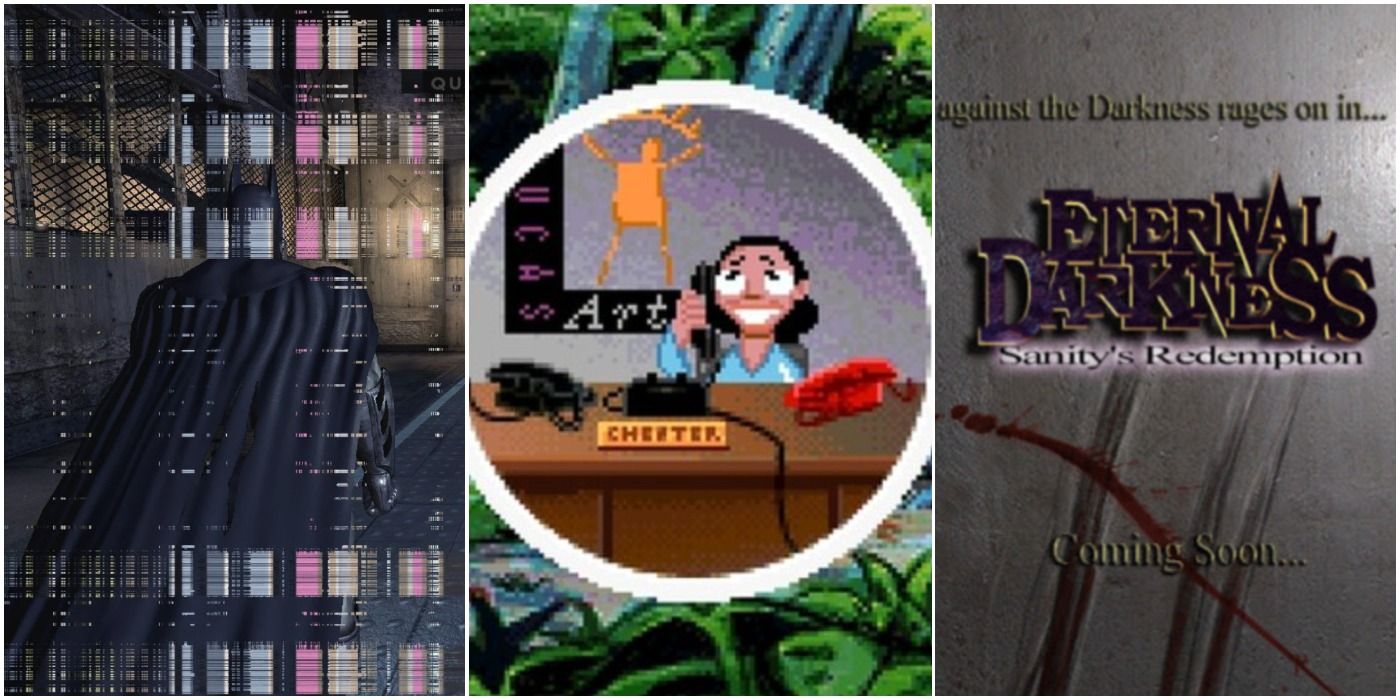
It’s a serious tragedy for survival horror fans that the Gamecube’s exceptional game, Eternal Darkness, never received a sequel or some form of modern remaster. One of the most groundbreaking concepts in Eternal Darkness is the use of sanity effects, which warp the player’s perception of in-game effects. These sanity effects go to some extreme lengths, including making the player think that their volume is increased, their video output has disconnected, or even that all of their save game data is about to be erased. It’s an excellent way to add stress to the player’s tense experience.
8 Earthbound Tasks The Player To Help The Hero Through Personal Faith
The Mother series hasn’t received the mainstream success that it deserves, but at least Earthbound is recognized as one of the very best titles on the Super Nintendo. Each of the Mother games experiments with the player in some creative ways.
The final battle in Earthbound breaks the fourth wall and explicitly asks the player’s name so that they can help in a prayer to defeat this ultimate evil presence. It adds an extra layer to these stakes and implies that this threat is greater than a mere video game. It’s an exceptional moment in storytelling.
7 Metroid Fusion Pats The Player On The Back For A Speedrun Mentality
The Metroid series is notorious for alternative ways to solve problems, and dedicated players continue to find surprising ways to speedrun games and forgo large spans of the game that were thought to be mandatory. Metroid Fusion rewards this ingenuity with a very rare meta Easter Egg. A difficult Shinespark maneuver can take Samus to Sector 4’s Data Room before she acquires the Diffusion Missiles. Samus receives original dialogue that applauds the player’s resourcefulness, but Adam goes one step further and even comments, “I wonder how many players will see this message…?”
6 Monkey Island 2: LeChuck’s Revenge Turns The Game’s Protagonist Into A Hopeless Gamer
LucasArts is most commonly associated with their Star Wars contributions, but they were at the forefront of the point-and-click adventure genre. These titles are some of the most meta titles of all time, and the Monkey Island franchise constantly pokes fun at the obtuse nature of the genre. Monkey Island 2: LeChuck’s Revenge goes so far as to have the game’s protagonist, Guybrush Threepwood, call up LucasArts’ tip helpline in order to solve his current problem, or just engage in meta dialogue about the nature of the video game company.
5 Conker’s Bad Fur Day Pokes Fun At Its Hardware Limitations
Rare is a company that regularly likes to poke fun at themselves and refer back to their legacy as developers. Some of their efforts for the Nintendo 64 have the most self-aware sense of humor, particularly Conker’s Bad Fur Day.
Conker’s controversial platformer found more of an audience after its Xbox remaster, but there are some excellent jokes hidden away in the game. A major boss battle temporarily “freezes,” only for Conker to complain to the software engineer to simplify the experience so that the hardware can handle the epic fight.
4 The Stanley Parable Puts The Player Under The Microscope And Makes It Too Late To Notice
The Stanley Parable is a triumph of modern gaming that proves just how important story and a distinct voice are to the gaming experience. The Stanley Parable is incredibly tongue-in-cheek and actively engages in a conversation with the player. This is at its most playful and subversive in The Beginner’s Guide, an extension of The Stanley Parable that’s narrated by the game’s creator. The Beginner’s Guide starts as an exploration of independent games, with the narrator providing analysis. However, the nature of this analysis grows increasingly slippery. Suddenly, the player realizes that they might actually be the subject.
3 Batman: Arkham Asylum Has The Player Ready To Call Tech Support
Effects that are designed to incite temporary panic in the player are a mean joke that’s oddly become an increasingly common way to break the fourth wall. One of the most nerve-wracking examples of this is in Arkham Asylum. The Scarecrow is a character who routinely uses fear toxins that cloud people’s judgment. Arkham Asylum recreates this anxiety for the gamer with a sequence that makes it seem like the console is about to malfunction and break due to some hardware glitch. It’s one of many clever ways that the Arkham series gets under the audience’s skin.
2 Sonic Chronicles Shamelessly Pats Itself On The Back To The Ultimate Degree
Sonic the Hedgehog is a franchise that’s gone through some fascinating transformations over the years, but one of the strangest experiments is BioWare’s DS release, Sonic Chronicles. Sonic Chronicles radically reinterprets Sonic’s lore, and there’s a surprisingly strong foundation to Sonic’s first RPG. Sonic Chronicles ends up an extremely weird meta note where Tails compliments the game’s final plot twist, commends the developer BioWare for their work, and that states he can’t wait to see what happens next in the sequel. The entire credits of the game continue to play out through Tails’ dialogue unless Sonic chooses to interrupt this weirdness.
1 Gex’s Ending Insults The Audience For Being So Good At Video Games
Gex is a bizarre relic of the video game industry that’s had a decent life as a platformer mascot. The original Gex packs in a ton of content and many secret accomplishments that seriously test the gamer. The ultimate reward for the completion of all of this extra content is an extended end credit sequence. Gex’s end credits chastise the gamer for devoting so much time to their perfect progress in the game and mention all of the better things that they could have spent their time on instead. It’s the most passive-aggressive accomplishment of all time.
About The Author
