WARNING: The following contains spoilers for Pixar’s Luca, streaming now on Disney+.
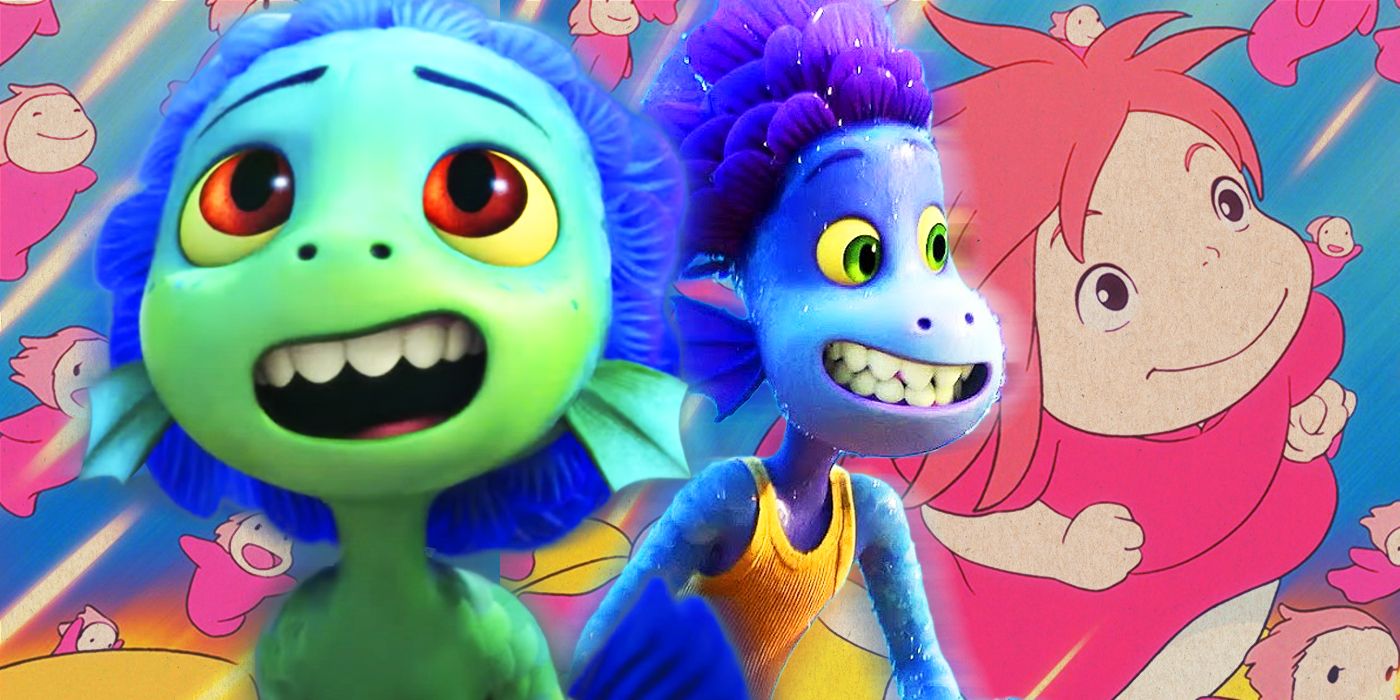
The people at Pixar have always spoken about how heavily inspired they are by the films of Studio Ghibli, particularly those directed by Hayao Miyazaki. Pixar directors have been in charge of dubbing Ghibli films, and the first DVD releases for much of the Ghibli library featured introductions by former Pixar head John Lasseter. There’s strong Miyazaki influence in parts of Up, and Toy Story 3 even featured a Totoro cameo, but Luca is Pixar’s most direct attempt yet at making its version of a Studio Ghibli film.
On the positive side, Luca does a good job translating the aesthetics of Ghibli’s films to 3D computer animation, actually doing better than this than Ghibli’s own CG film Earwig and the Witch. However, while the story is the sort of concept Miyazaki could have easily turned into a classic, Luca hews too stridently to storytelling formulas that just don’t fit with the style that makes most of the Ghibli films work so well.
Luca’s Ghibli Similarities
Director Enrico Casarosa has made no secret of how indebted Luca is to the films of Hayao Miyazaki. In fact, he’s specifically referenced Miyazaki and Isao Takahata’s pre-Ghibli TV series Future Boy Conan and 3000 Leagues in Search of Mother as an inspiration for the character designs. The town name of “Portorosso” is an obvious reference to the Italy-set Ghibli film Porco Rosso. And while both stories owe an equal debt to The Little Mermaid, parallels can also be drawn between Luca and Ghibli’s own sea creature-turned-human story Ponyo.
Beyond just animation techniques and references, Luca resembles the likes of My Neighbor Totoro and Kiki’s Delivery Service in that it forgoes the big dramatic stakes of other Pixar films in favor of a slice-of-life story where magical elements, while noteworthy, are ultimately less significant than just following around its young protagonists exploring the world around them and enjoying life’s ordinary pleasures.
Pixar’s Pacing and Writing Style Doesn’t Match Ghibli’s
While the premise of Luca is pure Ghibli, the execution is a lot more Pixar in ways that don’t mesh particularly well with its Ghibli influences. Pixar’s feature films are tightly-wound machines, precisely engineered around a hero’s journey three-act structure moving at a fast pace and (with the exception of the half-silent WALL-E and the occasional wordless montage in other films) relying heavily on dialogue to make sure kids are keeping up with the story. When the drama fits the structure and the ideas are complex enough to keep the talkiness interesting to adults, Pixar has made many great movies with this formula.
Luca‘s story is simple and lighter on drama than most Pixar films, yet it’s structured and paced like a standard Pixar movie. Films like My Neighbor Totoro and Kiki’s Delivery Service, in contrast, work so beautifully because their simple slice-of-life stories are appropriately complemented by their leisurely pace, moments of quiet and greater subtlety.
The Issue of Luca’s Villains
Perhaps the biggest difference between the Pixar and Ghibli methodology is in regards to villains. Ghibli films rarely have traditional villains, especially not in the childhood fantasy/slice-of-life films Luca is most indebted to. They build conflict by pitting sympathetic characters against each other, the elements or their own self-doubts without needing a standard antagonist. The “villain” in My Neighbor Totoro is tuberculosis, the “villain” in Kiki is depression and the closest thing to an antagonist in Ponyo ends up siding with the protagonists halfway through the film.
Luca’s interpersonal struggles with his well-meaning but misguided parents and his loving yet jealous friend Alberto would have provided enough conflict without needing a true villain. Yet, out of obligation to standard Hollywood storytelling formula, Luca throws in a villain, and an incredibly two-dimensional one at that, in the form of the bully Ercole Visconti and his two cronies. Maybe with some rewrites, he could have been adjusted into a more three-dimensional and fun rival a la Curtis in Porco Rosso, but as is, he’s the element that sticks out the most as feeling forced in out of fear that mainstream American audiences just couldn’t accept a more truly Ghibli-esque Luca.
Directed by Enrico Casarosa, Luca stars Jacob Tremblay, Jack Dylan Grazer, Emma Berman, Maya Rudolph, Marco Barricelli and Jim Gaffigan. The film is streaming on Disney+.
About The Author
