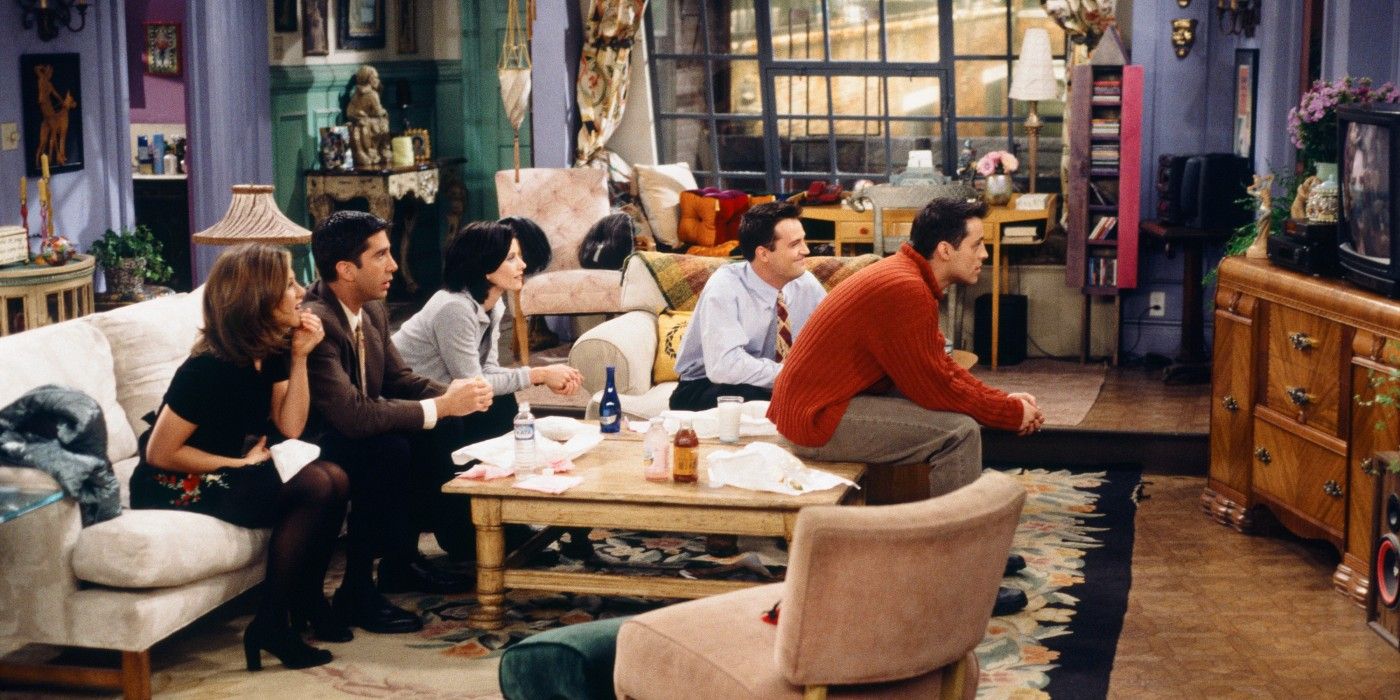
Soap operas are best known for their melodramatic themes and continuous plot threads, but the television form also hosts a unique visual style. Their cheap production requires constraints on set design and lighting, causing them to look different from other forms of television. And while some viewers may not notice the differences, a Season 2 episode of Friends parodying the genre made them abundantly clear.
Unlike other television programs, which have higher budgets and fewer time constraints, soap operas are heavily serialized, requiring a lot of footage with minimal reshoots. This type of cost-effective production requires them to be filmed on smaller sets, which are often evenly lit to accompany a multi-cam setup. These methods save a lot of production time, as it avoids the need to reset the lighting for each scene, while multiple static cameras can capture a scene from several angles at once. Although this saves time by cutting down on the number of takes, it also causes a noticeable amount of backlighting in a frame’s foreground, making people and objects in the shots become more pronounced.
Click the button below to start this article in quick view.
This lighting effect can be seen in the Season 2 Friends episode “The One Where Dr. Ramoray Dies,” which parodies the soap opera Days of our Lives. During one scene, Joey‘s character Dr. Ramoray is on a brightly lit hospital set. The lighting is clearly distributed throughout the set, as the characters in the frame are drenched by light from all sides, while the shadows in the background have multiple light sources. In the next scene, the rest of the gang is on the couch, and the lighting is carefully distributed throughout the set, giving everyone a more natural look.
While set design plays a huge role in a soap opera’s aesthetics, motion interpolation remains their most notable feature. Unlike primetime television shows and movies, soap operas used to be filmed on more cost-effective videotapes, which provided lower resolution but higher frame rates. This type of frame rate gave soap operas the unique, hyper-realistic presentation the genre has become known for, but it also made the cheap set designs incredibly apparent.
While the last soap opera to be filmed on tape was The Bold and The Beautiful in 2011, they continue to be shot at high frame rates despite using digital technology. Due to the declining viewership of soap operas during the past two decades, the show’s producers have come to rely on their most devout fans, many of whom have been watching these shows for decades. Such a drastic change to the style could put off many longtime viewers, and these programs are unlikely to capture younger watchers due to stiff competition from online content and cost-effective daytime reality television. And even if fans would adjust to such a drastic change, filming at a lower framerate would do little to change the soap opera effect on many modern television sets, as their screens depict images at a higher framerate due to robust resolutions.
Despite creating a unique visual style out of budget constraints, soap operas have made the most out of their limits, using these traits to their advantage. The effects of cost-effective lighting and motion interpolation have led these programs to rely heavily on close-ups and frequent cuts, which goes well with their character-driven and dialogue-heavy style. Even as the years go by, this style has proved to be timeless, as soap operas retain their iconic visual effects, even in the digital age.
About The Author
