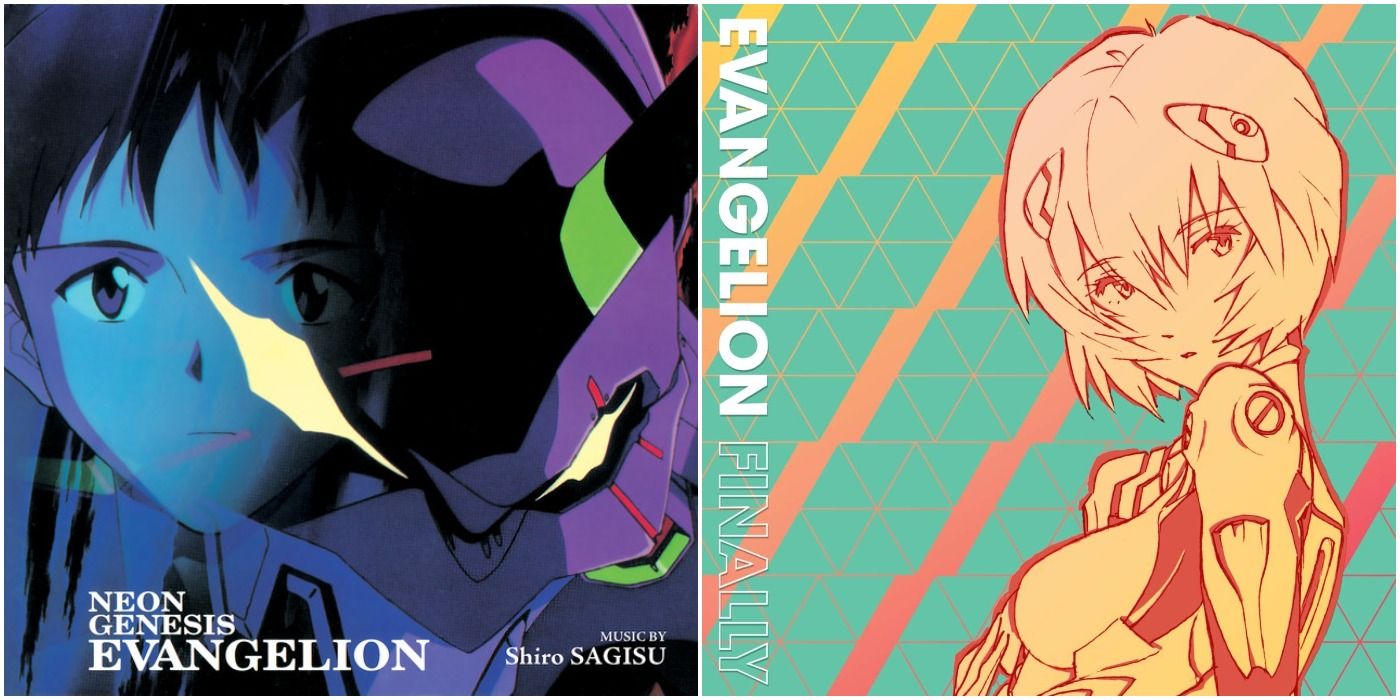
Shirō Sagisu, composer for Neon Genesis Evangelion since its beginning in 1995, deserves much credit for the series’ enduring success. Evangelion has an incomparable mood, for it fuses action with cosmic horror and mecha anime with introspective, sometimes religious-flavored existentialism. So much of said mood comes down to the series’ musical score, which, depending on the music or episode, can either complement or purposefully contrast the images.
Continuing this theme of contrasts, let’s look at some of the best musical compositions in Evangelion; the ones ripe to bring listeners to tears from either joy or despair.
10 Saddest: “Hedgehog’s Dilemma” Is As Depressing As Its Namesake
This track is named for the psychological concept at the core of Shinji Ikari’s character and the series as a whole; we all desire to be close to the people around us, it’s human nature. And yet, some people find that very challenging in spite of the aforementioned desire. So scared are they hurting or being hurt by those same people they wish to connect with. Like the dilemma implies, it’s akin to hedgehogs’ huddling together for warmth only to harm each other with their quills.
As for the song itself, it captures the quiet loneliness of despair, with the intermittent piano riffs emphasizing those feelings of isolation.
9 Happiest: “A Cruel Angel’s Thesis” Is Iconic, Ominous, And Uplifting
“A Cruel Angel’s Thesis,” originally sung by Yoko Takahashi, is the iconic, endlessly-parodied opening to Evangelion. Though the accompanying visuals are enigmatic and the acoustics ominous, the song’s lyrics are surprisingly uplifting, particularly the refrain (roughly translated): “Go forth young boy and you’ll become a legend.” In Hideaki Anno’s own words, the song is meant to “emphasize maternal affection.” Whether that affection is the absent Yui Ikari’s lingering protectiveness of her son or Shinji’s surrogate parent Misato encouraging him to come out of his shell is up for the listener to decide.
8 Saddest: “Rei II” Is A Melancholy Anthem For A Lonely Character
Rei Ayanami is Evangelion‘s loneliest character, and this is a story filled with nothing but lonely characters. Her melancholy anthem, with a heavy violin inflection, sounds almost mournful; Rei’s expendability and purpose being to die are even built into her own theme music.
There is a twinge of happiness; the theme plays during the ending of Episode 6, when Shinji saves Rei and tells her not to think of herself as disposable. Rei admits she is unsure of how to react, so Shinji encourages her to smile; in what is possibly her first moment of genuine happiness, she obliges.
7 Happiest: “Misato” Is As Bouncy As As The Character For Which Its Named
Fan-favorite Misato Katsuragi may be hyper-competent and have nerves of steel, but she’s also quite the slob and sure loves her booze. Her theme music emphasizes the latter part of her character. This bubbly, flighty theme typically plays during scenes set at her apartment and reinforces a mood of domesticity, fitting for a character who’s the closest thing Shinji has to a (normal) mother. Double-fittingly, the theme is also heard during Shinji’s fantasy of a normal life for himself and his friends in Episode 26.
6 Saddest: “Thanatos/If I Can’t Be Yours” Has Snazzy Acoustics, But Sad Lyrics
A common theme in the music of Evangelion is to hide the sad story of the lyrics behind happy sounds. “If I Can’t Be Yours” is an excellent example, with jazzy acoustics playing over lyrics about the uncertainty and self-doubt of unfulfilled love. The song seems to be about Rei, with the lyrics reflecting her increasing awareness of her true nature and her feelings for Shinji, something her aforementioned nature makes impossible to resolve in a mutually satisfying way.
5 Happiest: “One Last Kiss” Is A Fond Farewell To “Evangelion”
“One Last Kiss,” sung by Utada Hikaru, is theme for Evangelion 3.0 + 1.0, the long-delayed conclusion to the Rebuild films and reportedly Hideaki Anno’s last contribution to the series. The title refers to part of the song’s chorus, sung in English (along with “I love you more than you’ll ever know”) despite most of the song being in Japanese.
Fitting this title, “One Last Kiss” is about two former lovers remembering their time together before saying goodbye to each other forever. The lyrics could certainly fit Shinji’s relationship with Asuka or Rei, but the meaning is greater and more meta-textual than that; “One Last Kiss” is a goodbye to Evangelion itself.
4 Saddest: “Komm, Süsser Tod/Come, Sweet Death” Is A Peek Into The Darkest Corners Of Hideaki Anno’s Mind
You won’t find a song that better cloaks depression with joy this side of Paramore’s “After Laughter.” “Komm, Süsser Tod,” sung in English by Arianne Schreiber, plays during the Third Impact in The End Of Evangelion. It’s a sequence impossible to do justice without playing it in full, but the basics are that Shinji, so overwhelmed with guilt and now completely alone in the world, decides “the best thing [he] can do is end it all and leave forever.” With that, Rei/Lilith initiates Instrumentality and begins merging humanity’s souls as their bodies dissolve to LCL.
As the acoustics remain bouncy and the clapping picks up its rhythm, the lyrics, written by Hideaki Anno during the deepest pits of his depression, grow ever more alarming. Even the superficial happiness of the song hides a darker meaning of being liberated once all hope is lost.
3 Happiest: “Fly Me To The Moon” Raises Viewers’ Spirits After Every Episode
Evangelion occasionally used licensed music; the most prominent example is Bart Howard’s “Fly Me To The Moon,” famously sung by Frank Sinatra. The song is used as the theme of Evangelion’s closing credits; sung by various singers through the 26-episode run, the song plays over an upside-down night sky, the moon reflected in the ocean as Rei’s silhouette rotates on the side of the frame. Evangelion‘s covers of “Fly Me To The Moon” do nothing to twist or invert the romance of the song, allowing for viewers to decompress after each episode. When Netflix acquired Evangelion, they excluded “Fly Me To The Moon” due to licensing issues – let’s just say that fans were not pleased.
2 Saddest: “Everything You’ve Ever Dreamed” Is About The Impossibility Of Love
Another English-language song sung by Arianne Schreiber, “Everything You’ve Ever Dreamed” was cut from the final The End Of Evangelion soundtrack. While “Komm, Süsser Tod” definitely fits the Third Impact better, “Everything You’ve Ever Dreamed” shouldn’t be dismissed. The song focuses on Shinji and Asuka’s relationship, from their inability to be honest about their mutual feelings (“What was it she did to break your heart, betray your heart and everything, kiss you with a kiss that wasn’t true, it wasn’t you at all”) to Shinji’s spite when she rejects him (“Squeeze the very last and dying breath from everything you’ve ever dreamed”).
Then there’s the chorus: “You can sail the seven seas and find love is a place you’ll never see. Passing you like a summer breeze, you feel life has no other reason to be. You can wait a million years and find that heaven’s too far away from you. Love’s just a thing others do. What is love till it comes home to you?” These words hit home for Shinji, Asuka, and anyone who’s ever thought themselves incapable or unworthy of love.
1 Happiest: “Beautiful World” Reflects The Life-Affirming Messages Of “Evangelion”
Written and sung for the Rebuild Of Evangelion films by Utada Hikaru, one can view “Beautiful World” as part of an unofficial trilogy with “If I Can’t Be Yours” and “Everything You’ve Ever Dreamed” – all three are about Shinji’s relationship with one of his potential love interests. If “If I Can’t Be Yours” focuses on Rei and “Everything You’ve Ever Dreamed” on Asuka, then “Beautiful World” is about Kaworu. The affirming lyrics (“Beautiful boy, you don’t know how beautiful you are yet”) mirror how Kaworu offers Shinji the affection which he so craves.
For all its horror, Evangelion has always been a story about overcoming depression, finding worth in yourself, and learning to not run away from the world. Nothing could be a more fitting anthem for this idea than “Beautiful World.”
About The Author