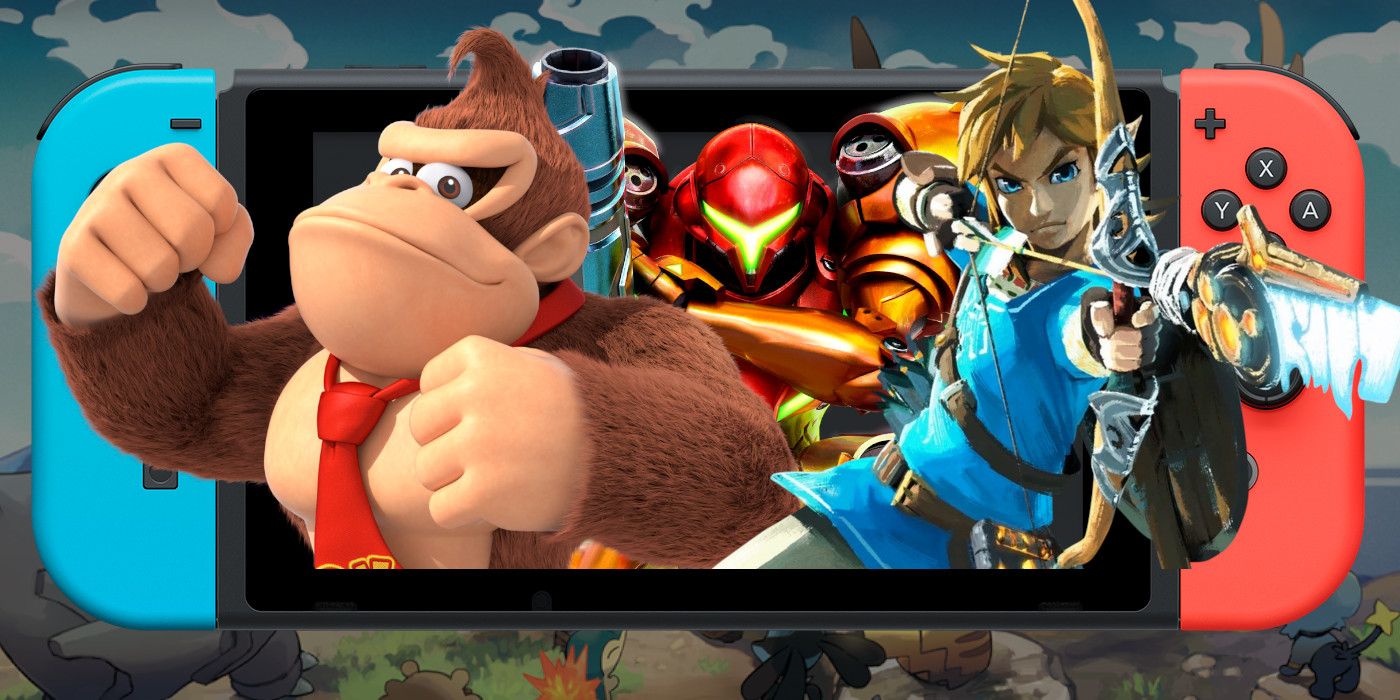
As per the usual arrangement, another round of Nintendo Switch Pro rumors from credible sources have appeared. This time, myriad outlets and insiders are reporting on both the device itself, as well as an imminent pre-E3 reveal. In a vacuum, this information is exciting. However, when contextualized within the larger ecosystem, Nintendo’s Fall and Holiday 2021 game slate is far more important.
A mid-generation console refresh means relatively little within the Nintendo ecosystem. It almost certainly won’t have first-party exclusives, and Nintendo’s innovations are rarely led by hardware iterations like this. Previous revisions from the Game Boy Advance SP to the New Nintendo 3DS were largely inconsequential beyond quality-of-life improvements. These are valuable benefits, but they don’t strike at the core of Nintendo’s appeal.
Click the button below to start this article in quick view.
The company’s relevance and resonance to its core audience is predicated squarely on its games. While a nicer screen to view those games on and more horsepower under the hood to run them is good, it’s not essential. What is, by contrast, are the games which players will enjoy with these affordances. It’s an obvious assertion, but one that warrants renewed attention at this moment. Nintendo’s 2021 slate is barren. Addressing that should be the company’s primary focus, and the audience’s central contention.
After all, the notion of a Fall 2021 Switch Pro means little if its benefits will only be applied retroactively. Perhaps the added horsepower will mean higher resolutions for Xenoblade Chronicles in handheld mode and less slowdown in Breath of the Wild‘s Korok forest — but most players have already put those games back on the shelf. The community needs new titles to rally around, and the upcoming lineup just looks thin.
This isn’t to say that a Switch Pro is not worth Nintendo’s research and development. More than most past Nintendo systems, a hardware refresh is needed here. As Nintendo sits on the cusp of regaining its third-party relationships, more power is essential. As Joy-Con drift plagues players and takes Nintendo to court, new hardware is imperative. However, the goal of the Switch was to provide a single device for all of Nintendo’s merged studios to converge on and deliver excellent titles over an extended console cycle.
That charge has worked so far and pushed the Switch to a stratospheric market position, which again cuts against the notion of exclusives. That’s important, because it demonstrates that software leads hardware, not the other way around. The announcement of a Switch Pro likely won’t be accompanied by the announcement of new experiences that rely upon it. And, as all the Switch models rely upon new first and second-party titles, there is a larger issue at play.
That extended console life cycle still produces games across franchises and scales, but that’s slowing down. The incredible momentum of years like 2017 and 2019 is waning as Wii U ports and remakes define the library. Those only motivate current Switch owners to an extent, so they’re unlikely to move the needle much on the Pro front, either. What the entire ecosystem needs to incentivize players to purchase both new software and hardware are tantalizing game announcements.
Rumors suggest this will soon come to pass. New Donkey Kong and Metroid titles are allegedly floating in the ether, with new reports fanning the flames of the latter. Those are the sort of announcements that will motivate players, but hopefully they’re just the tip of the iceberg. Breath of the Wild 2, Metroid Prime 4, Bayonetta 3 and a run of other, top-tier unannounced projects are needed. The future of the Switch will be determined by both hardware and software, but the latter needs to be prioritized imminently.
About The Author