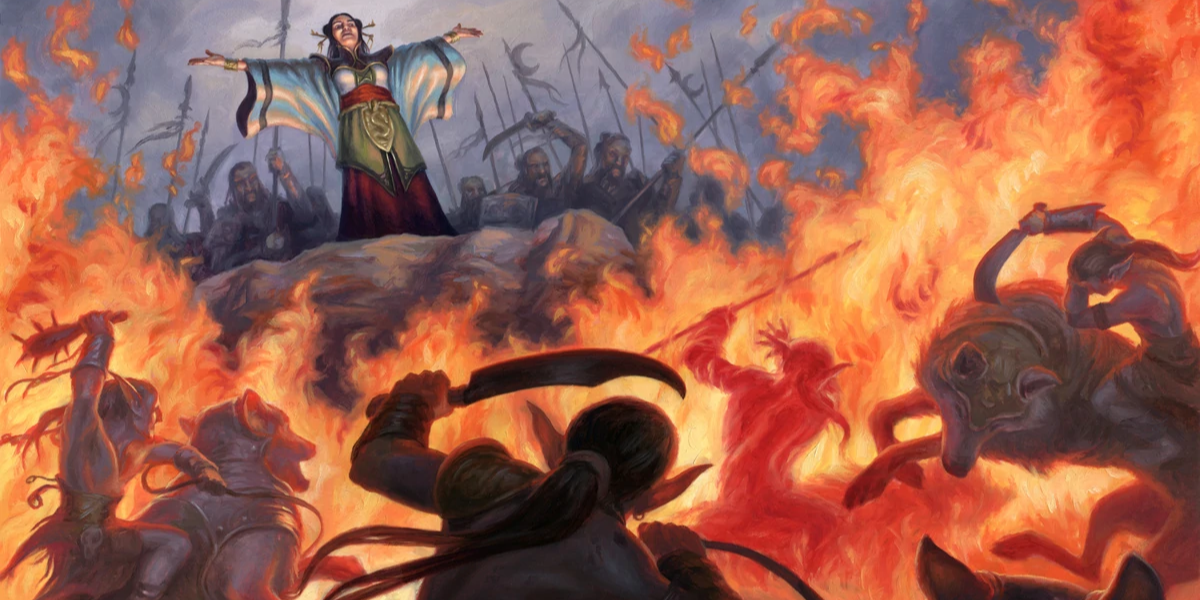
New Dungeons & Dragons players often make the same mistakes when getting into the game, in part due to how confusing the massive amount of rules can be. One such mistake is how they role-play their alignment. While individual Dungeon Masters will have different expectations for how much players should stick to their characters alignments, many use the Chaotic Neutral alignment as an excuse to do things that are unnecessarily violent or otherwise out of character. Many players interpret the “Chaotic” part to mean that the individual character is chaotic and uncontrollable, but that isn’t actually the case.
Click the button below to start this article in quick view.
Alignment is generally considered to be more of a guide as to how a D&D character should act in the world rather than something that needs to be strictly adhered to. It’s more important for players to behavior how their individual character would behave. Unfortunately, people misinterpreting the Chaotic Neutral alignment and using it to justify annoying behavior can be detrimental to other people’s enjoyment of the game as a whole, even if the murder-happy playstyle can feel fun for the player in the moment. In truth, Chaotic Neutral means something different than what many people think.
As described by the Player’s Handbook, Chaotic Neutral characters are more concerned with their own individual freedom and the rules they set for themselves. This doesn’t mean that they’re all anarchists; they generally don’t wish to keep others from striving for their own freedom. With this in mind, the murder hobo playstyle that many new CN players employ actually contradicts what this alignment actually stands for — in fact, such a playstyle really falls under Neutral Evil or Chaotic Evil depending on the situation.
Instead of killing and stealing, Chaotic Neutral characters are typically more content to let people live their own lives. They are generally meant to be free spirits who are content to let others live their lives as long as they are able to do the same. CN characters often make great Bards and Barbarians, as these classes are typically more concerned with the whims and freedoms of their own lives, and they reward that kind of play.
It is understandable why so many players misunderstand what Chaotic Neutral is actually means. After all, the “Chaotic” part is a little misleading, but that’s mainly because Chaotic means something different when talking about D&D alignments. Chaos in D&D refers to the absence of order, as law and order are two important forces in the Forgotten Realms. Chaos is flexibility and freedom compared to order’s rules and reliability, with neither painted as being inherently good or evil. In fact, Good and Evil are two completely different forces within the Forgotten Realms, though how these function is more in-line with what new players would expect.
Law and order can both be good, evil or even neutral. Neutral as an alignment shows no commitment towards sacrificing things for others or disrespect for life. Instead, it applies beliefs on a case by case basis. Most Chaotic Neutral characters don’t have a strict moral code and usually are content to let others do their own thing as long as they aren’t suppressing their own freedom.
Playing Chaotic Neutral characters is about recognizing the freedom that one has to make their own choices and protecting that — whether it is for the benefit of the self or for others. CN characters will protect themselves and won’t feel required to follow the laws of the land or government, though they will avoid imprisonment or death as much as they can. In short, if a Chaotic Neutral character feels as though the consequences of their actions would violate their freedom, they aren’t likely to take those actions.
About The Author