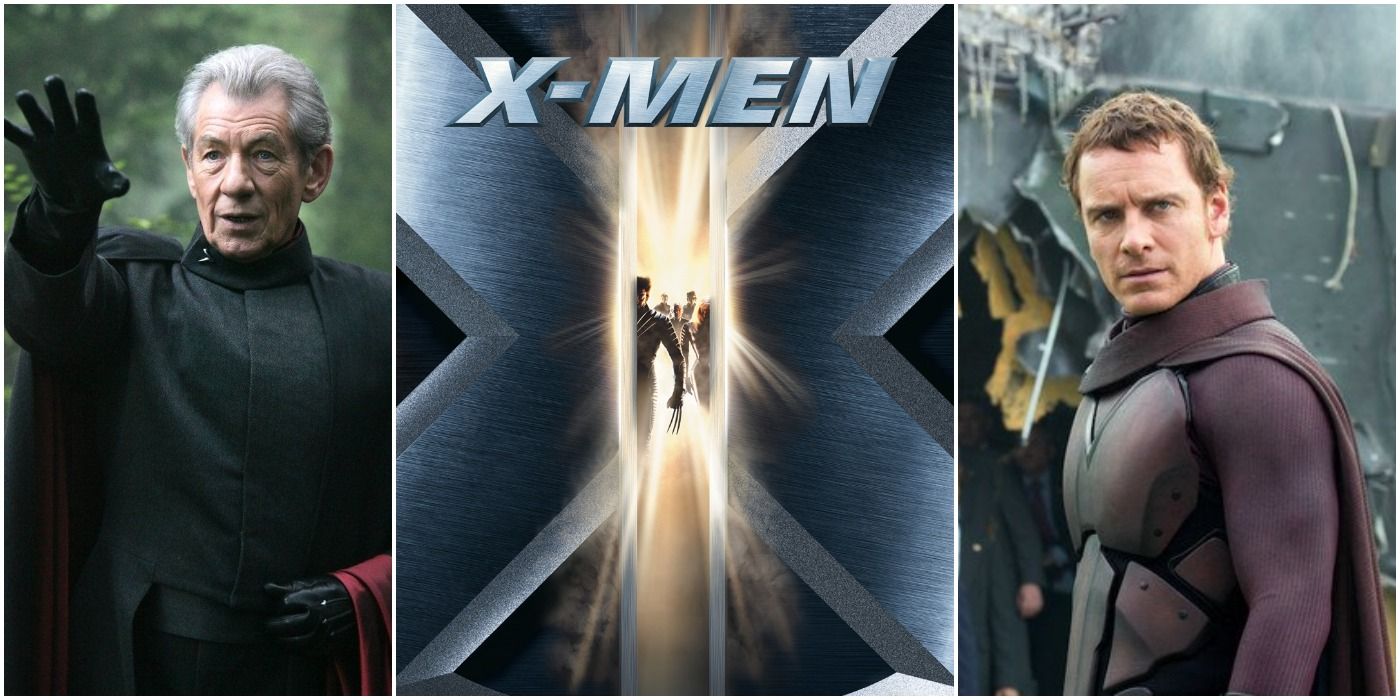
In the long-running X-Men film series, Magneto was just as much of a main character as the franchise’s heroes. This is a sharp contrast to the villains of contemporary superhero movies, where the villains were often one-and-done monsters of the week types. Ian McKellen and later Michael Fassbender both fit the role so beautifully and had such strong chemistry with their respective opposites— Patrick Stewart and James McAvoy as Charles Xavier— which was another incentive to keep Magneto around.
Like his comic counterpart, Magneto is a figure of shifting allegiances; though mostly an antagonist, he also has his principles and will ally with the X-Men if those principles align with theirs, with how villainous he was varying from film to film.
8 The Wolverine Features Only A Cameo From The Master Of Magnetism
The Wolverine is mostly displaced from the larger X-Men universe aside from Logan himself. As such, when Magneto does appear, it’s in a post-credits scene mostly irrelevant to the story itself. Cornering Logan in an airport, Erik seizes his adamantium skeleton and holds Logan in place. Then Erik reveals why he’s there; not as Wolverine’s enemy, but to recruit him for a coming war against mutantkind and those who wish them destroyed. Aware Logan will never trust him, Magneto calls out to his partner: Charles Xavier.
Though Magneto’s appearance is menacing, it’s also quite brief and he’s aligned with Charles wholesale. That means his cameo in The Wolverine is at the bottom of this list by default.
7 Magneto Is The Protagonist Of X-Men: First Class
X-Men: First Class is a prequel detailing the formation of the X-Men and history/schism between Xavier & Magneto; it was also Michael Fassbender’s debut and finest work in the part. Erik spends the first act hunting down Nazis, so it’s impossible not to root for him. After that, he meets Charles and their doomed friendship becomes the film’s dramatic focal point. Still, they’re on each other’s side until the story’s conclusion.
Though Charles and Erik are co-leads, the weight of the narrative falls slightly in the latter’s favor; the film opens with Erik using his powers for the first time, in a desperate, doomed attempt to save his parents at the gates of Auschwitz, while the film ends with him declaring himself Magneto. Elements from the scrapped X-Men Origins: Magneto were folded into First Class, so it makes sense that Erik’s arc receives so much focus.
6 Magneto Is Only Nominally Antagonistic In Dark Phoenix
Magneto played no part in The Dark Phoenix Saga of the comics, but both film adaptations of the story have included him. Perhaps this is why his presence and conflict with the X-Men feels perfunctory in both; in Dark Phoenix, he even acknowledges how repetitive things have become: “You’re always sorry, Charles. And there’s always a speech. But nobody cares anymore. “
Despite his attempt to kill Jean, Erik swiftly allies with the X-Men once the greater threat of the D’Bari reveal themselves. In the film’s final scene, he tracks down the depressed, retired Charles and attempts to renew his old friend’s spirits with a game of chess.
5 X-Men: Days Of Future Past Features Both A Heroic Magneto & An Evil Magneto
Days Of Future Past is a send-off for much of the original X-Men film cast and an affirmation that the First Class actors were around to stay. The film thus features both McKellen’s Magneto in the dystopian, Sentinel-ruled 2023 and Fassbender’s version in the past of 1973.
These two halves and their differing portrayals— McKellen’s Magneto a full-blown X-Man and repentant for his past, Fassbender’s militantly waging a war for mutant survival while inadvertently guaranteeing its destruction— make the contrasts in Magneto’s character rather literal.
4 X-Men: Apocalypse Displays Both Sides Of Magneto
X-Men: Apocalypse is a familiar experience, hitting many derivative beats from previous X-Men films and general superhero movies. Magneto’s arc is no different; he begins the film in hiding, having begun a family in Poland and keeping his powers a secret. When he’s discovered and his family is killed, however, he falls into despair and is swayed to Apocalypse’s side.
Magneto unlocks the full potential of his powers, learning to manipulate the Earth itself and causing massive, worldwide devastation at his new master’s demand. However, his memories of Charles ultimately return him to his old friend’s side and he helps the X-Men defeat Apocalypse. Erik, always one for the dramatic, makes his allegiance known by slamming two girders, shaped like an X, in front of Apocalypse in a move that is equal parts cheesy and badass.
3 Magneto Is Both An Ally & Enemy In X2: X-Men United
X2 is based on Chris Claremont and Brent Anderson’s graphic novel God Loves, Man Kills, where Magneto joins forces with the X-Men to rescue a captive Professor X from William Stryker, a anti-mutant fanatic who intends to use Xavier’s powers to wipe out mutantkind. This comic was the genesis of Magneto as an anti-hero, and the cinematic version was another change of pace after he’d been the main antagonist of the first film.
However, in a major departure from God Loves, Man Kills, the alliance ends in betrayal. Magneto decides not to stop Stryker’s plan, but to invert it so that Charles’ psychic attack targets humans rather than mutants. On top of this genocidal scheme, Erik is also willing to leave his oldest, best friend to die.
2 The First X-Men Film Introduces Magneto As A Sympathetic Antagonist
Though Magneto is purely antagonistic in the inaugural X-Men film, he’s a sympathetic villain from the start. The film and series’ opening scene depicts a young Erik in Auschwitz seeing his parents for the last time; it’s a moment so powerful that any audience member will instantly understand why Magneto is the man he is.
Motivated by the imminent passage of a Mutant Registration Act, he plans to forcibly transform the world’s leaders into mutants. With the most powerful people in the world now on their side, Mutant Liberation will have begun in earnest. As far as supervillain plans go, there’s been plenty more malicious. However, Magneto also isn’t willing to be a martyr for his cause, so he kidnaps Rogue to use as the power source for his plan. As Logan points out: “If you were so self-righteous, it would be you in that machine.”
1 X-Men: The Last Stand Turns Magneto Into A Megalomaniac
Though quite a step down in quality from its predecessor, The Last Stand does have one of the best Magneto moments in all of the films. Early in the film, Magneto crashes a mutant summit and is accosted by the Morlocks; they question how sincere his “mutant pride” is since he isn’t displaying any visible marks of it. Magneto responds by showing them the serial number inked into his skin at Auschwitz: “I have been marked once, my dear, and let me assure you — no needle shall ever touch my skin again.”
Unfortunately, after that powerful moment, Magneto devolves into a caricature of himself. When Mystique is depowered by the “Mutant Cure,” he discards her, and he generally behaves more like a burgeoning dictator than a revolutionary. About Erik’s only redeeming quality in this outing is his genuine remorse for Charles’ death, even if he was the one who egged the unstable Jean on in the first place.
About The Author