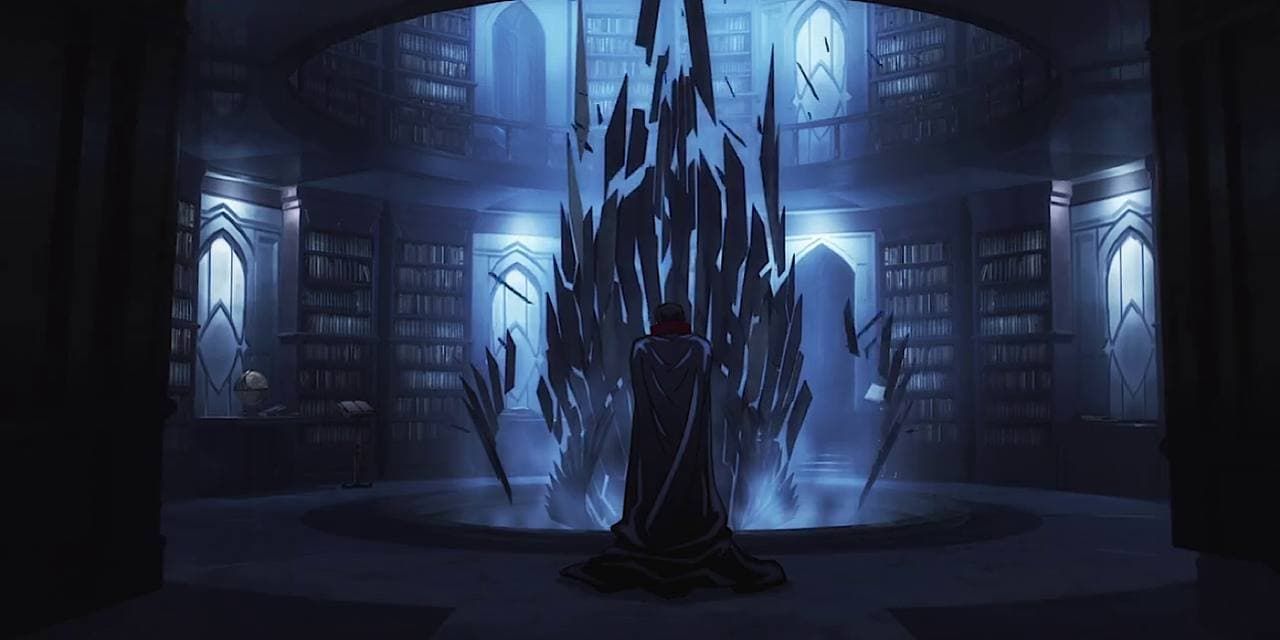
While Dracula may have had technology, everyone else in Castlevania dealt with the limitations of the show’s medieval setting. Some characters used magic to make everyday activities like communication and combat easier, but those were a select few. Most characters communicated through traditional means for the first three seasons but during the fourth, distance mirrors suddenly became the medium of choice.
Distance mirrors were hardly a new addition to the series. They had been utilized several times as the story progressed. Essentially, these mirrors showed any place their owner wished to see provided they fulfilled the conditions necessary for its activation. Some required their owners to inscribed the correct runes on them, while others responded to a mere clap of the hand.
Click the button below to start this article in quick view.
Isaac’s distance mirror was a unique one. It sensed his heart’s desires without him having to vocalize them. There wasn’t any limit to what it showed him either. The mirror also had a quirky activation method; it responded to his clap but only if he also called it “Sir,” implying it had at least a little bit of sentience.
Apart from the usual distance mirrors, Castlevania also introduced two other types of magic mirrors: transmission and remote viewing mirrors. The remote viewing mirrors landed at the bottom of the hierarchy. These only allowed a user to view a location without actually interacting with it in any way. Even though they weren’t as versatile as the others, they were still a powerful addition to any magician’s arsenal. It was through one such mirror that Sypha channeled her magic and teleported Dracula’s castle on top of the Belmont Hold.
Transmission mirrors seemed the most powerful of the three. Apart from having all the capabilities of remote viewing and distance mirrors, they allowed the user to transport objects or themselves to whatever location they were viewing. Dracula did this to project his image over Targoviste, and Isaac used a particularly large one to invade Styria with his army.
The mirrors’ origins are unclear. Little information about their creation was revealed in Castlevania. However, it’s learned a few were created by ancient Carpathian scrying hermits. The process itself was lost, and Dracula once boasted that his mirror was the last one monks created over 400 years ago. A fact that might explain why they seemed somewhat rare in Castlevania‘s first three seasons.
Distance mirrors became a bit more common during the fourth season. All of Varney’s plots to resurrect Dracula were coordinated via mirrors. He could summon anyone he wanted and speak to them through the mirrors at will. He spoke not only Isaac but also Hector and Saint Germain since they were suddenly in possession of distance mirrors of their own. Varney easily connected with them, making communication as simple as a modern-day FaceTime call.
Varney never explained exactly how he achieved this feat, so it was left to the audience to speculate. Perhaps his status as an ancient spirit gave him access to special magic, or he recalled lost secrets of distance mirrors due to his sheer longevity. Whatever the case, the secret of his calls remains a mystery, but they likely had nothing to do with iPhones.
About The Author