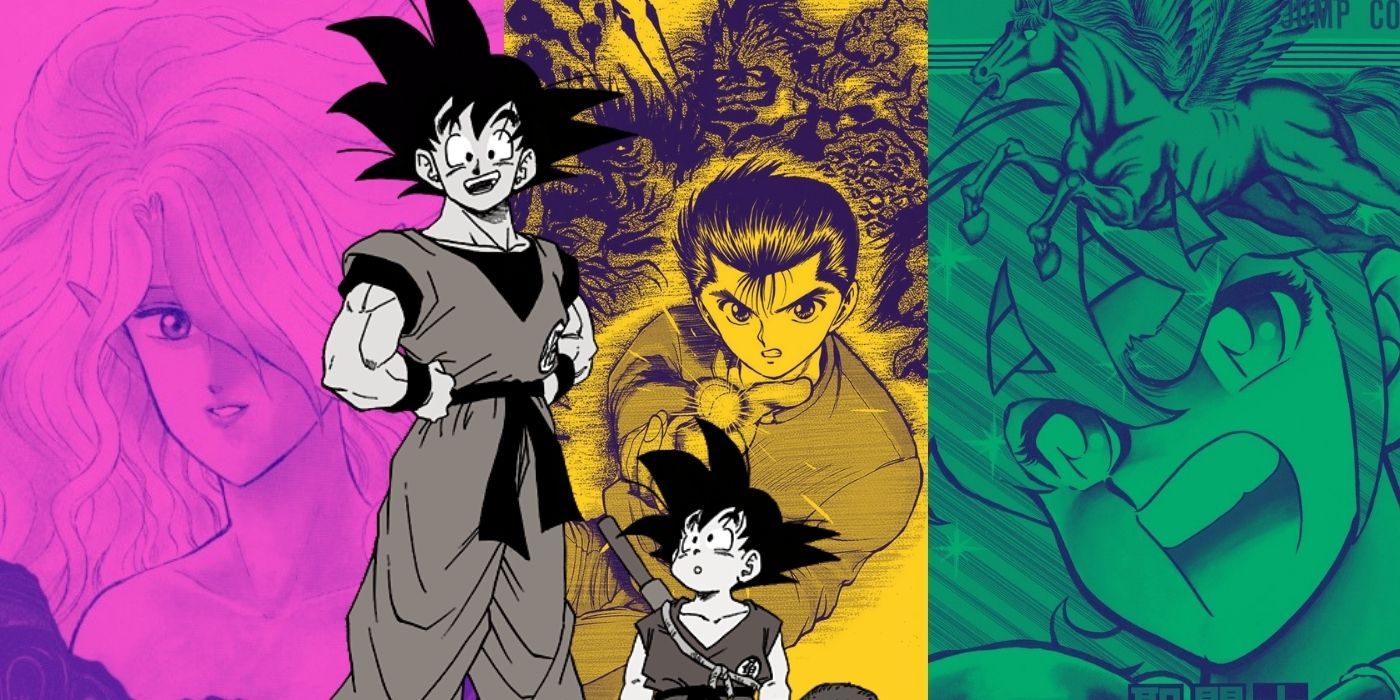
While dozens of manga ran alongside Dragon Ball during the eighties, the reign of Goku and company was far from over. Dragon Ball ran for a decade in Weekly Shonen Jump before its final chapter was published in 1995. While some manga were serialized alongside it for the bulk of its run, others came and went almost too quickly in comparison.
Celebrating Dragon Ball is a no-brainer for most anime fans, for whom the series remains a major gateway and inspiration. But among those series that shared pages with the iconic manga, there were certainly some gems that also deserve the nostalgia treatment.
50 Kochikame (1976-2016)
Kochikame may not be familiar to an average otaku in America, but this series has long since achieved legendary status in Japan. This comedy manga about a cop was serialized for 40 years, from 1976 until 2016, and has sold more than 150 million volumes.
49 City Hunter (1985 – 1991)
City Hunter proved remarkably successful not just in Japan but on an international scale. It has received several anime adaptations over the years and was even adapted into a Hong Kong feature film starring Jackie Chan. Notably, the series has been especially popular in France.
48 Otokojuku (1985-1991)
Otokojuku was a huge success and ran for six years, capitalizing on the constant popularity of martial arts stories and the budding success of high school delinquent dramas. Toei produced an anime adaptation in 1988.
47 Saint Seiya (1986-1990)
Still relatively well-known by anime fans today, Saint Seiya has proven to have longevity on its side. A story that borrows heavily from mythology, the series has received no fewer than thirteen anime adaptions on the big and small screens. The most recent adaptation, Knights of the Zodiac: Saint Seiya, aired in 2019.
46 JoJo’s Bizarre Adventure (1987-2004 In Shonen Jump, 2005-Present In Ultra Jump)
Some things are eternal, and JoJo’s Bizarre Adventure seems to be among them.
Arguably more popular now than ever before, the series has sold more than 100 million copies and spawned several cult-hit anime series.
45 Jungle King Tar-Chan (1988-1990)
Tar-Chan has a lot in common with Tarzan and features a lead who’s been raised by a chimpanzee. While the manga was primarily a gag series, it also indulged in occasional fighting arcs that carried more emotional weight.
44 Kami-Sama Wa Southpaw (1988-1990)
The first God of the Southpaw manga began publication in the late eighties until 1990. Since that time, a sequel series has been published in Manga Goraku in 2009.
43 Rokudenashi Blues (1988-1997)
Another series that capitalized on the popularity of gritty delinquent stories, Rokudenashi Blues ran in Weekly Shonen Jump for almost the same duration of time as Dragon Ball.
42 Dragon Quest: The Adventure of Dai (1989-1996)
A long-running franchise that began life as a series of RPGs, Dragon Quest also became a successful manga series in the late eighties. Almost every game since has also merited a parallel adaptation.
41 Ace! (1990-1991)
Ace! was a successful baseball manga written by Yoichi Takahashi, creator of Captain Tsubasa. The series was one of many examples of Takahashi trying his hand at illustrating other sports.
40 Keiji (1990-1993)
A historical manga that serves as a retelling of the life of famed samurai Keiji Maeda, Keiji wasn’t quite non-fiction.
While Keiji Maeda was a real general, this manga was inspired by a novel by Keiichiro Ryu.
39 Hikaru! Chachacha!! (1990-1991)
In Hikaru! Chachacha!!, the son of a deceased judo master aims to contribute to his father’s legacy. The series never received an anime adaptation but ran long enough to be compiled into seven volumes.
38 Kickboxer Mamoru (1990-1991)
Written by iconic Kinnikuman mangaka-team Yudetamago, Kickboxer Mamoru ran for 32 chapters. The authors wanted to write a story that would introduce audiences to Muay Thai.
37 Metal Finish (1990-1991)
Written by Masaru Miyazaki and Nobutoshi Ejinara, Metal Finish featured players who didn’t wear protective helmets and only lasted a few chapters. Still, it beat The Mighty Ducks to the punch when it came to helping hockey go mainstream.
36 Slam Dunk (1990-1996)
Even today, Slam Dunk is arguably one of the most famous sports manga, though the anime was canceled prematurely. The story chronicled Hanamichi Sakuragi’s transformation from delinquent to basketball star.
With more than 150 million volumes sold, Slam Dunk is one of the bestselling series of all time and is credited for popularizing basketball in Japan.
35 Chin’yuki: Taro To Yukai Na Nakama-Tachi (1990-1992)
A monk and a kabuki player team up in this comedic retelling of Journey to the West. In this highly irreverent story, the kabuki player is also a violent assassin, and the monk has been transformed into a monkey due to a curse.
34 Yu Yu Hakusho (1990-1994)
Yu Yu Hakusho needs no introduction, as it is still widely considered among the best shonen series of all time. Yoshihiro Togashi was inspired by his love for occult and horror films and wanted to create a series that incorporated some supernatural elements. Even so, the shift from a detective story to martial arts epic was always intended, and few series blend genres so well.
33 Takeda The Libero (1991-1992)
In this soccer manga by Majima-Kun Suttobasu!! author Makoto Niwano, Takeda longs to be a striker but takes on a libero position instead.
32 Outer Zone (1991-1994)
With a title that deliberately refers The Twilight Zone and The Outer Limits, Outer Zone and its iconic host, a strange elfin creature called Misery, introduced readers to peculiar happenings in an alternate universe. Fans of the occult will still find much to admire here.
31 Pennant Race: Yamada Taichi No Kiseki (1991-1994)
Pennant Race is a baseball manga about the career of Yamada Taichi, who dreams of one day joining the Astros team.
30 Ten Yori Takaku! (1991-1992)
Though this manga shares its name with a rom-com manga published later, the 1991 manga was about a young equestrian living in Hokkaido.
After the death of his mother, Yuuki Mori finds a new purpose when he begins riding horses competitively.
29 Tengai-Kun No Kareinaru Nayami (1991-1992)
In the Tengai-kun no Kareinaru Nayami manga, a boy who’s allergic to women also ironically secretes pheromones that attract them.
28 Tennenshoku Danji Buray (1991-1992)
Buray was a short-lived professional wrestling manga written by Kazuki Takahashi, the author who later created the incredibly successful Yu-Gi-Oh! franchise.
27 Majin Bokentan Lamp Lamp (1991-1992)
An adventure manga inspired by 1001 Nights, Majin Bōkentan Lamp Lamp, this manga was written by Cyborg Grandpa G mangaka Shigeru Hijikata, albeit under a pseudonym. The same author would later take on a more famous pen name: Takeshi Obata.
26 Change Up!! (1992-1992)
Tohma Nagasu is the determined protagonist who must overcome an injury to succeed in baseball and achieve his dreams in Change Up!!
25 Monmonmon (1992-1993)
Monmonmon, perhaps remembered for its offbeat style, was a gag-manga featuring some smiling and mischievous monkeys with runny noses.
24 Baramon No Kazoku (1992-1993)
The family of Brahman has passed judgment on lawless criminals for centuries. Baramon no Kazoku chronicles the activities of its modern members.
23 Bonbonzaka-Koko Engeki-Bu (1992-1995)
This gag-heavy school manga about a boy who falls for the school’s most popular girl featured a rarity for the time: an openly gay character.
However, this element of the series hasn’t aged well, as the character in question is written as a caricature madly in love with the protagonist.
22 Chibi (1992-1993)
Chibi was yet another sports manga by Yoichi Takahashi. It told the story of a short, sickly boy named Satoshi Nakamoto who becomes determined to excel as a boxer.
21 BØY (1992-1999)
The hugely popular sequel to Hareluya, BOY is the story of God’s delinquent son. An anime adaptation aired in 1997, but most fans preferred the manga.
20 Psycho+ (1992-1993)
Written by prolific author Fujisaki Ryu, Psycho+ is a story about supernatural game software and the boy who becomes immersed in it.
19 Rikito Densetsu: Oni Wo Tsugu Mono (1992-1993)
Before he illustrated Death Note, Hikaru No Go, and Bakuman, mangaka Takeshi Obata worked on this sumo manga. The story was in part biographical, detailing the life of acclaimed sumo wrestler Takanohana Koji.
18 Genshoku Chojin Paintman (1993)
In the decidedly oddball Paint-Man, an alien prince gives an elementary school teacher a magical paint that allows him to fight off alien invaders.
17 Ninku (1993-1995)
A popular ninjutsu manga that spawned anime films and a series, Ninku’s unique art style is a signature of author Koji Kiriyama. The sequel manga, Ninku 2nd Stage: Story of Etonins, was later published in a seinen magazine.
16 Komorebi No Moto De… (1993-1994)
In Komorebi no Moto de…, Tatsuya Kitazaki meets a girl who can speak to trees. Thereafter, his life begins to change dramatically.
15 Tottemo! Luckyman (1993-1997)
Luckyman is a zany superhero who battles aliens. An anime adaptation by Pierrot aired in the mid-nineties, and two video games featuring Luckyman were released for the Game Boy.
14 D·N·A² (1993-1994)
This successful sci-fi manga from Zetman and Video Girl Ai author Masakazu Katsura featured harem elements that somewhat diminish the strengths of the series.
13 Hell Teacher Nube (1993-1999)
Hell Teacher Nube, a manga that was popular enough to reach 31 tankobon, features a teacher who is also an exorcist. Until a game featuring Nube was released for the PS4 in 2014, the series had never had an official US release.
12 Kagemusha Tokugawa Ieyasu (1994-1995)
This historical manga, yet another illustrated by Tetsuo Hara, retells the story of military commander Tokugawa Ieyasu. Set in the Keicho era, the series pairs the legendary commander up with a wandering warrior named Jirosaburo. When Ieyasu dies, Jirosaburo assumes his identity.
11 Osama wa Roba ~Hattari Teikoku no Gyakushu (1994-1996)
A gag manga that was included at the end of Jump issues, Osama wa Roba holds a unique place in the Shonen Jump canon. While most of the series has been collected into omnibus editions, an early chapter has not been included, apparently due to inappropriate content.
10 Captain Tsubasa: World Youth (1994-1997)
A continuation of the Captain Tsubasa franchise, World Youth chronicles the fourth story arc of the series.
Set primarily in Italy, the protagonist dreams of joining a professional Italian team.
9 Rurouni Kenshin (1994-1999)
Among the most famous manga published alongside Dragon Ball, Rurouni Kenshin’s reputation has dimmed in recent years due to the controversy surrounding its author, Nobuhiro Watsuki.
8 Bakudan (1994-1995)
Bakudan, another work by Akira Miyashita, tells the story of a young gangster who aspires to reach the pinnacle of the yakuza.
7 Midori No Makibaou ( 1994-1997)
Midori no Makibaou was a much-beloved story about a mule who’s determined to win races against horses. He often does so, thanks to his tenacity and speed, and grows into a fantastic racehorse.
6 Mind Assassin (1994-1995)
In Mind Assassin, Doctor Kazui Okumori is descended from an assassin and has inherited psychic powers, which he uses to help his patients deal with psychological trauma.
Unfortunately, his family legacy catches up to him.
5 Hisoka♥Returns! (1995-1996)
In Hisoka Returns, a teacher named Hisoka dies and finds himself reborn in the body of the student he tried to save. Unfortunately, Hisoka can’t explain what’s happened to him without breaking the bond between his soul and his borrowed body, incurring his own immediate death.
4 Majima-Kun Suttobasu!! (1995-1996)
Majima-Kun Suttobasu!! won itself no shortage of fans due to its playful balance of martial arts and comedy. While it might not be familiar to modern international fans, the series received a reboot as recently as 2010.
3 Ryuudou No Sieg (1995-1996)
Set during the warring states period, Ryudo no Sieg chronicles the exploits of a boy learning a fictional martial art called “Koppojutsu.”
2 Karakurizoushi Ayatsuri Sakon (1995-1996)
Karakurizoushi Ayatsuri Sakon relays the story of a puppeteer named Tachibana Sakon, who solves mysteries with the help of his puppet. While the manga was popular enough to merit a manga adaptation, author Takeshi Obata rose to heights of fame years later when he collaborated with Tsugumi Ohba to illustrate Death Note.
1 Takeki Ryuusei (1995)
The boss of a biker gang leaves Japan to help his sick sister, only to return and discover his friends have fallen in with the yakuza. Takeki Ryuusei was yet another classic written by Keiji author Tetsuo Hara.
About The Author
