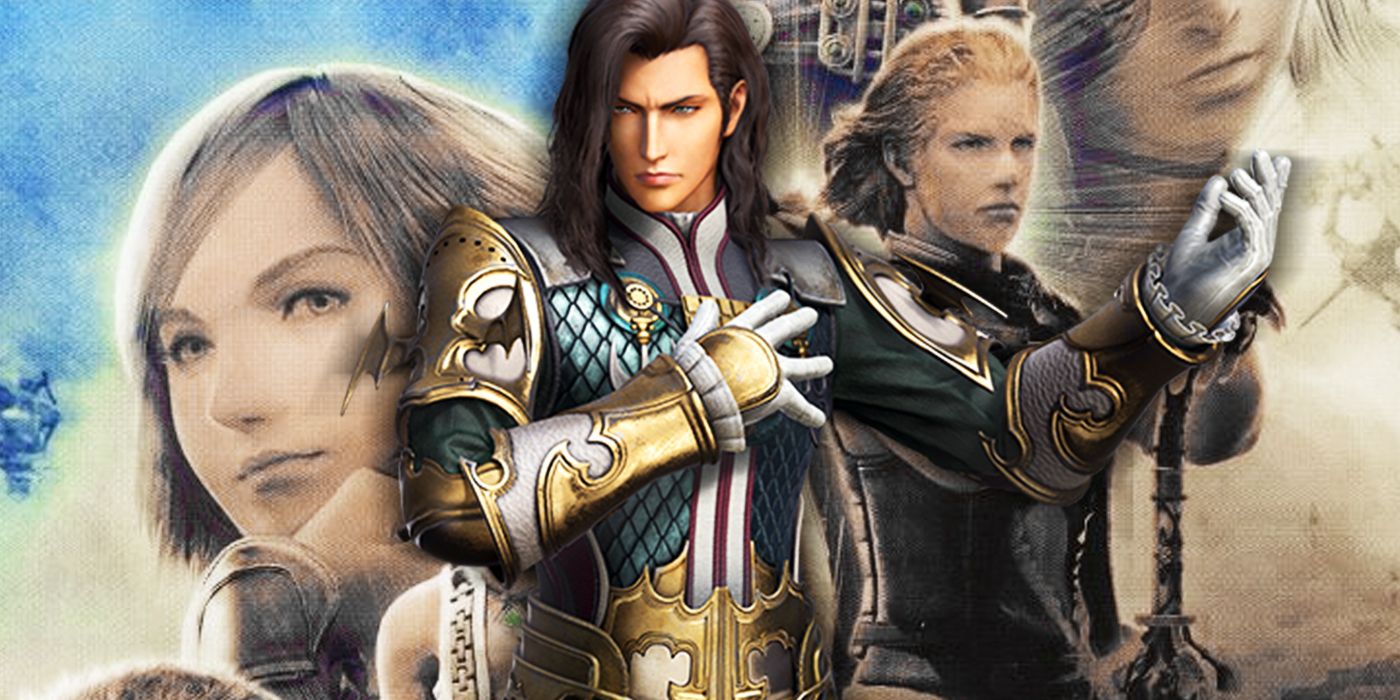
Vayne Carudas Solidor may be the smartest villain in the history of Final Fantasy. Developer Square Enix’s flagship franchise has introduced gamers to several classic foes but the antagonist of the often-overlooked Final Fantasy XII is the best-written of them all.
Unlike most Final Fantasy villains, Vayne has no desire to destroy the world or become a god. Rather, he seeks to empower humanity to rise above the forces perverting its destiny. Vayne’s subtle scheming and eloquent rhetoric might not be as obviously-threatening as the genocidal ambitions of Kefka and Sephiroth, but his vision makes for one of the most intellectually invigorating JRPG villains ever.
Click the button below to start this article in quick view.
Vayne’s desire is to become a Dynast King, a hero-monarch who carves out an empire with divine crystals called Nethicite. These stones are gifted by the Occuria, a race of godlike entities that influence the world from the shadows. Through their puppets, these would-be deities have guided the course of history to suit their own desires. Vayne finds this abhorrent. Though inspired by the Dynast King’s legend, he strives to unite humanity under its own banner rather than that of the false gods, engineering artificial Nethicite to achieve that end.
What makes Vayne fascinating is that his story implicitly comments on and criticizes the series’ past entries. Many Final Fantasy games star heroes empowered by crystals, or rough equivalents in the case of titles like VII. They typically also have an antagonist that seeks power to satisfy their own greed, often by harnessing an ancient energy source. XII is the first in the main series to unambiguously call these concepts out as absurd. It argues that a humanity reliant on power it did not forge for itself will become reliant on it, leading inevitably to stagnation and ruin.
Fittingly, there is a historical precedent for this very eventuality within the game’s world. The original Dynast King is a parallel for all the past Warriors of Light, a divinely-ordained hero guided by the power of the crystals. His empire is remembered as a peaceful and prosperous one, but fragmented all the same by the time he passed into legend. The lesson Vayne learns from his history is that the Occuria do not care for humanity’s long-term prosperity, and that their blessings can be taken away as easily as they are given. Unwilling to leave his peoples’ destiny to chance, Vayne resolves to, in the words of his Final Fantasy XII ally Dr. Cid, “[put] the reins of history back in the hands of Man.”
Unfortunately, Vayne’s good intentions lead him down an increasingly dark path. He willingly sacrifices states in the name of researching Nethicite’s power and abuses the legal loopholes of his country to crown himself autocrat, to say nothing of his own desire to rule those he “liberates” from the Occuria. Though he and the game’s heroes would agree to reject their control, his callous methods make them foes.
Final Fantasy XII failed to achieve the same pop-cultural presence as earlier titles, despite its critical and commercial success. However, as the series continued, the ideas its story presented have become increasingly relevant. Final Fantasy XIII launched an entire trilogy about humanity being controlled by malicious gods, requiring three games for its cast to reach a happy ending. Final Fantasy XV, before its remaining DLC was cancelled, seemed to be setting up a twist that would expose its crystal as a capricious agent manipulating mortals for its own gain.
Even the Final Fantasy VII Remake toys with the idea of humanity at the mercy of greater forces, with the Whispers trying to preserve history. Their subsequent destruction implies that Sephiroth now has a free hand to remake it in his image. While the villains of these succeeding games have not always shared Vayne’s ideals, the themes of his story now echo loudly throughout theirs.
Vayne may not be the most imposing Final Fantasy villain, and traditional fans may dislike how his game criticizes the series’ mythology without offering a replacement. XII being a distant prequel to Tactics means humanity will descend into the same crystal crusading he tried to stop, casting a bittersweet shadow over an otherwise hopeful ending. However, Square Enix is still to be commended for trying a different kind of villain and writing him with a fierce intelligence his genocidal peers simply cannot match. Vayne may never be popular enough to win a spot in Super Smash Bros. but, at the very least, the man who would be king deserves a royal celebration.
About The Author