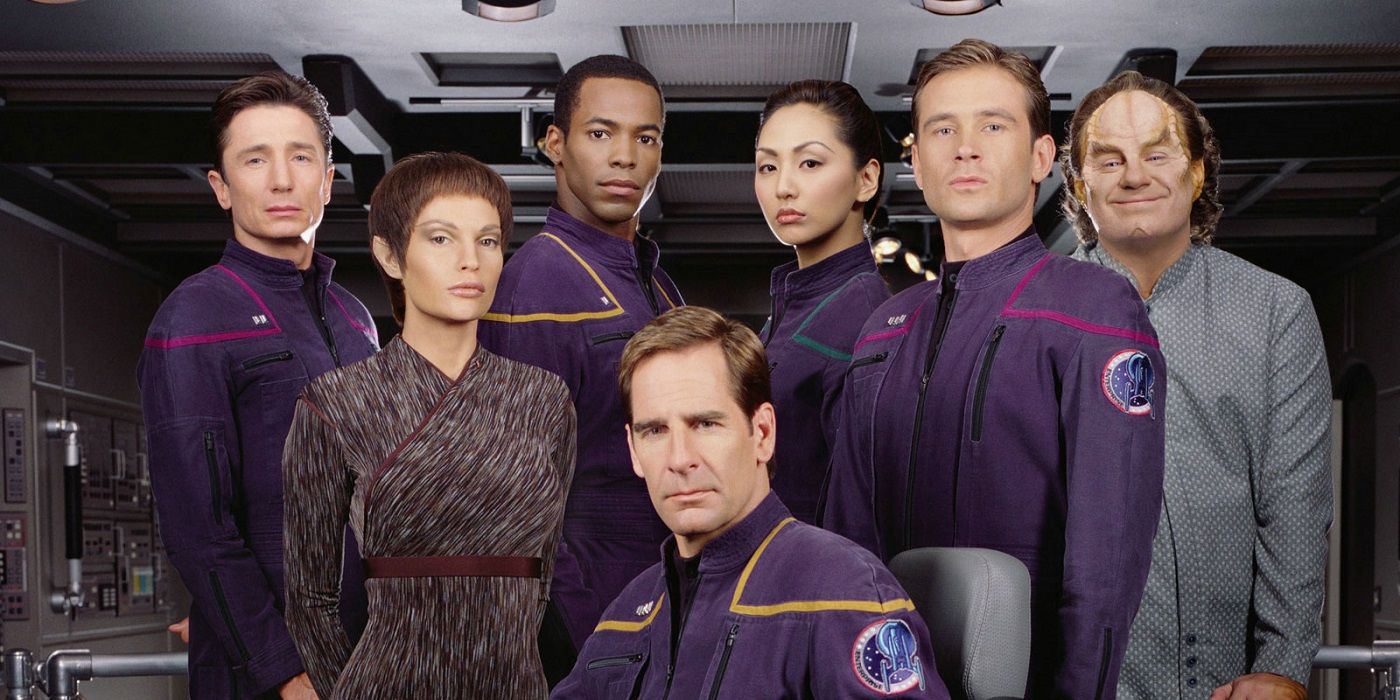
Star Trek: Enterprise held an unfair reputation as the runt of the Star Trek litter for many years. It was beset by a number of issues and canceled after only four seasons when the previous three Star Trek shows all ran for seven. Yet it always showed promise, and over the course of its run found a spin on the Star Trek universe that helped it age better than its challenged production run suggests. Looking back at Enterprise, it shows a lot of strong material that never really got its due.
Few of Enterprise‘s problems could be laid at its feet, though that didn’t always do it any favors. Early missteps, a shake-up in the boardroom at Paramount and an overall sense of franchise fatigue converged right at the point when the show caught fire. Early creative efforts, such as the Xindi and Temporal Cold War, ran into unexpected problems since no evidence of them existed in earlier shows set later in the canon timeline. That was often compounded by ill-considered use of species like the Ferengi and Borg (whom Earth had no canon knowledge of at the time). By the time Enterprise worked free of those early issues, it had been canceled.
Click the button below to start this article in quick view.
Through those troubles, Enterprise found its own path and contributed to Star Trek in ways no other show could match. It started with the same magic bullet that every other Star Trek series had: a stellar cast playing substantive characters. Scott Bakula provided a strong anchor, and showcase episodes took each figure in fruitful and interesting directions. The best of them tied their stories into key Federation concepts, such as Season 2, Episode 22, “Cogenitor,” which featured a well-intentioned Trip Tucker attempting to aid an oppressed member of an alien society. It ended in disaster, and Archer closed the story by stressing the need for the kind of protocols that would eventually become the Prime Directive.
Enterprise took advantage of that pre-Federation universe with increasing boldness and confidence as its run continued. That allowed it to throw clever twists at an audience all-too-familiar with Trek’s usual tropes. Vulcans were often cast in less-than-benevolent roles, suggesting that they weren’t always the fonts of benevolent wisdom that they became.
Perhaps no figures benefitted more from this attention than the Andorians, canonical co-founders of the Federation who had been all but invisible save for a few brief glimpses in The Orginal Series. The arduous make-up made it easy for previous shows to pass them over, but Enterprise fully committed to the concept. They hired Trek stalwart Jeffrey Combs as the pugnacious Shran, an early antagonist who slowly develops a grudging respect for Captain Archer. The resulting story arc played out across the show’s run, unlike any previous incarnations.
That distinctiveness was hard to come by at the end of an extraordinary period in the franchise’s history, encompassing four TV shows, six movies and the exponential expansion of what Star Trek could be. Its efforts to strike out in a new direction came with built-in problems, but external factors denied it the time to find its own voice that Star Trek: The Next Generation and earlier shows had enjoyed. Time has allowed Enterprise‘s better qualities to shine through and even its missteps (such as the infamous theme song) have grown endearing. It might not be everyone’s favorite Trek, but it’s still terrific, and its take on Gene Roddenberry’s vision is one of a kind.
About The Author
