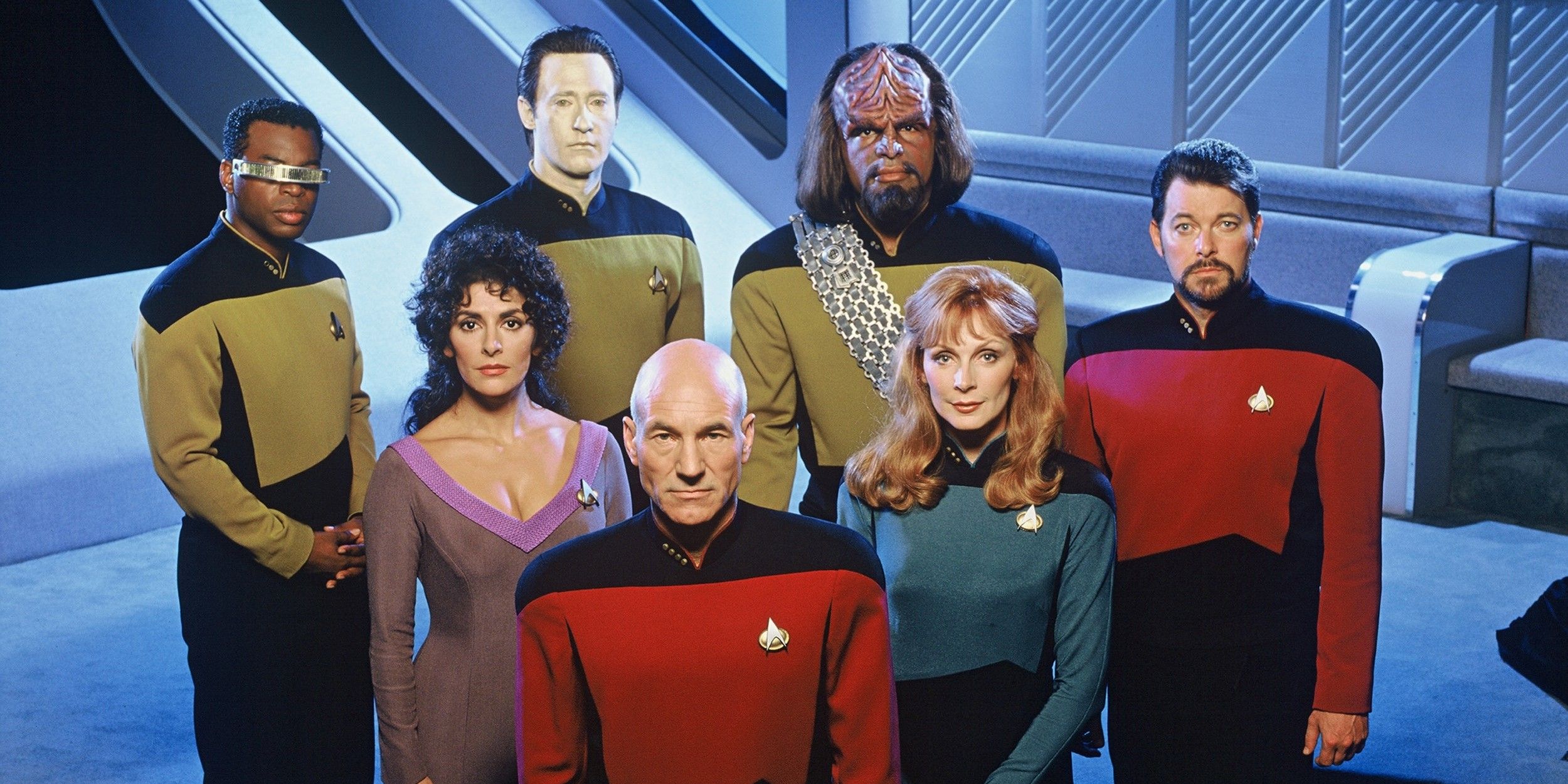
When Star Trek: The Next Generation debuted in 1987, it looked like anything but a winner. It was beset by poor scripts, departing cast members and a feeling that perhaps the final frontier had run its course. However, it turned around in short order. By the end of its seven-year run, TNG not only changed the rules on what Star Trek could be, but it also cemented a place as one of the greatest television shows of all time.
The first three seasons were an exercise in rapid improvement, and The Next Generation had the luxury of time to find its footing. Once it hit its stride, its quality became more nuanced and seasons varied as the writers experimented with new stories and plotlines. From the worst to the best, here is every season of The Next Generation ranked.
Click the button below to start this article in quick view.
Season 1
TNG‘s heights stand out all the more for its incredibly shaky start. Saddled with an arduous production process and storylines cribbed from 15 years of development hell, it struck wrong notes left and right. Gene Roddenberry’s rewrites often eliminated interpersonal conflicts in the name of an idealized future — sucking the drama out of the scripts — and his infamous coddling of Wesley Crusher left fans ice cold. Gates McFadden and Denise Crosby both left the show, and Patrick Stewart expected the entire endeavor to be over within one season.
And yet even in Season 1, flashes of better things appeared. The cast always outshined the material and worked to overcome the deeply flawed scripts. Sharp ideas could be seen, most notably John de Lancie’s Q. Plus, even misfires like the Ferengi found redemption in later seasons. The fan base proved willing to let the show work out its kinks, and its syndicated broadcast platform kept the networks from interfering. It had a way to go, but there was time to recover — and recover it did.
Season 2
Season 2 actually deserves a good deal of credit for getting The Next Generation where it needed to be, taking huge leaps forward from the disaster of Season 1. It did so under an enormous amount of pressure: a 1988 writer’s strike limited development time, leading to the season’s infamous “clip show” finale among other problems. Trek stalwart Diana Muldaur was brought in as McFadden’s replacement, and her Dr. Pulaski never quite connected with the rest of the cast.
Despite this, so much of Season 2 was much stronger than Season 1. The characters began to find their rhythm, while Whoopi Goldberg’s arrival as Guinan brought a stabilizing influence to the cast. Though still uneven, episode quality improved, with standouts like “The Measure of a Man” echoing the kind of larger questions that Star Trek excelled at pondering. There was also “Q Who?” featuring the chilling introduction to the Borg. The Next Generation finally stepped out of the original series’ shadow at that moment and set the stage for brilliant things to come.
Season 7
The Next Generation’s curtain call came at just the right time. With Star Trek: Deep Space Nine gearing up for the Dominion War, TNG turned inward with a lot of personal episodes. Strong concepts were still the order of the day, notably “Lower Decks,” which showed the ship from the POV of its rank-and-file and served as the inspiration for the recent animated series. The series finale “All Good Things…” wrapped it up in fine fashion, with a welcome return from Q and a time-spanning storyline that never lost sight of the characters.
But while the season featured its share of winners, they felt few and far between, with more placeholders in evidence. The infamous “Sub Rosa,” which saw Beverly seduce the ghost of her grandmother’s lover, marked an unwelcome return to risibly bad Trek, and the show as a whole felt like it was running out of things to say. With Star Trek: Generations kicking off the TNG feature films, it was enough for the season to bow out with grace before the shark-jumping began in earnest.
Season 4
Season 4 started out with a bang, as “The Best of Both Worlds” concluded and the Enterprise found a miraculous way to defeat the seemingly insurmountable Borg. It followed with a surprising episode, “Family,” which focused on Picard’s trauma following his assimilation. That broke with the tradition of self-contained “adventures of the week” in a big way while humanizing the ship’s captain like never before.
That kind of care became the watchword for the entire season. Epic storylines remained — with Worf and the Klingons the biggest beneficiaries as Starfleet’s traditional foes came into their own — but the more personal episodes truly set the season apart. The likes of “Data’s Day” and “Half a Life” showed the characters outside of crisis situations and gave the universe a new sense of reality. Suddenly Star Trek was a universe where people lived their lives, instead of just getting into adventures.
Season 6
Season 6 is best described as “workmanlike,” as the writers dutifully mined the storylines that held potential, and the cast got to kick up their heels. Deep Space Nine had premiered, and while it was finding its footing, The Next Generation held the line with a series of solid, quality episodes. Indeed, the only negatives about the season were the quiet sense of complacency that crept in: signs of a show at the top of its game and looking for new mountains to climb.
The actors got to stretch their muscles as never before, and the bulk of the season’s joys rested on their capable shoulders. Brent Spiner played a whole band of outlaws in “A Fistful of Datas,” William Riker first met his doppelganger Thomas in “Second Chances” and Deanna Troi had to brass it out as a Romulan spy in “Face of the Enemy.” Picard and Q found a strangely personal side to their rivalry in “Tapestry.” However, the season’s high point was “Chain of Command,” with David Warner’s Cardassian torturer putting Picard through an Orwellian hell.
Season 3
This was the year The Next Generation hit its stride, with strong episodes becoming the rule rather than the exception. The sins of Season 1 were long gone, and the show finally had the chance to realize its potential. It took advantage of the opportunity with a number of bold endeavors that threw open the gates of what Star Trek could be. “Yesterday’s Enterprise” brought Tasha Yar back in surprising fashion, topping similarly strong episodes like “The Most Toys” that grappled with the limits of the crew’s morality.
The season was also marked by significant character development, as Data conceived of a child, Worf accepted dishonor to preserve the Klingon Empire and Picard had to prove to a planet of proto-Vulcans that he wasn’t a god. Gate McFadden returned as Dr. Crusher and suddenly felt like she never left. Reg Barclay appeared for the first time, while Mark Lenard’s cameo as Sarek launched a long line of fruitful cameos from original series cast members. Johnathan Frakes directed his first episode this season, beginning a long tradition of Trek alum behind the camera. And it all ended with the legendary “Best of Both Words, Part 1” which saw Jean-Luc Picard assimilated by the seemingly unstoppable Borg.
Season 5
Everything about The Next Generation came together in Season 5 with elegant puzzle-box episodes, world-building epics and personal stories that made the characters thrive. Mr. Spock made his return in “Unification,” part of a formal farewell to the original crew that culminated with the release of Star Trek VI a few weeks later. Ensign Ro made her debut, while Tasha Yar’s half-Romulan daughter Sela found yet another way for the deceased security officer to haunt her former crewmates. “I, Borg” found the first cracks in the Collective’s armor and the introduction of the franchise’s first X-B.
But more than any other single factor, Season 5 was Patrick Stewart’s to shine. A trio of showcase episodes punctuated his status as first among equals in the crew. “Darmok” and “The Perfect Mate” each gave him a terrific co-star in Paul Winfield and Famke Janssen, respectively, while the penultimate episode, “The Inner Light,” is widely cited as one of the best Trek episodes of any kind. It was a high point for an amazing season when everything Star Trek could be suddenly appeared as if by magic.
About The Author
