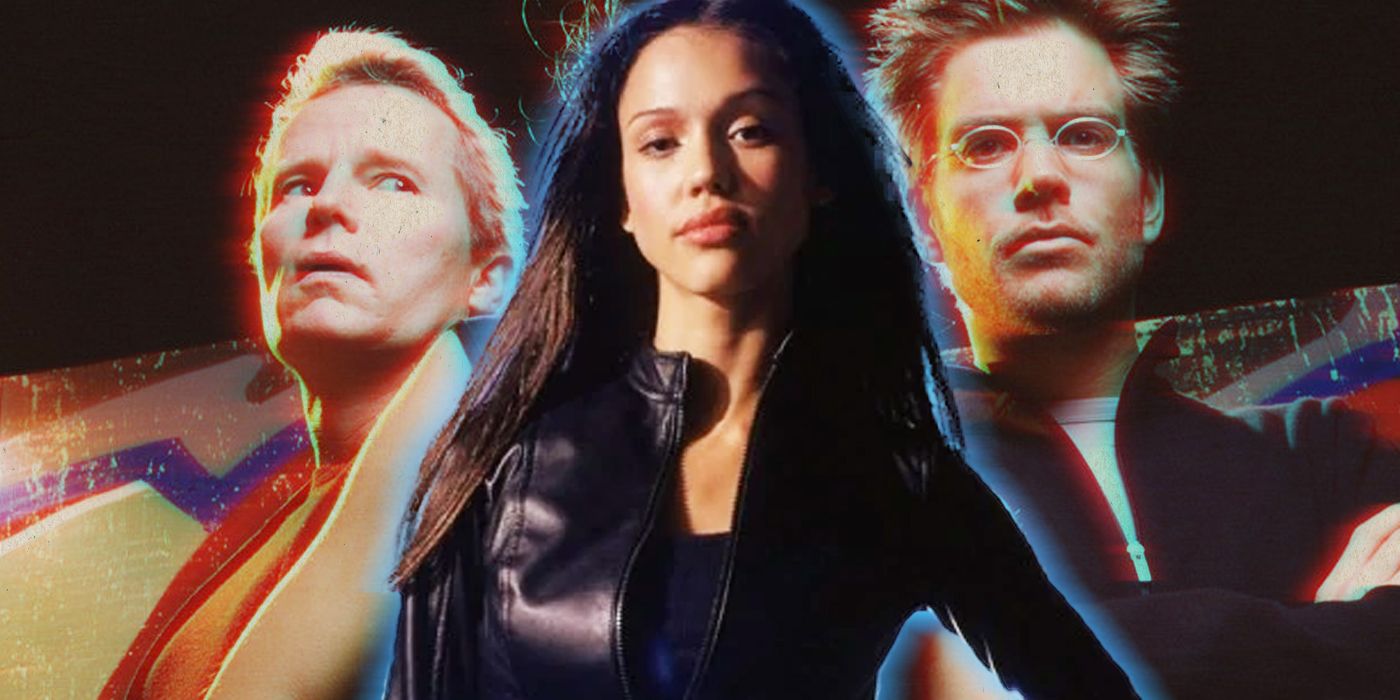
The dystopian sci-fi series Dark Angel launched to great promise on the Fox network in 2000. Touted as the next major project of creator James Cameron following his massive success with Titanic, the show initially scored with audiences and critics. Unfortunately, ratings dropped precipitously in Season 2 after the show was moved to the Friday night “death slot,” and Dark Angel never made it to Season 3. Today, the series is mostly remembered for launching the career of Jessica Alba — if it’s remembered at all. However, the show boasts multiple elements that would fit perfectly into the current TV landscape.
Click the button below to start this article in quick view.
Dark Angel centers on Alba’s Max Guevara, a genetically enhanced super-soldier who escaped a secret government program called Manticore as a child along with 11 of her transgenic brothers and sisters. Shortly after, an electromagnetic pulse was detonated over the United States, wiping out all computers and turning the country into a hellish dystopia virtually overnight. Ten years later, in 2019, Max is a bike messenger in a post-apocalyptic Seattle who is still trying to lay low to avoid recapture by her creators while also attempting to track down her fellow escaped super-soldiers. Against her better judgment, she gets drawn into the world of underground journalist Logan Cale, who wants to use her special skills to uncover and expose corruption. By the time the show ended in Season 2, Max evolved to become a leader in the fight for transgenic rights.
In hindsight, Dark Angel was ahead of its time. Between the show’s strong Latina lead, cyberpunk dystopian setting and exploration of themes like government overreach and corruption and the rights of marginalized people, it sounds more like a property that’s being released today instead of 20 years ago. And there are many reasons to suspect that now it would find the success that eluded it then.
One of those reasons is the diversity of Dark Angel‘s cast. With Alba as its lead, the series put a Latina front and center, something that’s still fairly rare on television. The cast also boasted multiple people of color, the most important of which was Max’s best friend, Original Cindy, who was Black and an out lesbian. While this was groundbreaking in 2000, according to actor Valarie Rae Miller, who played Original Cindy, the character made the network nervous, and consequently, her potential was never completely fulfilled. Today, however, when representation and inclusion are considered assets instead of liabilities for new shows, a Dark Angel revival would enable Original Cindy to be exactly who she was meant to be while enabling the show to create roles for even more diverse characters.
Moreover, while Dark Angel‘s dystopian vision of the near future wasn’t typical television fare for the early 2000s, today, visions of the post-apocalypse have become a pop-culture standard. Of course, there were dystopian sci-fi stories before Dark Angel, and much of the early appeal of the series came from the way it seemed to take cues from popular Cameron movies like Terminator 2 and Aliens, which predicted bleak futures for humanity. Yet, the show’s weekly worldbuilding ultimately couldn’t sustain audience interest. Nowadays, though, dystopian series like The Walking Dead, The 100 and The Handmaid’s Tale have become a staple, making the setting of a Dark Angel revival far easier for audiences to embrace.
The same is true of Dark Angel‘s overarching themes of government corruption and transgenic rights. While they might not have caught on 20 years ago, these are topics that are potent and important to viewers in 2021. The series’ idea of transgenic rights functions as a lightly veiled metaphor for the rights of marginalized groups, a subject that’s been tackled in everything from the recent update of Saved by the Bell to superhero shows like Black Lightning. Furthermore, instead of being saddled with the standards of the traditional broadcast model, which required shows to produce 20+ episodes per season often leading to unnecessary filler, newer TV practices allow for shorter seasons. A limited episode count would allow a Dark Angel revival to tighten its storytelling, enhancing its exploration of these themes in a way that could make them especially enticing and meaningful to modern-day audiences.
Given all these factors, it’s clear the time for a Dark Angel revival has come. With everything from Head of the Class to The Equalizer being rebooted today, it’s a shame there are no reports of Dark Angel being considered for the same treatment. Although the series didn’t make much of a splash in the early 2000s, a remake in the early 2020s could finally see it get its due.
About The Author