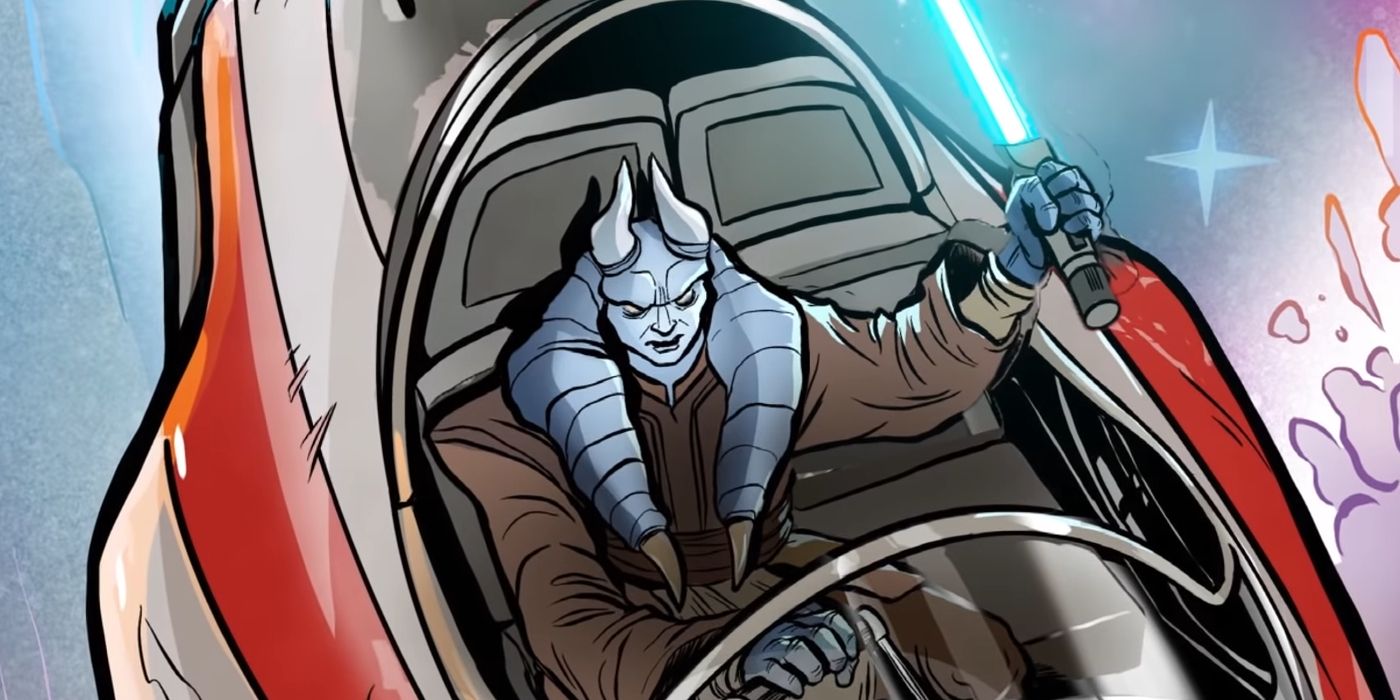
WARNING: This article contains spoilers for Star Wars: The High Republic Adventures #1 and #2 by Daniel José Older, Harvey Tolibao, Pow Rodrix, Jake M. Wood, Rebecca Nalty, Elizabeth Brei and Riley Farmer, on sale now.
In Star Wars: The High Republic Adventures, Chagrian Jedi healer Torban Buck, more commonly known as Buckets of Blood, may have a gory nickname, but he only is interested in healing, not fighting. In the second episode of Star Wars: The High Republic Show, host Krystina Arielle asked Daniel José Older to expand upon his inspiration for the character. Older explained that he drew upon his time as a medic in New York City, and Buckets of Blood was inspired by a medic who went by the same nickname. Within the pages of Star Wars: The High Republic Adventures, Buckets of Blood shows that there are many ways to be a hero in the Star Wars universe.
Click the button below to start this article in quick view.
In the Star Wars: The High Republic Show interview, Daniel José Older related more stories about the real Buckets of Blood. He stated, “Buckets of Blood is actually based on an old time medic from when I was a medic, but even before that time.” Older described Buckets of Blood as a “street lord medic” who people talked about with respect and awe.
Throughout the episode, Older and Arielle used an emphatic, enthusiastic way of saying the name Buckets of Blood, and that emphasis stems from the real man. As Older explained, “part of the reason that it’s said that way is that [Buckets of Blood] would actually come up on the air, on EMS Radio, probably illegally, to turn down jobs that he didn’t think were cool enough. And so everyone was like, oh my God, Buckets of Blood, like, who was that dude?” Thus, the real Buckets of Blood was a highly competent medic who was enthusiastic about his job and helping people, and Older created Torban Buck to honor him.
In Star Wars: The High Republic Adventures, Torban Buck carries the same enthusiasm for healing. At the beginning of the comic, he accompanies Jedi Master Yoda and a group of Padawans to try to stop debris from the Great Disaster from harming Trymant IV. This mercy mission turns violent when they realize that the Nihil are on the planet, and the Nihil attack.
Throughout the second issue, Buckets of Blood makes his aversion to fighting clear. At the beginning of their escape from the Nihil, he protests, telling Yoda that he is “not a fighting Jedi.” Because the situation is dire, Buckets of Blood does take part in the fight, but he hates doing so. Afterward, he explains to the Padawans that his nickname stems from his desire to “keep the blood within the body! Not take it out!” Therefore, while his nickname seems odd, Torban Buck derives his own meaning from the moniker Buckets of Blood.
Buckets of Blood and his reluctance to fight show that for many, if not most, of the Jedi during the High Republic, fighting is not a priority. Later in the interview on The High Republic Show, Krystina Arielle noted that the Jedi seem to question the Order more in the High Republic era. Older explained that “what we’re seeing now is the Jedi at their peak, and because of that, they get to think about the Force in ways that we never get to see them think about the Force.” According to Older, these questions about each Jedi’s place within the Force are “deeper questions that you kind of have the luxury of being able to ask when you’re not constantly under attack.” Buckets of Blood has clearly taken the time to reflect on his own view of the Force and his role within the Jedi, and he is fully confident in his ability to heal and train other Jedi to heal as well.
Thus, in Star Wars: The High Republic Adventures, Buckets of Blood represents a different kind of hero. He finds glory in healing, not in battle. This choice on his part helps illustrate that for the Jedi of the High Republic era, they have more options precisely because they have not been engaging in major wars. Instead, they are able to reflect on the Force in new ways and find new avenues for helping the citizens of the galaxy.
About The Author
