Knowledge Waits is a feature where I just share some bit of comic book history that interests me.
I’ve been doing a rewatch lately of the classic 1980s television drama, Cagney and Lacey, which was executive produced by Barney Rosenzweig (the show was created by Rosenweig’s wife at the time, Barbara Corday, and her writing partner, Barbara Avedon). The show was a critical sensation, winning Best Drama Series at the Emmys twice (nominated five times) and the two stars of the show, Tyne Daly (as Mary Beth Lacey) and Sharon Gless (as Christine Cagney), won literally every Best Actress in a Drama Series Emmy from 1983-1988 (three in a row for Daly, then two in a row for Gless and then one last one for Daly in the show’s final season). Anyhow, along the way, I came across the fact that Rosenweig (who later married Gless after the series finished. They’re still married to this day) keeps a steady blog that is a really good read and I thought I’d share his recent thoughts (from earlier this month. Like I said, it’s a steady blog!) about the recent Shazam! movie.
Click the button below to start this article in quick view.
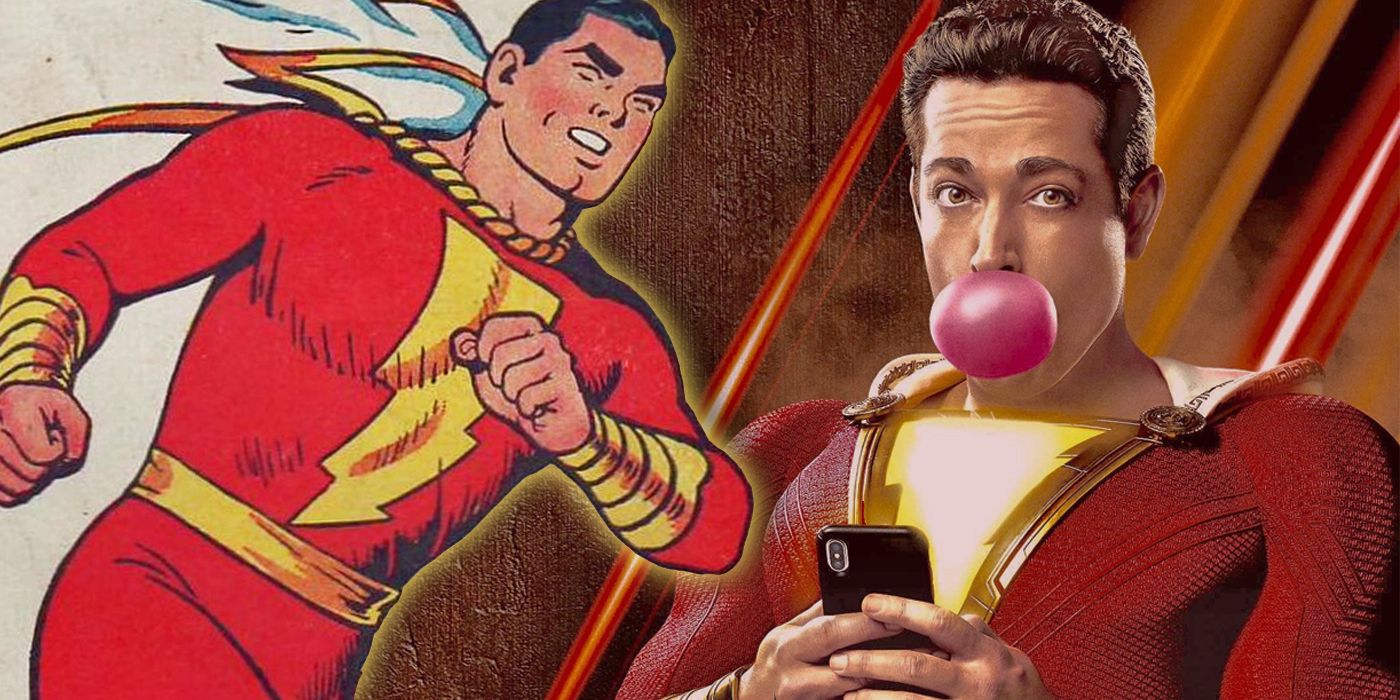
It’s important to remember that, while the Golden Age of Comics was obviously some time ago, it’s not like there aren’t plenty of people around who grew up reading these comics. Obviously, comic book writing legend, Roy Thomas, was a big Golden Age comic book fan, and so was Rosenweig (who turned two around the time that Captain Marvel made his debut in Whiz Comics #2). First, Rosenweig describes his Captain Marvel fandom:
During the early days of World War II, there was another conflict going on in America that divided our nation’s youth. I was a kid during those early 1940s, and as I remember it, you pretty much had to come forward…declaring yourself in support of one side or the other. You were either a Superman comic book kid or you were in the camp of Captain Marvel. There were few, if any, crossovers. I always believed that in this battle I was in the minority. It seemed to me that everyone liked Superman and only I related to the other guy.
The reasons for my choice were solid. Superman was always invincible… never really in jeopardy… even when he put on glasses, and a double-breasted suit and called himself Clark Kent. Underneath that suit and tie, Superman was wearing his tights and was still Superman while my guy was different. Captain Marvel only existed when summoned by a 14-year-old crippled newsboy named Billy Batson. Billy was vulnerable, very human, and all alone in the world… until he shouted out the word SHAZAM…and magically became the indestructible, invincible, Captain Marvel.
It is easy to see how things could get hairy for young Batson. Some bad guy might observe the transformation, then lie in wait for the kid, grab him and gag him before he could say anything… let alone “Shazam.” Now there you have something… a hero who was vulnerable. Something bad could happen… unless Billy could figure out some way to get rid of that gag and say the mystical and magical word…SHAZAM.
And what did that all mean? Shazam was an acronym. Whomever was given the gift…and the comic book had a very elaborate explanation of just how it was that Billy came to be chosen… by saying “Shazam” he would instantly be the embodiment of the wisdom of Solomon, the strength of Hercules, the stamina of Atlas, the power of Zeus, the spirit of Achilles and the speed of Mercury.
And then… it all ended. I grew up, and Captain Marvel disappeared…not just from my life, but from everyone’s life… Billy Batson and his alter ego became the victim(s) of a protracted lawsuit where the verdict handed down came from none other than the fabled Judge, Learned Hand. Coincidentally, along about this time, the popularity of the comic book in the US waned, ultimately to have a resurgence and a bigger than ever comeback for the superheroes, but not for my favorite….
Rosenweig then discussed Superman’s forays into film and how superhero films have become such a major part of the film industry. He then discusses coming across a NEW Captain Marvel film, only it was the Marvel one starring Brie Larson as a whole other Captain Marvel. He compliments that film, but then he discusses the Shazam film and how he tried to watch it by himself without disturbing Gless (it’s a really charming sequence, like when she is busy one night and so he finally rents the movie, but then she decides to just watch TV with him and he shuts it off as if she caught him watching a skin flick). Really, you should just read the whole blog post. It’s very well written.
But let’s get to the meat. What did he think of the film when he finally watched it? First, he notes his impression that he assumes that the film had decided to do a kitsch take on the character to stand out, but when he actually watches it…
Turns out, this is not what they were doing. In almost an homage to the Tom Hanks movie, Big, the creators (it seemed) speculated what would happen if a 14-year-old kid could turn into a superhero just by saying “Shazam” … would all of him change, or would he still be 14 inside that grown up super body? I never thought of that in 1943 when I was six, but… well… it is not altogether a bad idea.
For me, the movie gets a bit dreary where all of these superhero movies do…. too much wham, bam, crazy fights and over the top action sequences… that all just sorta goes with the territory. But where it is that this movie succeeds for me is in those thoughtful and semi subtle decisions that were made about setting, character, and relationships with the rest of the family of dramatis personae in the film.
I am not going to recommend it to you all, because I have no real good idea just who is reading this stuff. But if there is still a youngster inside anyone out there with access to Apple TV, who wonders what became of their favorite superhero… on a night when their spouse is engaged in a longish Zoom session…. I’m just sayin’… you could do a lot worse.
…And y’know, it’s sort of fun getting back in touch with that kid.
It’s fascinating to note that the “Billy Batson now turns into Captain Marvel but retains control of his body” take has been around for well over 30 years, but if you were a Captain Marvel fan from the old days, such a take is still novel to you (and, in Rosenweig’s case, he naturally assumes it was created for the film). Fascinating stuff from a television icon.
If anyone has an idea for an interesting piece of comic book history, drop me a line at brianc@cbr.com!
About The Author
