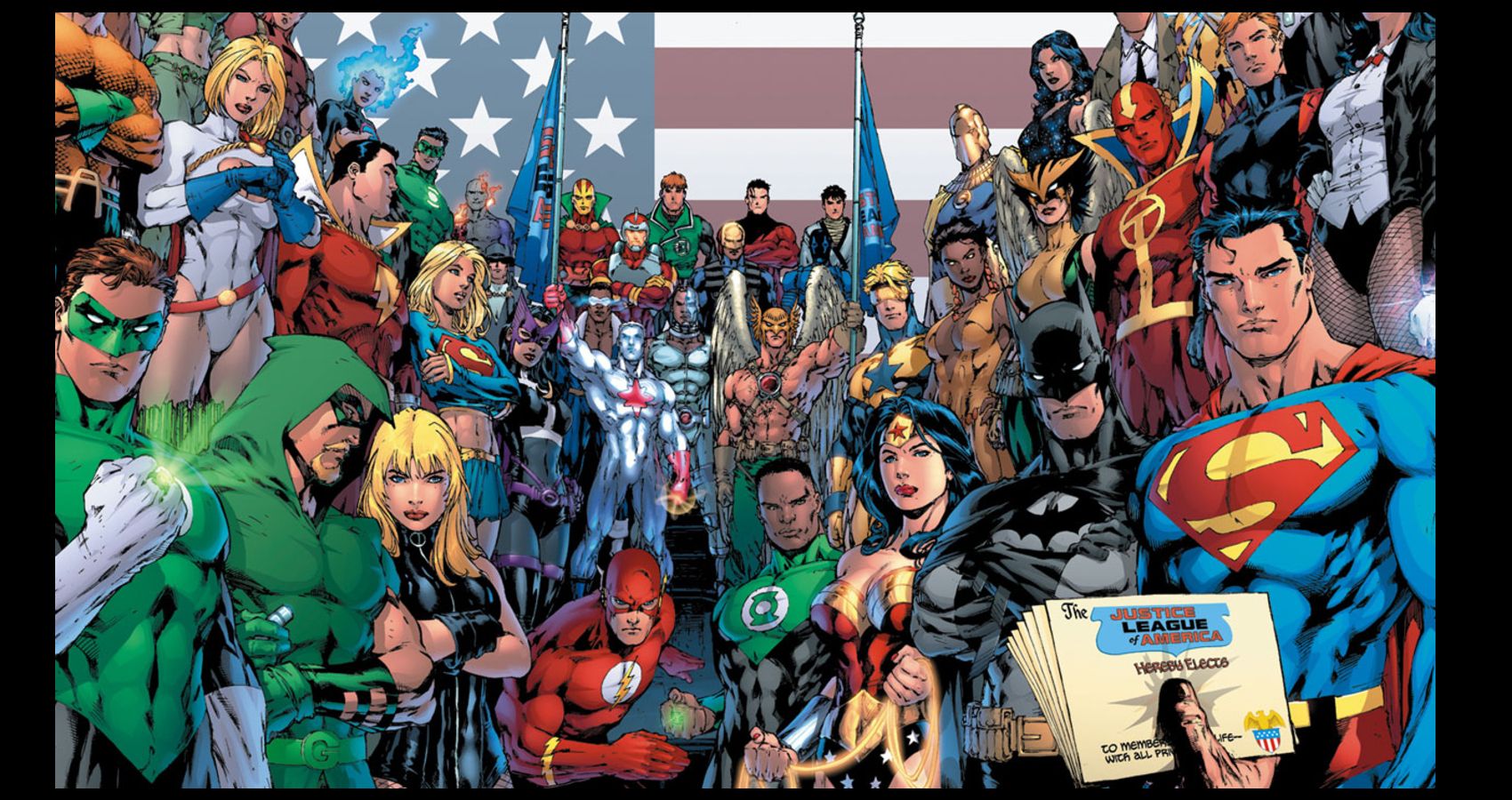
The Justice League is the flagship team in the DC Universe—for the most part, the team members tend to get along with each other—but sometimes, some members tend to not play well with others. Personality conflicts in a group of superheroes who can fly, run fast, or possess super-strength are sure to be a common occurrence.
Over the years and different incarnations of the Justice League, there is usually at least one member who, for some reason, decides that they don’t want to be a team player. When this happens, the hero who clashes with the others either quits voluntarily or is asked to leave the team. However, sometimes the character eventually returns, and the other members deal with the fact that they may not be team players.
10 Green Arrow, The Hot-Headed Idealist Who Clashed With The Leagues Ideology
Green Arrow’s history with the Justice League is rocky at best, even though he was the first hero to join the team after the original members formed. Oliver’s objections and lack of being a team player were ideological clashes with the team’s direction finally coming to a head in Justice League of America #181.
The decision to admit Firestorm and his belief that the team was wrong to focus on the more significant threats to the DCU while forgetting about the street-level crimes taking place. Ollie would leave the team but remain a reserve member and later admit that he missed being a part of the group when he passed the quiver to Roy Harper and suggested he be called Red Arrow.
9 Metamorpho, The Element Man, Was Not Ready To Fully Commit To Working With The Team
Metamorpho was one of the first heroes to be offered a place on the Justice League’s expanding roster. He is approached and offered membership in Justice League of America #42 by the League, who helps him with a mysterious attacker. Metamorpho later informs them about his reluctance to join the League, a response that takes them by surprise. He says that he is not ready to be a team player because he is still more interested in being Rex Mason and finding a way to cure himself of his abilities and appearance caused by his exposure to the Orb of Ra. Instead of becoming a full-time Leaguer, he opts to become a reserve member, appearing two issues later.
8 Guy Gardner, Who Was Not Afraid To Try And Take On Batman One-On-One
Guy Gardner has matured as a person and a hero over the years, however before this change, he was not much of a team player, especially during his tenure with the post-Crisis Justice League. In the Keith Giffen, J.M. DeMatteis, and Kevin Maguire run, one of the subplots found Guy frequently challenging Batman’s authority and harshly denied time after time.
The situation comes to a head when Guy refuses to let up, challenging Batman to a fight, sans power ring. The one-punch fight became a classic moment in the League’s history and shut Guy up for a little while. Apparently, Guy didn’t learn much from the experience as he continued to try and assert himself while in the League.
7 Huntress The Vigilante That Batman Gave A Chance To With The League
In the pre-Flashpoint DCU, Huntress, Helena Bertinelli, was mainly a key part of The Birds of Prey and some short stints in the Justice League and Justice League International. Following the Rock of Ages event, the League undergoes a membership drive, and Batman sponsors Huntress even though he believes her to be unpredictable and violent at times. By bringing her into the League, he hopes that being around the other heroes will mellow her and teach her to be a team player. For awhile, Huntress begins to gain confidence and play a key role as part of the team. However, even though she plays a key role in stopping Prometheus, but resigns after she is stopped short of killing him once he was incapacitated.
6 Orion, The Son Of Darkseid Whose Legendary Temper Preceded His Time With The League
Another addition to the team during Grant Morrison’s run on the 1997 JLA series was the Orion, the second son of Darkseid raised by the Fourth World New Gods‘ High Father. In issue 17, Orion and Barda appear in the Watchtower, informing the team that they have been assigned as Earth’s protectors, leaving Superman to question High Father’s motives.
Superman, knowing Orion’s reputation, says that the team does have rules, to which Orion immediately takes objection to be told how to act. Superman tells Barda that the two of them will be talking if Orion is not a team player. For the most part, during his time with the League, Orion does play well with the others, partly due to a Mother Box that kept his anger in check.
5 Etrigan The Demon, The Two-For-One Deal Included In Jason Blood’s Help
During the Obsidian Age storyline in JLA, Batman recruited Jason Blood, one of the DCU’s strongest magic wielders, to be part of a substitute Justice League if something happened to the current team. Batman was well aware that asking for Jason Blood’s help was a two-for-one deal, as The Demon Etrigan is forever bonded with Blood. Batman, knowing that Etrigan tends not to be a team player, assured Blood that he had would not give Etrigan access to the Watchtower unless he had a backup plan in place and was confident that he could be controlled and made to play nice. Jason does eventually call Etrigan, and in the end, saves Jason’s life.
4 The Dark Flash, Walter West, Won’t Even Reveal His Identity To Anyone Except Superman
Walter West, The Dark Flash, was a hypertime version of Wally who temporally took the mantle and position of The Flash after believing that he killed Wally during a battle with Kadabra. Walter travels back to the main DCU timeline and assumes Wally’s role as the Flash, with a darker and grittier approach. In JLA #33, Superman and Wonder Woman confronts the mysterious Flash, helping him with Dr. Alchemy before explaining why they need his help. Walter, standoffish at first, later would reveal his identity to Superman, who vouches for him to the rest of the League. This issue is only the time Walter interacts with the JLA, as Wally returns several issues later.
3 Lex Luthor Joins The League During The New 52 After Blackmailing His Way In
During the New 52, one of the least likely members in the DCU joined the Justice League and was the furthest thing from a team player, the one and only Lex Luthor. Through a combination of subtle threats and manipulation, Lex found himself on the team, if for no other reason, so that Batman could keep a close eye on him. Once on the team, Lex clashed with the other heroes. Still, he did eventually strive to be a hero for a short time following the sacrifice of the New 52 Superman and a stint as ruler of Apokolips after Darkseid’s defeat by the Anit-Monitor.
2 Lobo, The Main Man Reluctantly Joins The Justice League Of America As A Favor To Batman
During the Rebirth Era event, the Justice League vs. The Suicide Squad, Batman freed Lobo from Maxwell Lord’s control by literally blowing his head off his shoulders. Lobo offers the Dark Knight something rare in return, a free favor as a gesture of thanks. Batman wastes no time cashing in this favor, telling Lobo that he will be part of the Justice League of America, a second Justice League Batman has assembled.
Batman gives Lobo, who is infamously known for not playing well with others, one stipulation is no killing. Initially, Lobo protests, reminding Batman that he’s not much of a joiner, but ultimately joins the team because he does honor his word despite being a bounty hunter.
1 Batman: The Justice Leaguer Who Every One Knows Is Not A Team Player, And Gets Away With It
The Justice League member who definitely is not a team player is Batman, though he is a regular addition to almost every team’s incarnation. The other members regularly regard Batman as not being a team player. Batman’s first instance not playing well with others was in 1983 when he left the Justice League and formed the Outsiders because the League wouldn’t get involved in the Markovian rebellion. Batman was also kicked out of the League in JLA #46 for keeping secret contingency plans to take out the other members of the Justice League should they go rogue. Batman’s absence from the team is usually short-lived as he soon finds himself cautiously welcomed back.
About The Author