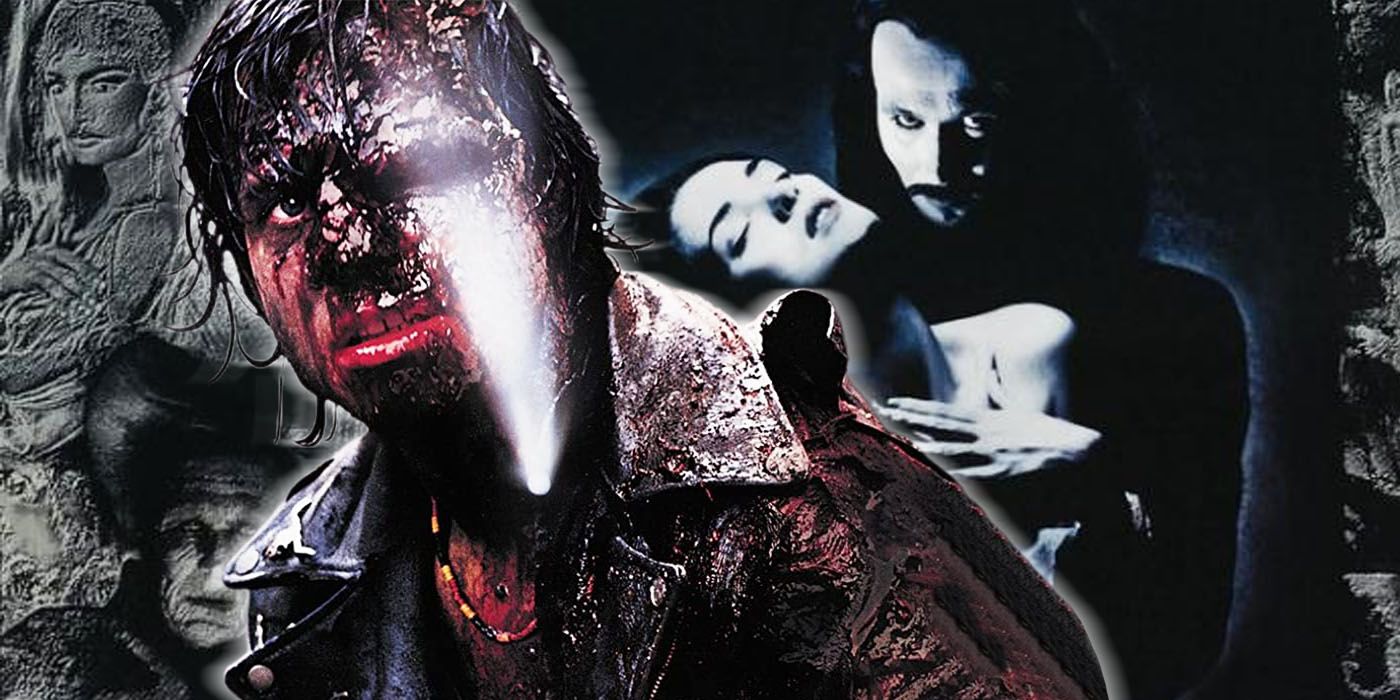
Before becoming the first woman to win the Best Director Oscar for 2009’s The Hurt Locker, Kathryn Bigelow directed one of the most unusual and effective vampire movies ever made. 1987’s Near Dark got lost at the time amid Joel Schumacher’s higher-profile The Lost Boys, released that same year, but developed a cult following for its strong visuals, compelling characters and unique take on the age-old clichés of vampirism. Indeed, Bigelow’s stated purpose, in part, was to strip the undead monsters down to their basics.
And yet as wildly as the film succeeded on that front – to the point where the word “vampire” is never uttered onscreen – it still relied on a few tricks from the progenitor of the genre. Bram Stoker’s original novel Dracula underwent a great deal of distortion with its bevy of movie adaptations. Among the details ignored or discarded was a cure for vampirism, and for all the ways it eschewed the old folk tales, Near Dark fully embraced Stoker’s take on the topic.

The film’s vampires are a clan of drifters – closer to serial killers than undead corpses – who drive forgotten highways of the Southwest looking for victims. When a young woman in their company, Mae, bites a local boy, Caleb, he gets pulled into their world against his will. If he can’t learn to be a killer, they’ll murder him in the most brutal way possible. Bigelow specifically did away with all lore beyond the barest defining traits. The film’s vampires are super strong, impervious to normal damage, and never seem to age. The price for that is killing and drinking blood to survive, which they accomplish through a variety of methods, from picking up hitchhikers to – in the film’s showstopper – locking the doors to a country honky-tonk and murdering the patrons one by one. Sunlight kills them, causing their skin to ignite in another of Near Dark’s signature visuals, but none of the other preventative measures – such as stakes in the heart – are effective or even mentioned.
It gives their vampirism a grit that more traditional bloodsuckers lack, suggesting a virus or scientific root for the condition rather than a supernatural cause. It makes Near Dark as much neo-noir Western as horror movie, and even the romance between Mae and Caleb is more outlaws-on-the-run than infernal seduction. And yet Bigelow uses one of the stranger tropes in Dracula to give her protagonists a hand. Midway through the novel, Dr. Van Helsing arrives to examine Lucy Westenra, on whom the count is feeding. Recognizing her condition, he arranges for a blood transfusion, which partially restores her. Dracula later returns and finishes the job, however, turning Lucy into a vampire and rendering Van Helsing’s efforts futile.
The sequence is notable for being one of the first descriptions of a blood transfusion ever in fiction. It’s also factually dodgy on several issues. Blood type is never mentioned, for instance, and although Lucy receives blood from four unrelated people, her body accepts all of it. Francis Ford Coppola’s 1992 adaption of the novel features the scene more or less as written and earned derision at the time for its inaccuracies. The director was simply staying true to his source.
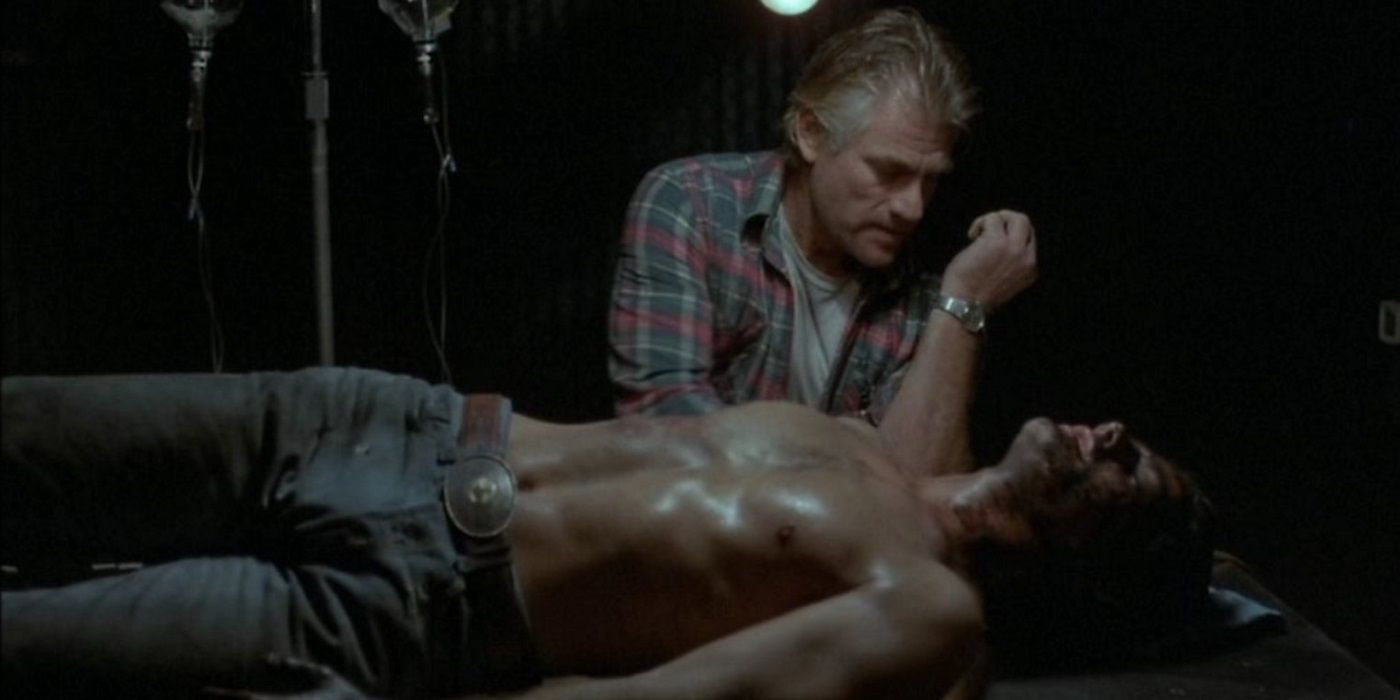
Bigelow had a better grasp of the science involved, as well as 100 years of blood transfusions serving as standard medical practice. The idea worked well in the context of her story while also providing a means for a happy ending. Caleb is rescued from the clan by his father, a rural veterinarian who performs a blood transfusion on him to cure him of his vampirism. Mae receives the same procedure after a final showdown with the other vampires. Both are presented far more feasibly than the transfusion in Dracula, with one donor only and a modern medical professional overseeing the entire affair.
As strange as the detail is, it’s in keeping with the idea of vampirism being a virus and Near Dark’s vision of the creatures being streamlined versions of their traditional Gothic incarnations. It provided a feasible defense against the condition that didn’t resort to hokey rituals and gave the film’s romance a potent bit of symbolism to thrive. It’s an odd detail in a very unusual movie and indicative of the one-of-a-kind approach that helped it find a loyal fan base.