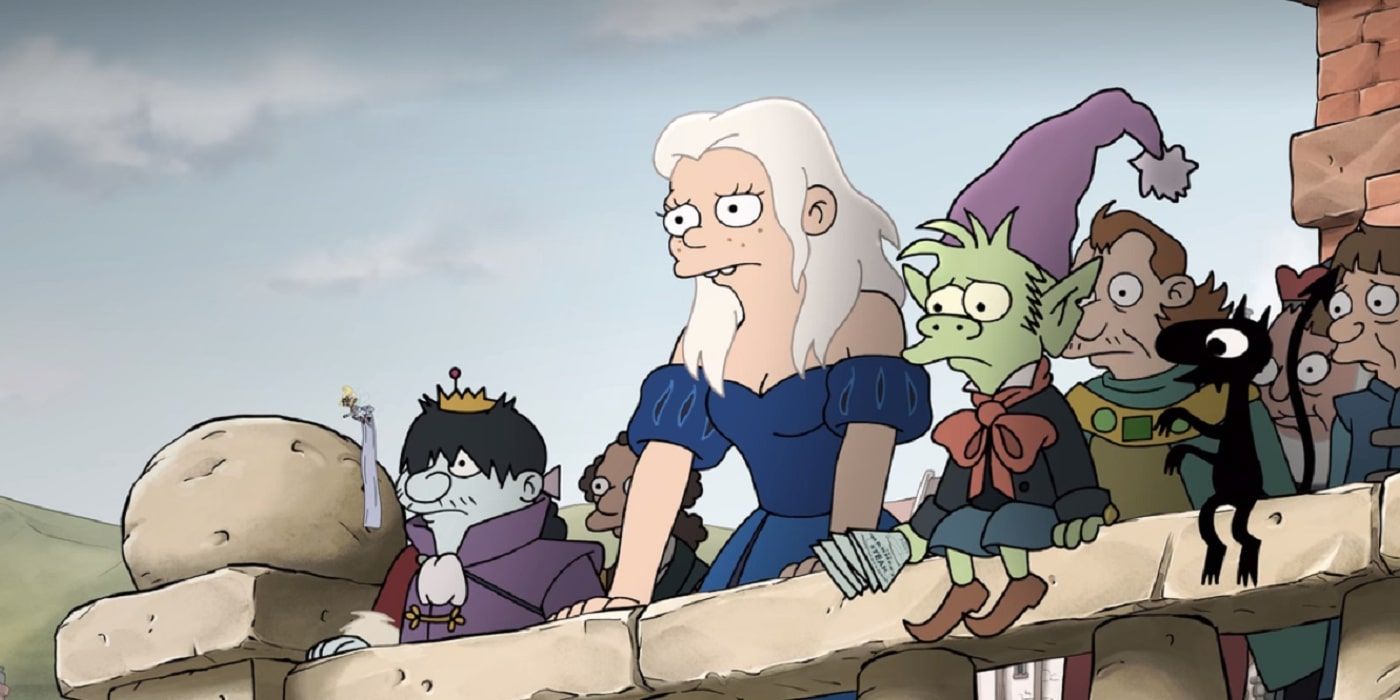
WARNING: The article contains spoilers for Part 1-4 of Disenchantment now on Netflix.
Disenchantment, the animated fantasy show created by Matt Groening, has released its Part 4 on Netflix. While it is an animated show, it isn’t afraid to tackle topics around mental health and how its characters are affected by trauma.
Disenchantment is a fantasy story that follows Princess Tiabeanie, more affectionately known as Bean, and her two friends, Elfo and Luci. The trio goes on adventures together, during which they face many hardships and tragedies that they have to overcome. Bean and others have to deal with the trauma of certain life events, which have impacted their lives. Disenchantment brings these front and center in the show, which results in more rounded and authentic characters.
Bean’s poor self-control

As a princess, Bean has a life of privilege by residing in a castle and having access to large amounts of wealth. She, however, feels trapped by her title and is unable to choose how she wants to live. To process these emotions, she goes out drinking almost every night while also gambling and getting into fights. She may also be doing this to rebel against her father and to take back some control over her life. It seems that the problems and feelings that she is trying to deal with through drinking are mostly related to her family.
King Zog, her absentee father, was never really there for her. If he wanted anything done, he would scream and shout. Bean also lost her mother at a young age, meaning that she no longer had a caring parent to guide her. When her father re-married Queen Oona and her younger brother Derek was born, she was no longer in line for the throne. Bean became jealous of her stepmother and soon came to resent Derek. Though it seems that Oona tried to be more of a parent to her than her actual parents.

She was angry and frustrated that no one understood her and her struggles. She wasn’t like ordinary princesses, and she didn’t want to act like one. However, her father kept pushing her to fit into this role, even trying to marry her off to Prince Guysbert. In trying to force Bean to do what he wanted, he only pushed her away even further and led her to take out her frustrations through drinking.
As the show progresses, Bean learns more about herself and what she wants out of life. In Part 4, she finds out that she had an evil doppelganger that she calls Bad Bean living inside her mind. Bad Bean, who was created from her mother’s magic, influenced Bean into making poor decisions. With no one taking a guiding role in her life, Bean easily fell prey to her. At the end of the latest season, she finally takes control of her actions by chopping her evil half’s head off.
King Zog’s State of Mind
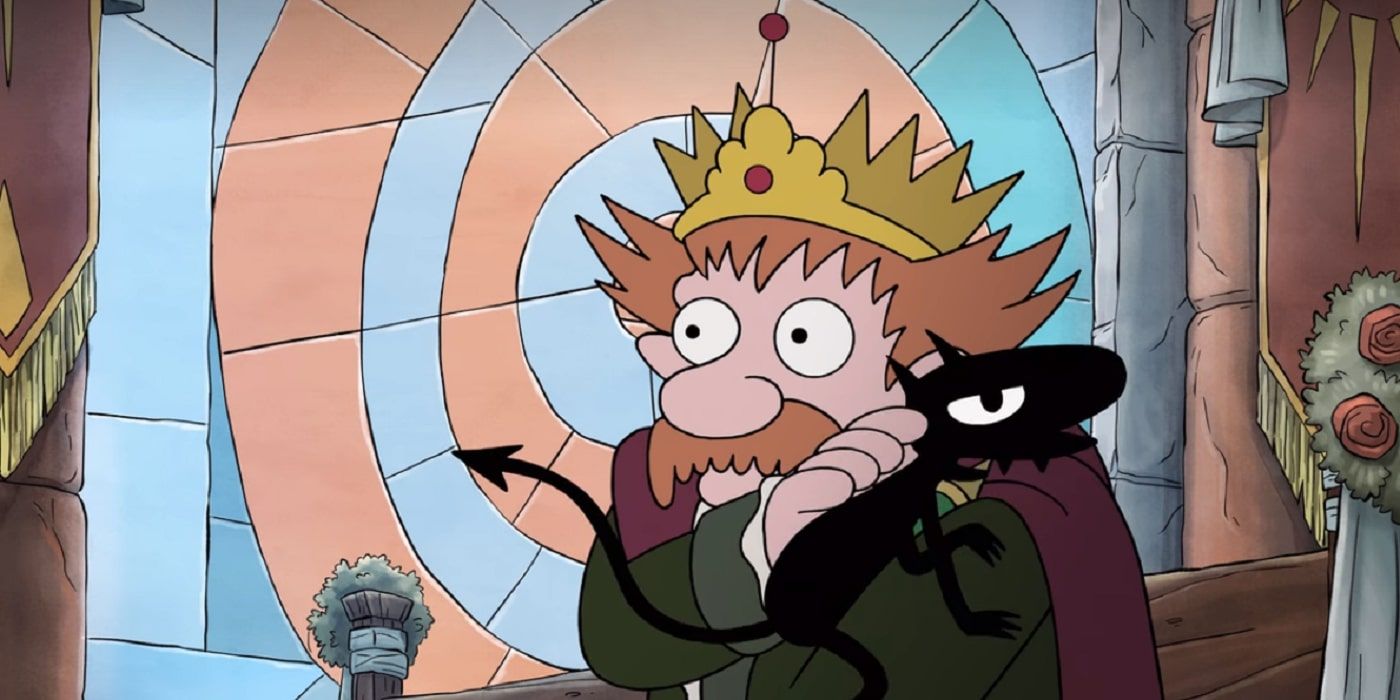
King Zog has also been through quite a lot. He was betrayed, shot, overthrown and even buried alive. It was the culmination of all of these that led to his breaking point. During Part 3, he slowly loses his grip on reality. He even mentions how in bouts of lucidity he can tell what is happening and how he is powerless to do anything about it. After a while, he is only able to honk and scream, which is when he gets admitted to Twinkletown Insane Asylum. His state could have developed because of things that were out of his control and his inability to change them.
At the asylum, he is buried alive, again, but in a wall by his roommate. However, this time he acted differently by not panicking and taking control of the situation by digging himself out. After his break-out, he also stops at a monastery where he learns about inner reflection. At this point, Zog does quite a lot of introspection, thinking about how he has acted and treated his family members in the past. Upon his return, he tries to be a better parent to all his three children, one of which he discovers is the son of Ursula, his long-lost bear-woman love.
Dagmar as a Toxic Parent
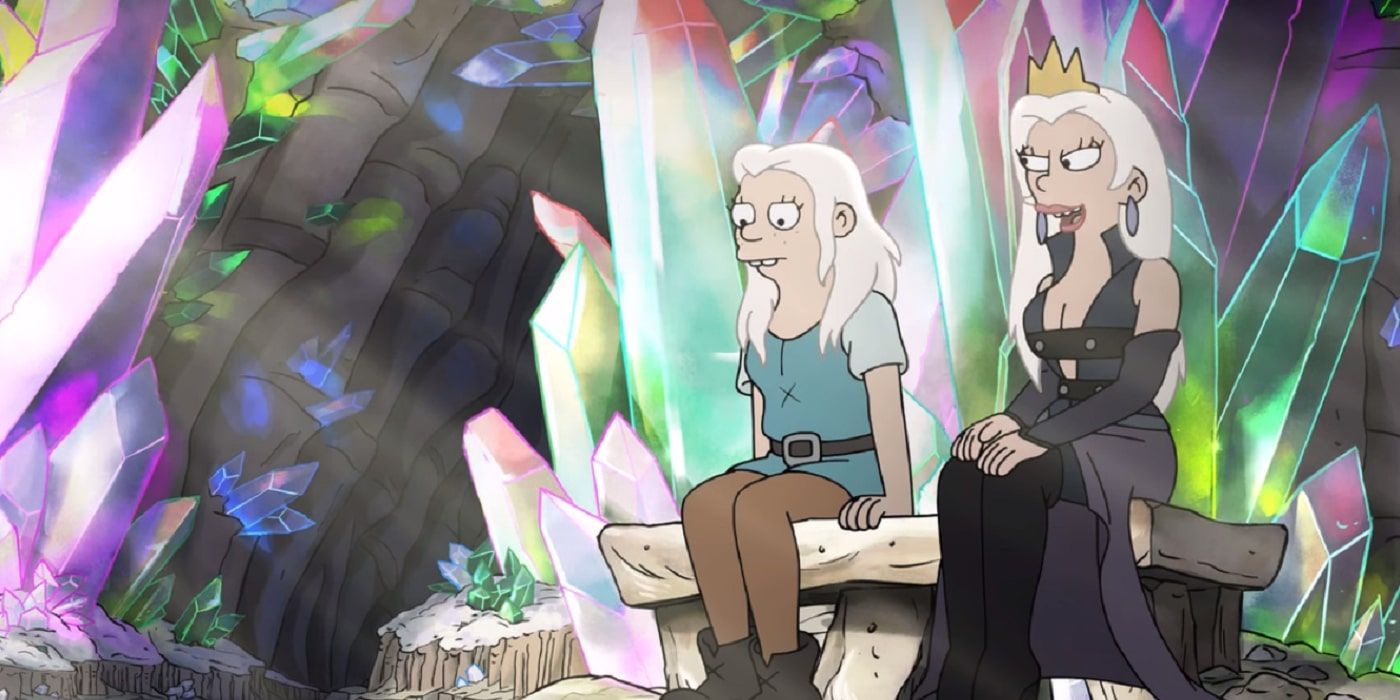
When Dagmar returned at the end of Part 1, Bean was relieved that her mother had finally returned to her. Her image of the loving parent that she had curated in her mind seemed to have become a reality. However, Bean quickly learned that it was all an act. The only reason she had a child was to fulfill the prophecy and repay their family’s debt to Hell. Dagmar reveals herself to be a toxic parent, as she is verbally abusive toward Bean and even gaslights her.
Her mother’s actions are aimed at breaking down her self-esteem and making it seem like she has no control over her life, much like she had felt before. Bean slowly comes to terms with the fact that her mother is evil and that she needs to confront her, which she tries to do through her dreams. Though in Part 4, Bean soon realizes that she was chasing after herself and not her mother, suggesting that she needs to do more work on herself if she wants to fully overcome these feelings.
Many of the characters in Disenchantment have experienced traumatic events that impacted their lives, whether they were buried alive or forced to fulfill an evil prophecy. They are each finding their way through these difficult times by confronting themselves and others.
All four parts of Disenchantment are currently available to stream on Netflix.