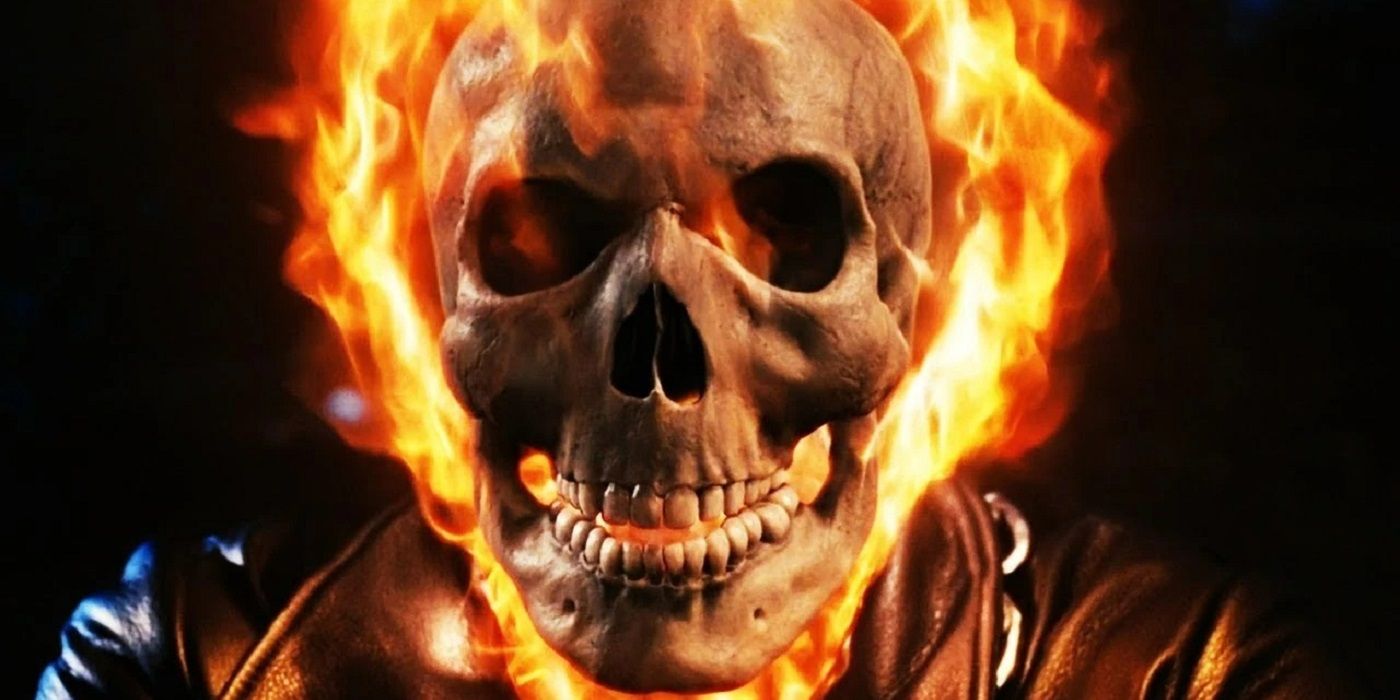
Today, we look at how Ghost Rider’s famous penance stare doesn’t always work the way its supposed to work.
This is “How Can I Explain?”, which is a feature spotlighting inexplicable comic book plots.
Last month, I did a piece about five characters who have withstood Ghost Rider’s Penance Stare. As I was writing it, though, I found some of them to be a bit surprising, in terms of what I understood about Ghost Rider’s penance stare. I was planning on doing this follow-up, but my friend Donald M. also commented on my Facebook post where I shared the article, so I’ll credit him, too, as he didn’t know I was planning on doing this article anyways.
Now, before I even start, let me stress that it really, really, REALLY doesn’t matter if people decide to ignore stuff like this for shit that doesn’t make sense for the sake of having cool moments. Does it make any sense for a kick from Batman to knock the wind out of the Hulk like in Batman vs. The Incredible Hulk (by Len Wein, Jose Luis Garcia-Lopez and Dick Giordano)?
No, of course not. But guess what? It’s freakin’ AWESOME.
So hey, I’m all for inexplicable moments for the sake of an awesome comic book moment. It’s just also fun to talk about, as well, that’s all.
HOW DOES GHOST RIDER’S PENANCE STARE WORK?
The Penance Stare debuted at a weird point in the Ghost Rider revival series in 1990, as it didn’t show up until the fourth issue of the series. Here’s the interesting thing about the Penance Stare in the first issue. When it is first used in Ghost Rider #4 (by Howard Mackie, Javier Saltares and Mark Texeira), it’s done off-panel!
And when we actually see it in action later in the issue on Mister Hyde, it is unclear what it actually is doing to the villain, as it just turns him back into his non-powered self…
However, in the next issue, we see it more in action, as Ghost Rider uses it to make two rapists feel the pain of their rape victim…
The problem, though, is that the term “penance stare” clearly confused people a bit, as it made people think that it confronted villains with the damage that they have done and forced them to repent, but only if there was something TO repent. And that’s the trick, as people began to think that it only worked if the person doing the killing actually REGRETTED their actions.
Reader Shaun D. Padden actually wrote in to pose this specific question in Ghost Rider #35, asking the central question, “The Ghost Rider’s penance gaze, I don’t get it. Why would a villain care about the pain inflicted on others? And wouldn’t a villain know themselves? I mean isn’t that all part of being one of the bad guys? Thus why does this penance gaze have any affect on the Ghost Rider’s foes?”
The editor (or perhaps Howard Mackie himself) replied, “That’s just it, Shaun. Why would a villain care about the pain inflicted on others? All they want to do is inflict even more pain and suffering. To remedy this situation, Ghost Rider uses his penance stare. His gaze goes down into the villains’ psyche and causes them to feel what they done to these people, what it would be like to be the victims, and to have to deal with the pain for the rest of their lives.”
And that’s the hook, then. You suffer the pain of the victims. It has nothing to do with whether you enjoyed what you did in your life or not, you will still suffer because you’ll feel the pain as your victims felt the pain. In other words, even if you’re a demon, you’ll still be affected by the Penance Stare because it will HURT.
A key example of this was in Midnight Sons Unlimited #1 (by Mackie and Klaus Janson), where a paralyzed serial killer who killed homeless children for years until she became paralyzed cut a deal with a demon to be able to continue killing through a bond with a demon. She actively LOVED killing kids. She cut a deal with a demon to be able to do it again even as her body was paralyzed. She clearly regretted NOTHING and yet…the Penance Stare still messed her up good…
WHY HAS GHOST RIDER’S PENANCE STARE NOT WORKED?
However, over the years, this has been shown differently in the comics. Let’s ignore all of the stuff involving Venom and Carnage, as very early on in the comics, Mackie himself established that the Penance Stare didn’t really work on symbiotes for whatever reason.
In 2012’s Venom #14 (by Rick Remender, Tony Moore and Val Staples, with plotting assists from Jeff Parker and Rob Williams), Blackheart had successfully brought Hell to Las Vegas and a group of disparate superheroes were trying to take him down. As I pointed out in a recent article, the way that the heroes tried to do so was for the Red Hulk to merge with Venom’s symbiote and also gain the Spirit of Vengeance.
However, during the attack on Blackheart by Ghost Hulk Venom Rider (or whatever you want to call the combined hero), the hero had the demonic son of Mephisto on the ropes until he used the Penance Stare and showing a demon all of his misdeeds actually served to POWER UP Blackheart!
That’s not how the Penance Stare works.
Perhaps one of the most famous examples occurred in Thanos #15 (by Donny Cates, Geoff Show and Antonio Fabela), where the issue opens up by specifically reiterating the powers of the Penance Stare pretty darn accurately…
And yet when Thanos uses it….
He LOVES the feeling…
That doesn’t make any sense. It would be like if the Penance Stare was used on, like, someone who gets off on abusing kids and then they get to relive their abuse which is what they LIKE. So the Penance Stare can’t possibly work that way, but yet it has more and more in comics in recent years. It just seems like it is representative of a fundamental misunderstanding of the point of the Penance Stare, as otherwise, it sure seems like it would be useless against nearly any villain who enjoys hurting people (which is a LOT of them).
Thanks to Donald for the suggestion! If anyone can think of a good inexplicable comic book plot, write me at brianc@cbr.com!
About The Author
